

Sorghum (Sorghum bicolor)
Charcoal Rot (Macrophomina phaseolina )
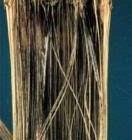
Symptoms
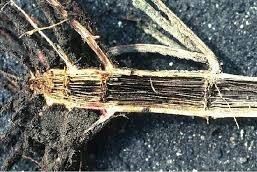
- Charcoal rot is a major disease in the dry sorghum-growing regions.
- The charcoal rot fungi infects roots of seedlings and plants growing under adverse environmental conditions, particularly moisture stress and high temperature.
- Infected roots show water-soaked lesions that shrink eventually and turn brown or black.
- Affected stalks are soft or spongy at the base and tend to lodge.
- Lodging is the most apparent symptom of charcoal rot. If lodged plant is split open and examined, the pith of the stalk may be found in various stages of rotting of the tissues leaving longitudinal fibres.
Management
- Maintain soil moisture through irrigation.
- Avoid over use of nitrogenous fertilizers.
- High plant population or crowding should be avoided.
- Soil application of organic manures fortified with Trichoderma spp. reduces charcoal root rot incidence.
- Remove and destroy all infected plants along with roots and then disinfect the soil with Bordeaux mixture 1% or copper oxychloride / captan (3 gram/ litre of water).
Chemical Control
| Sl.No | Generic Name | Trade Name | Color code | Dosage/litre | Knapsack Sprayer (Capacity 10L) | Dosage/acre (200 L) | Dosage/hectare (500 L) | Remarks |
|---|---|---|---|---|---|---|---|---|
| 1 | Copper Oxychloride 50 WP | Bensaan, Blitox, Blue copper, Bluetrox, Copter, Cupramar, Cuprina, Dhanucop, Fytolan, Fytox, Fytran, Fytolan, Hilcopper, Killex copper, Maincop Dhanucop, Star cop, Tagcop, Trucop | Blue | 3 g/litre of water | 30 g | 600 g | 1500 g | Soil drenching |
Extremely Toxic

Highly Toxic

Moderately Toxic