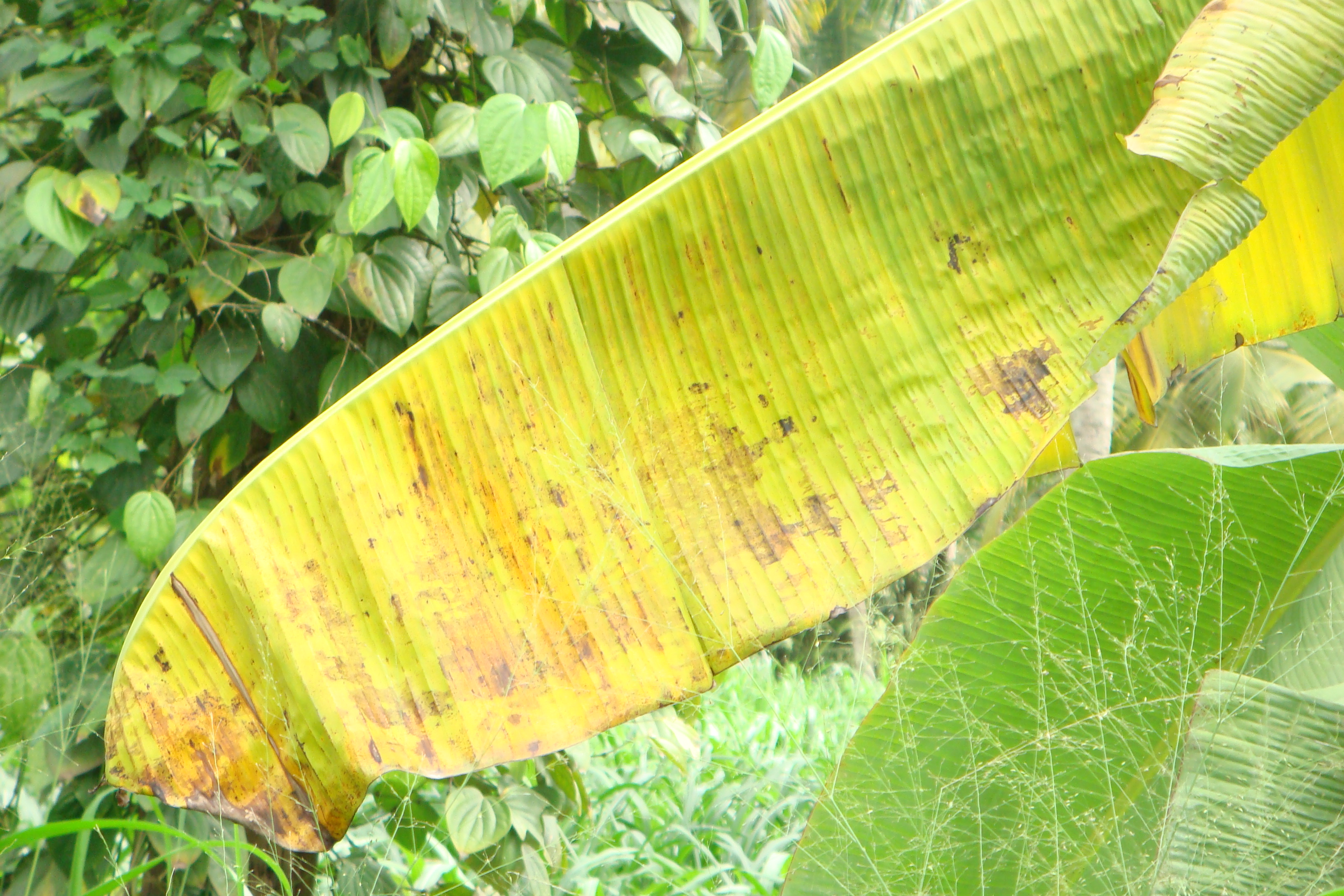
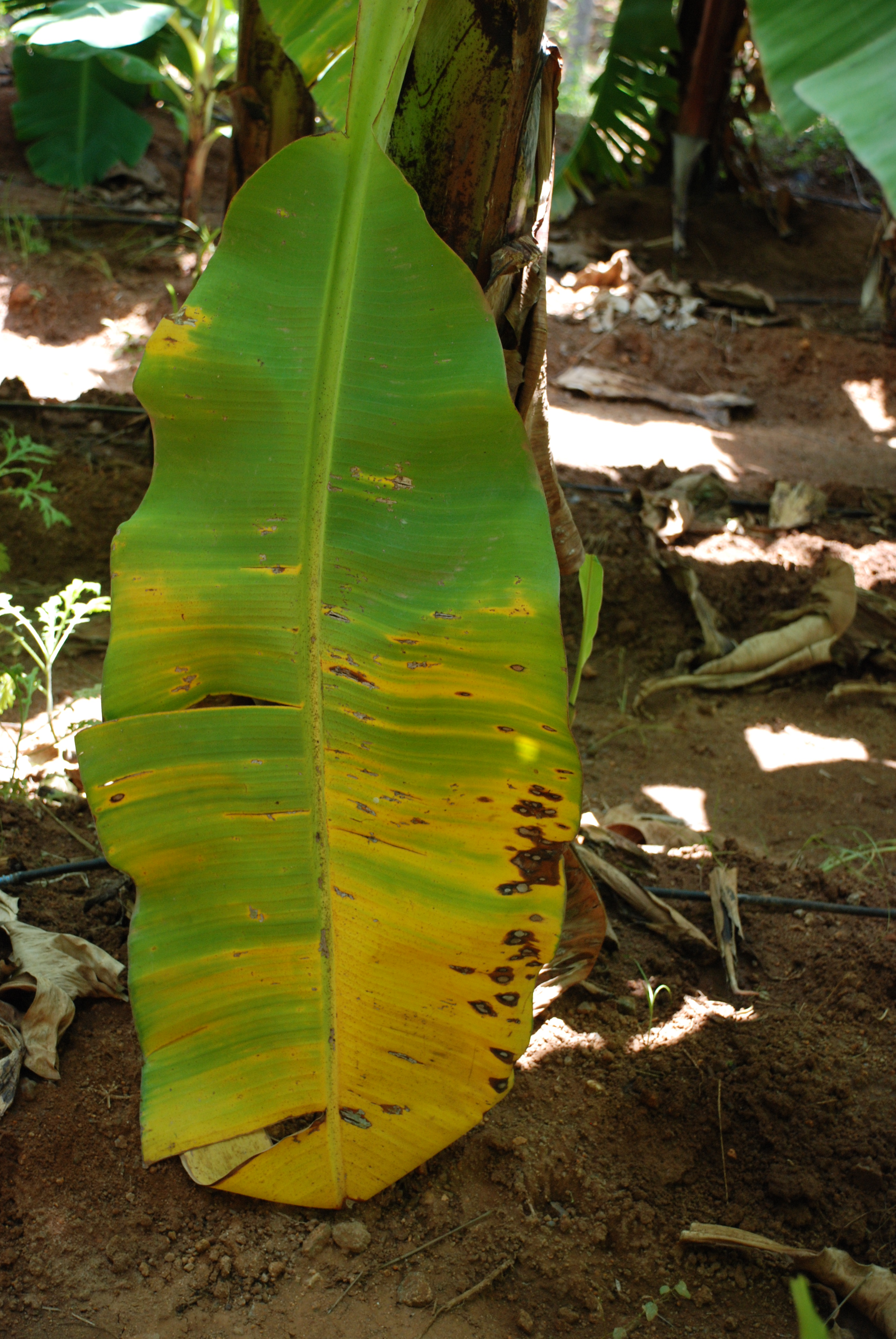
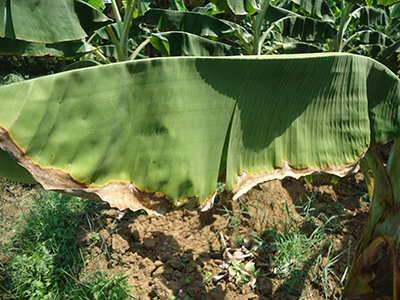
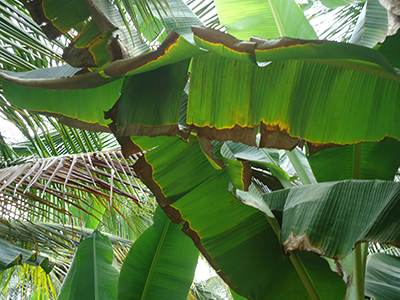
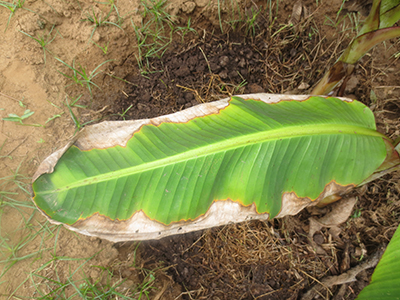
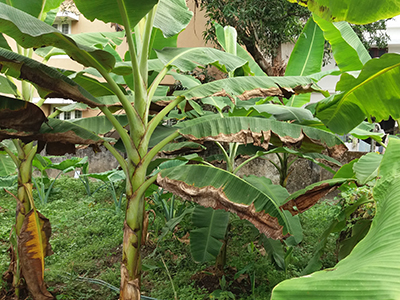
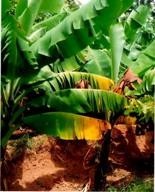
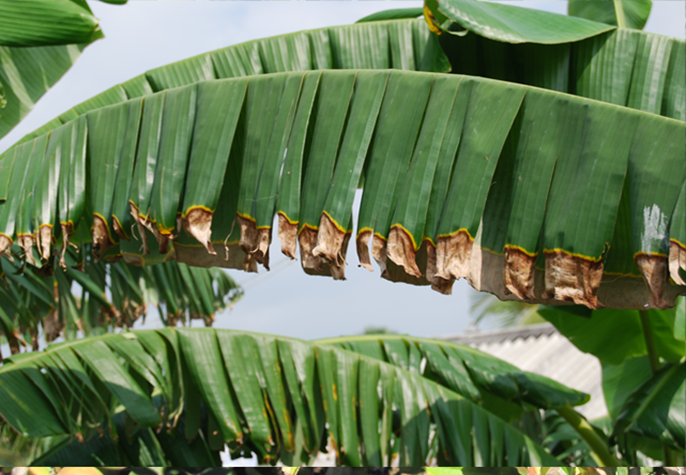
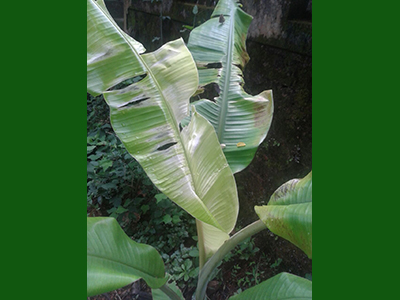
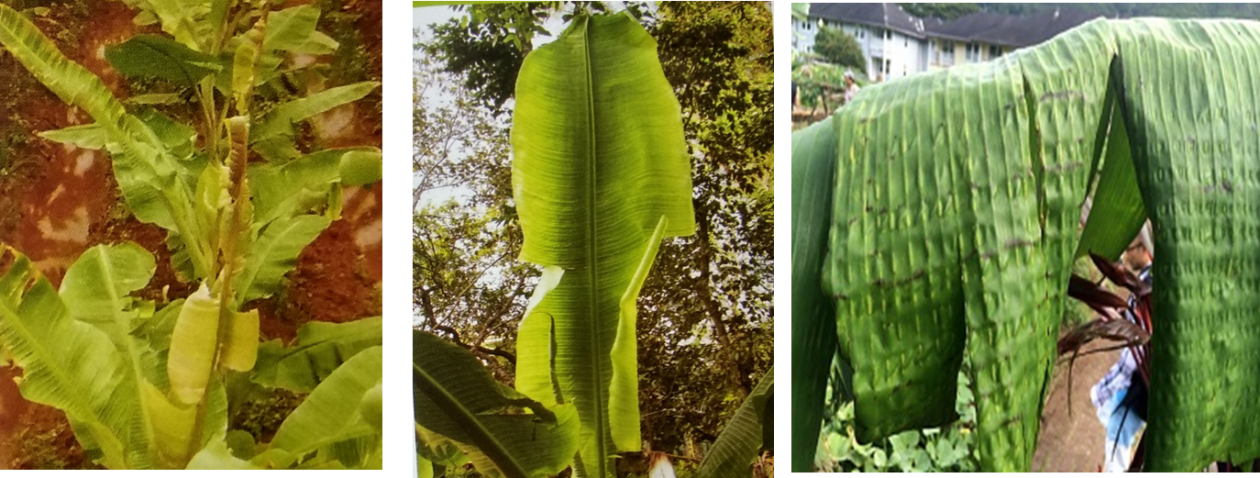
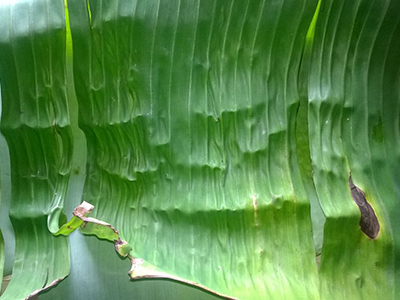
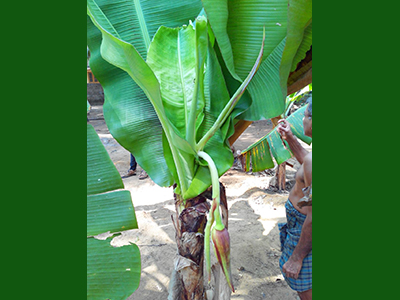
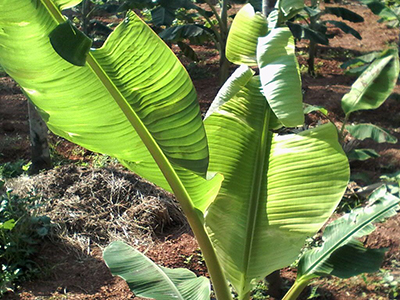
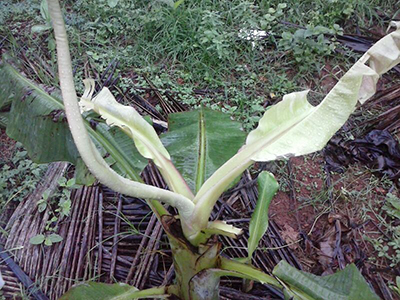
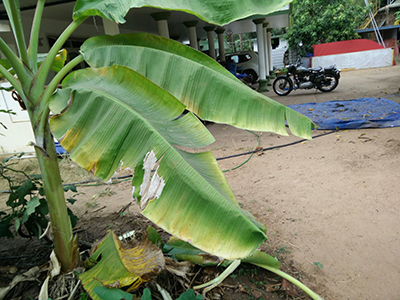
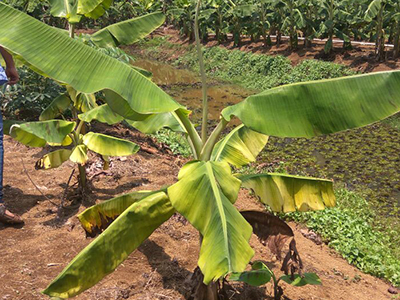
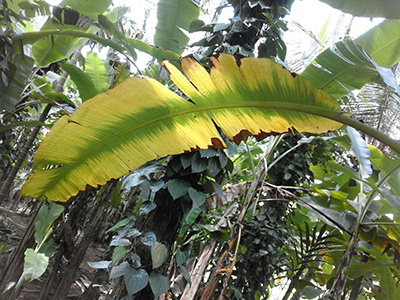
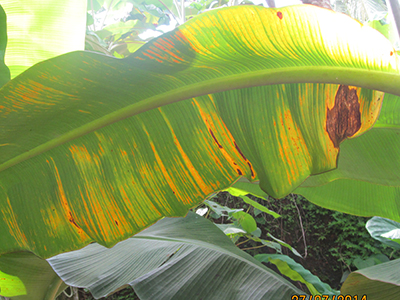
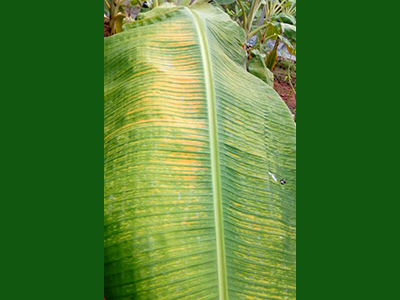
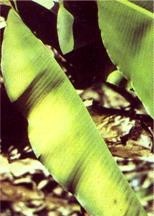
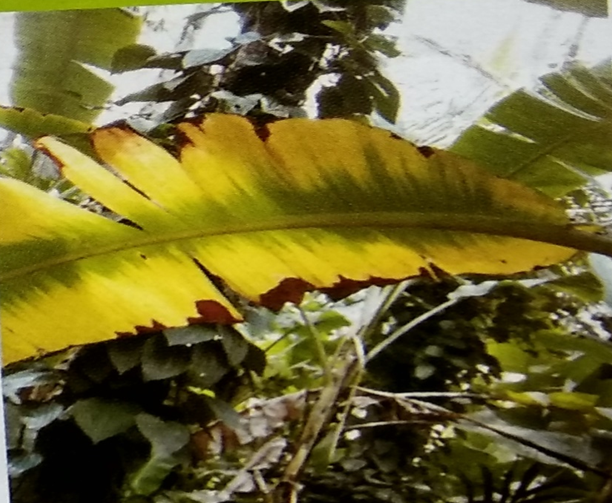
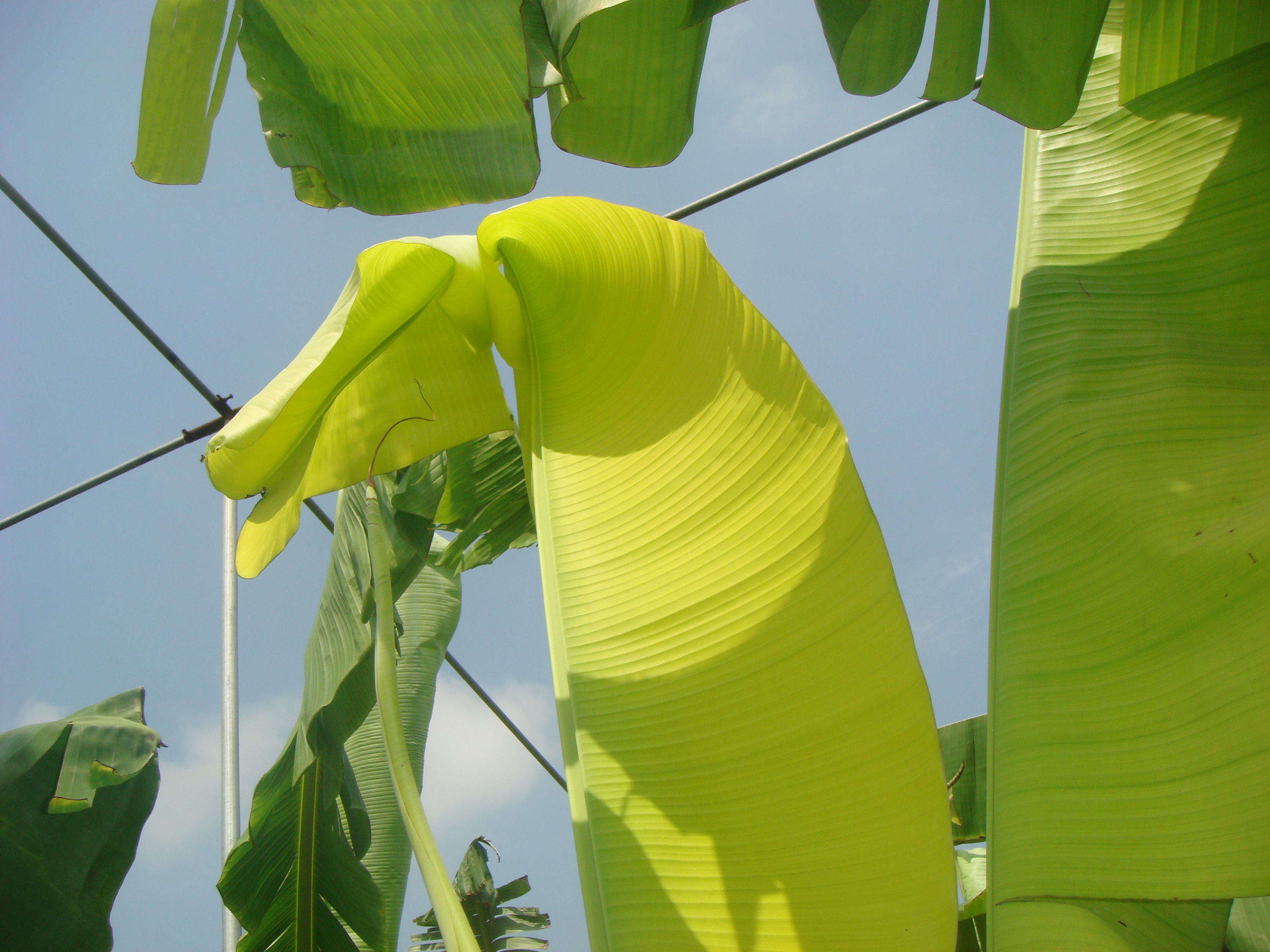
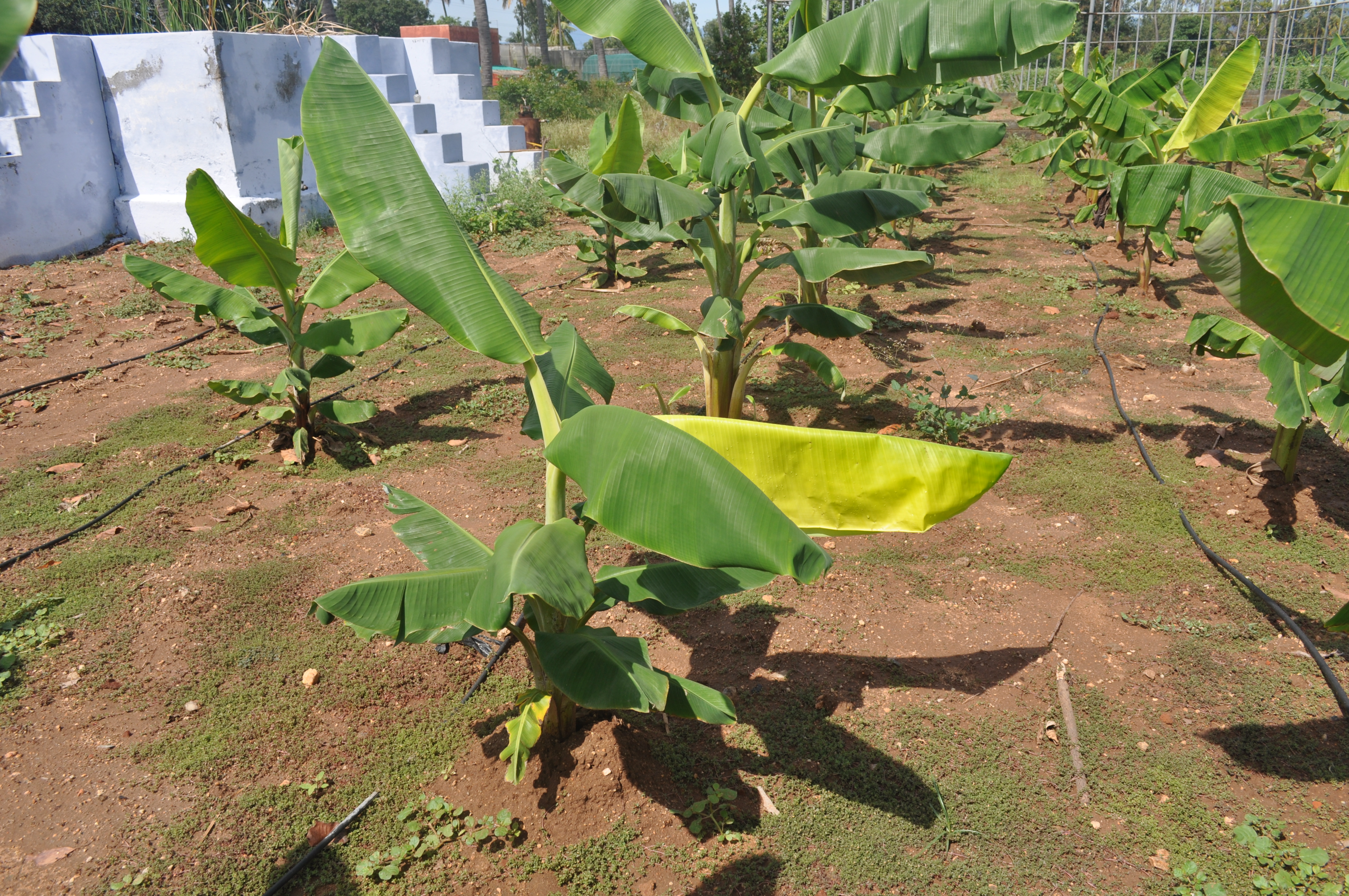
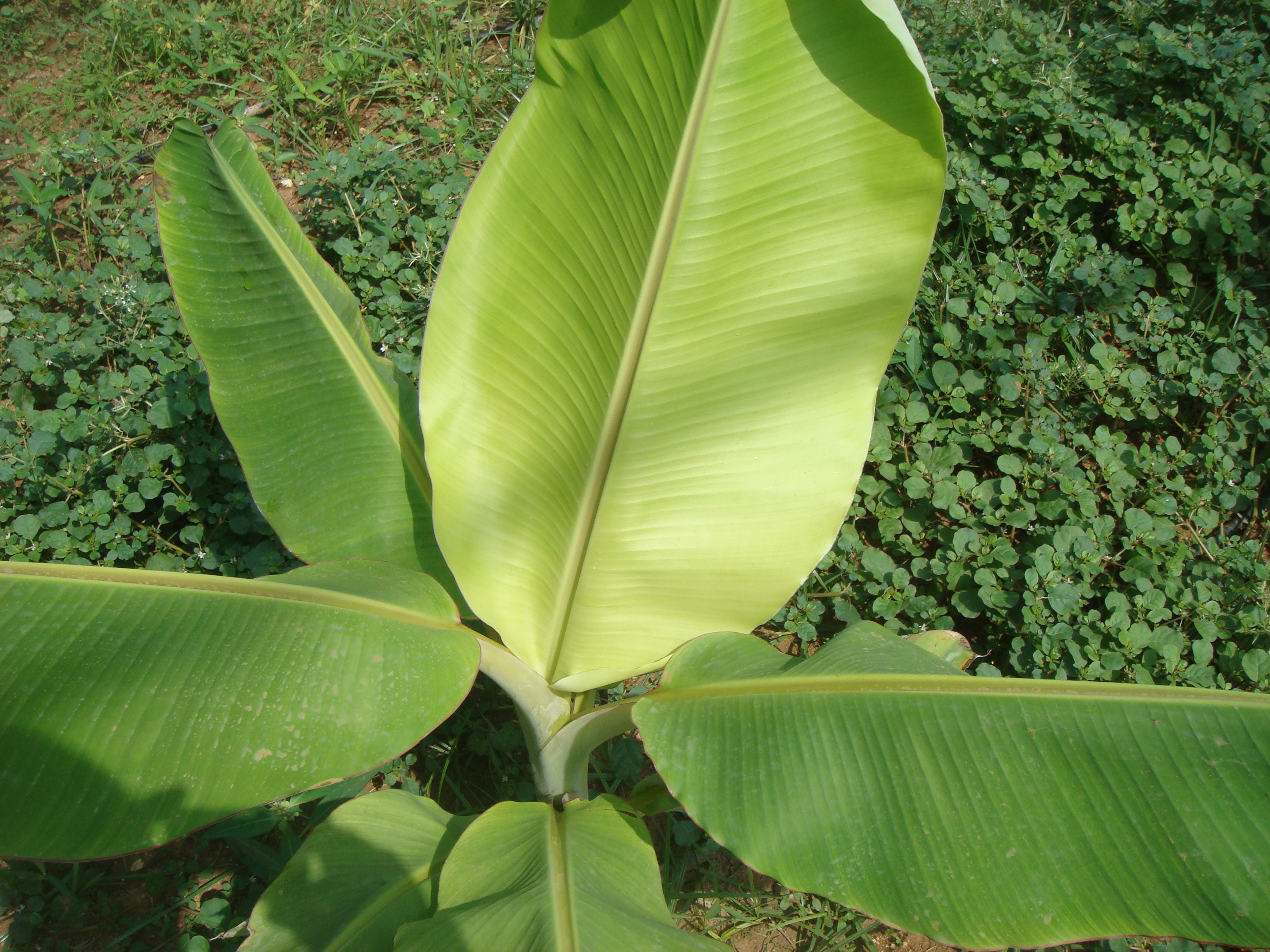
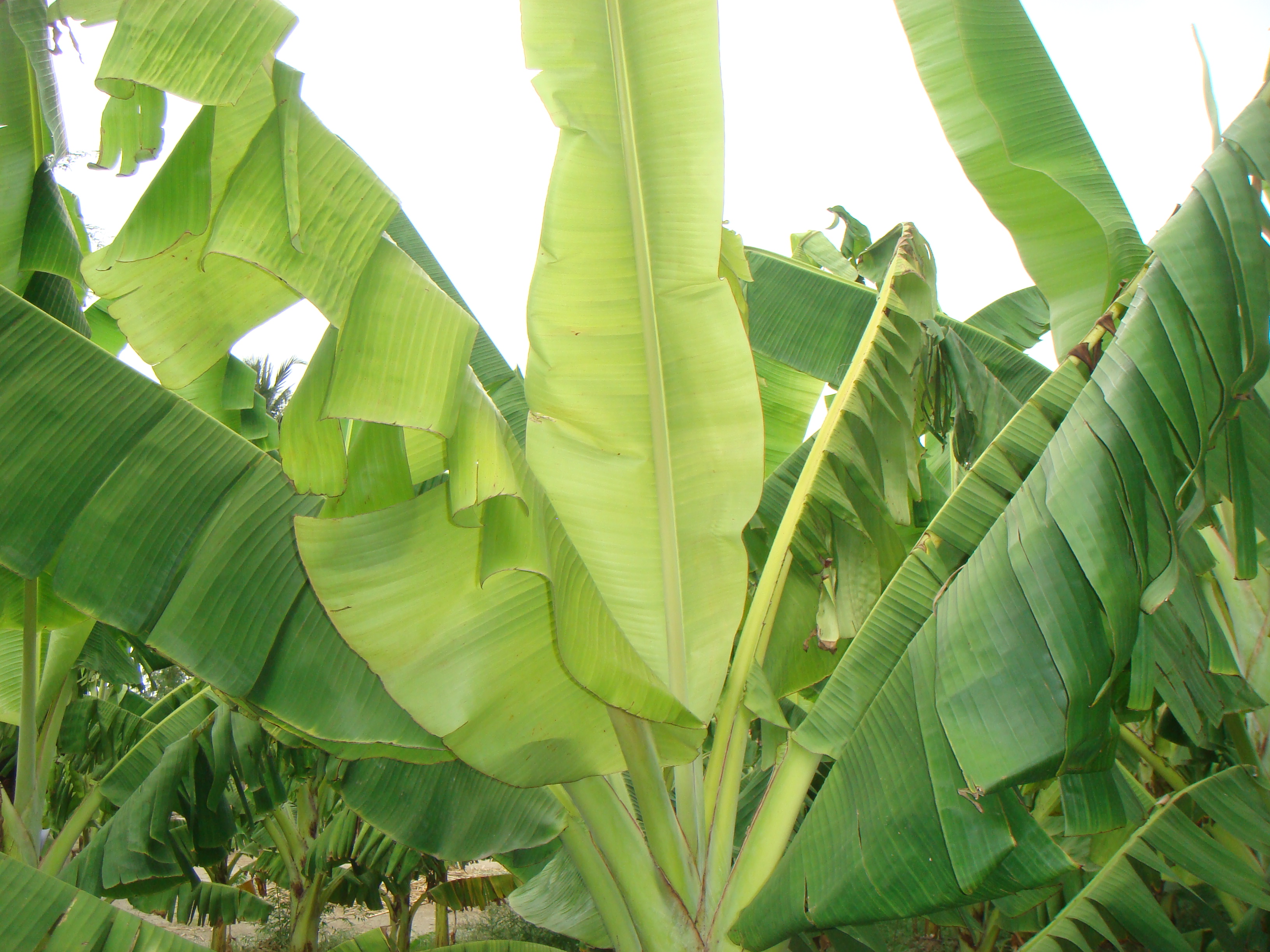
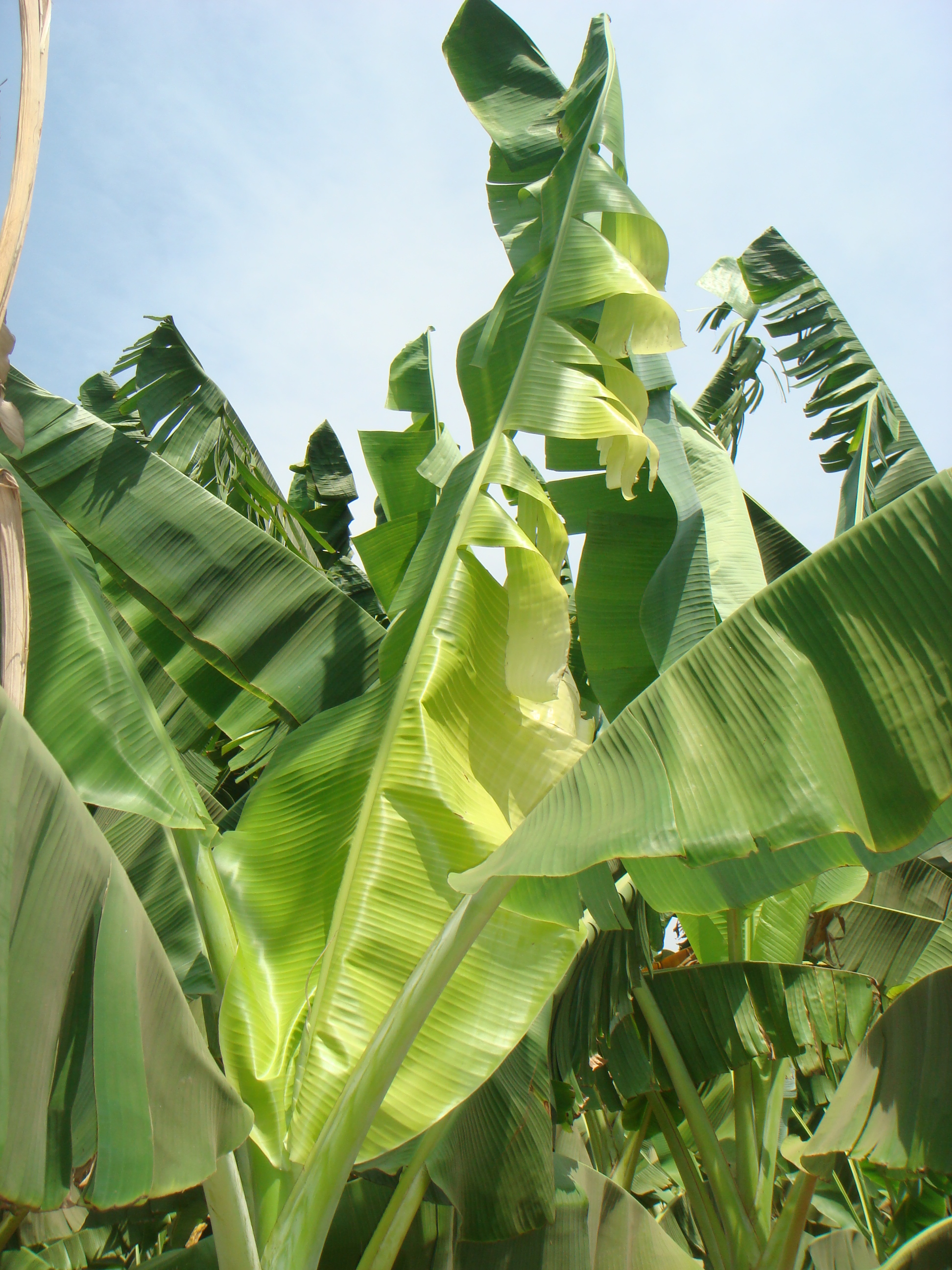
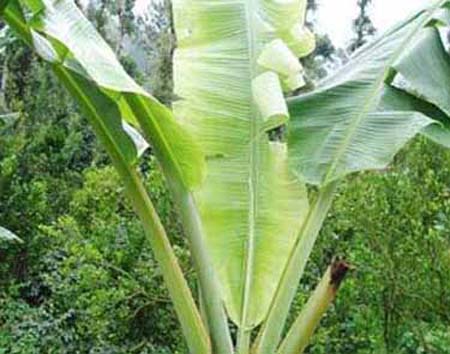
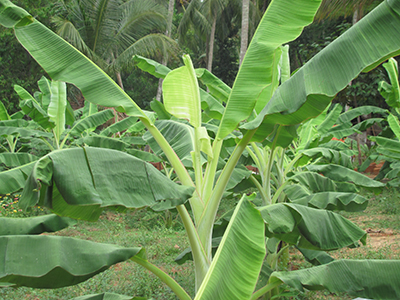
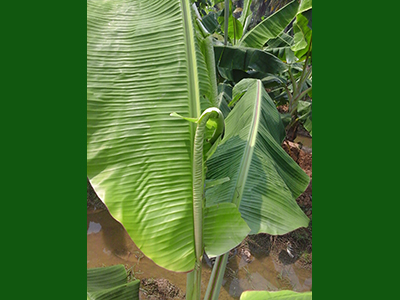
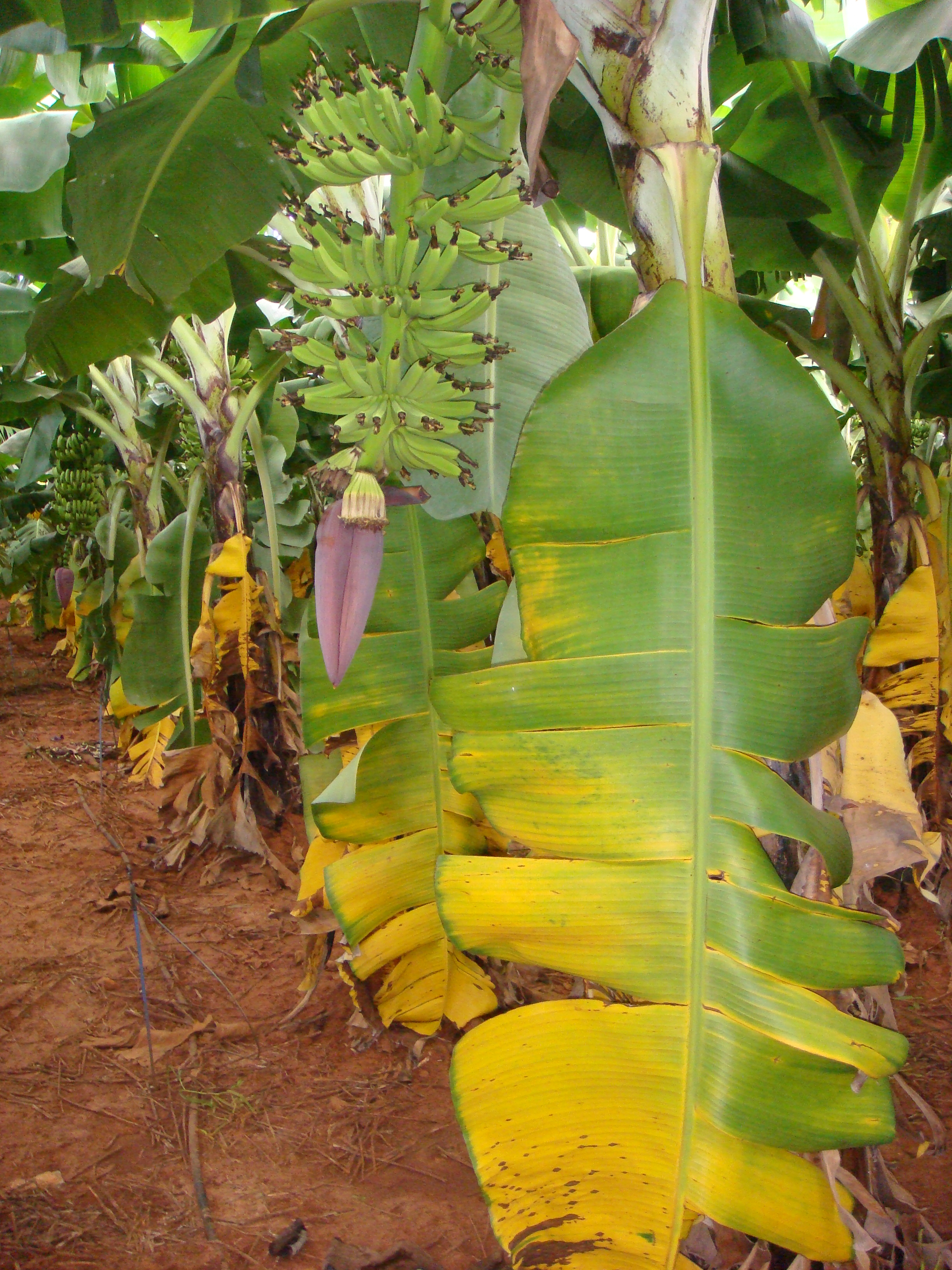
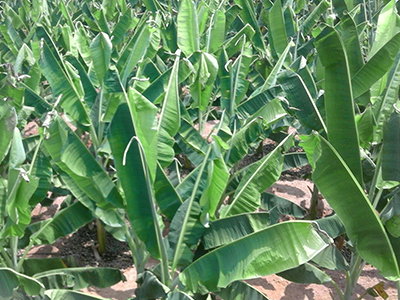
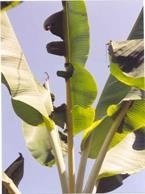
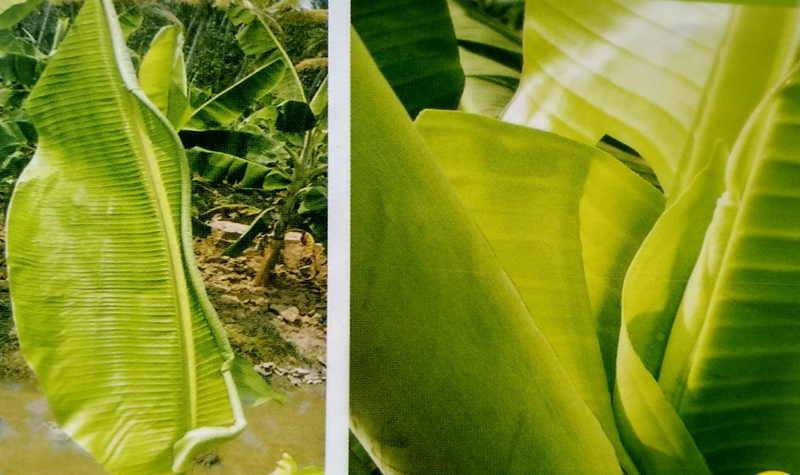
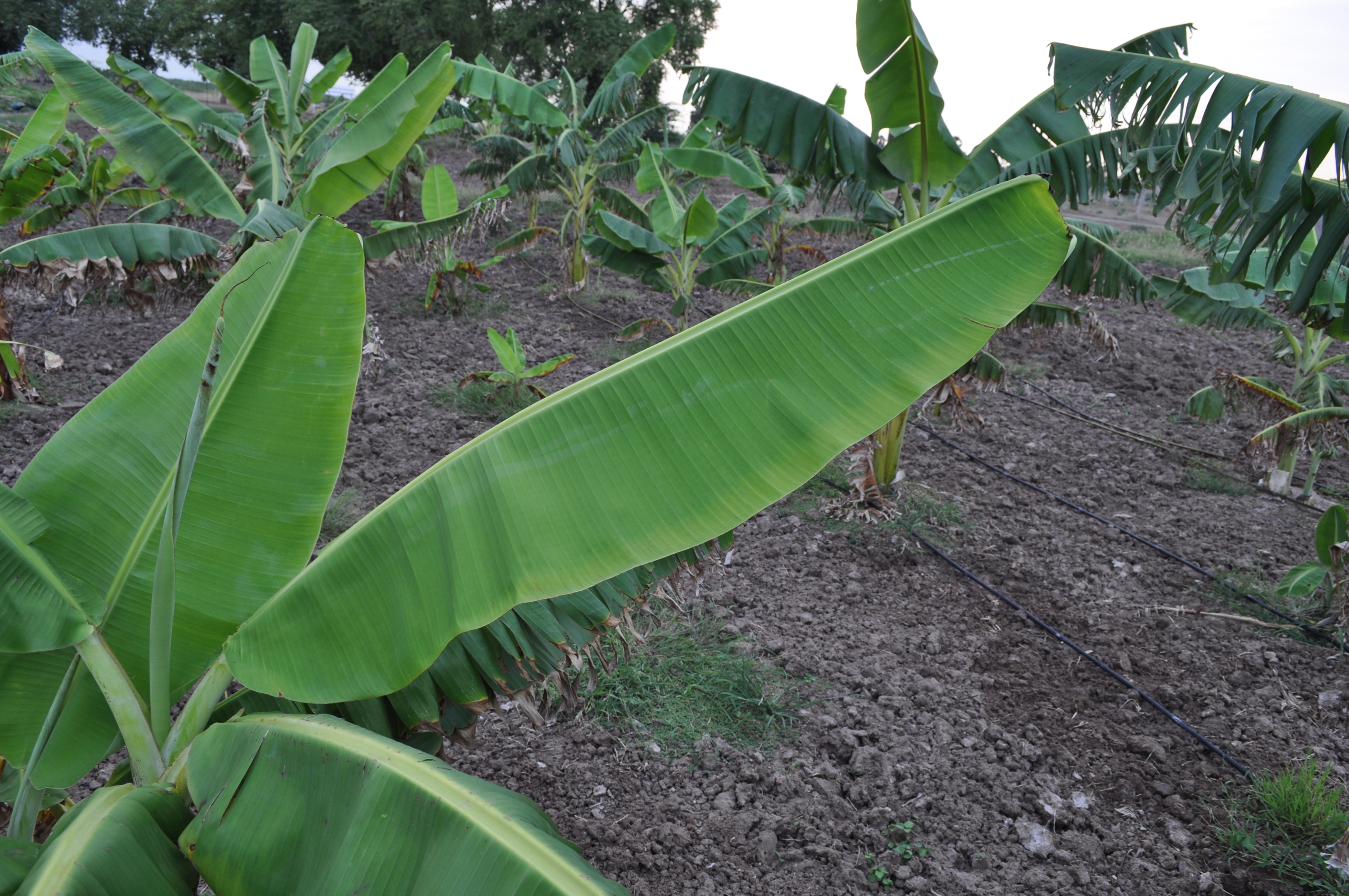
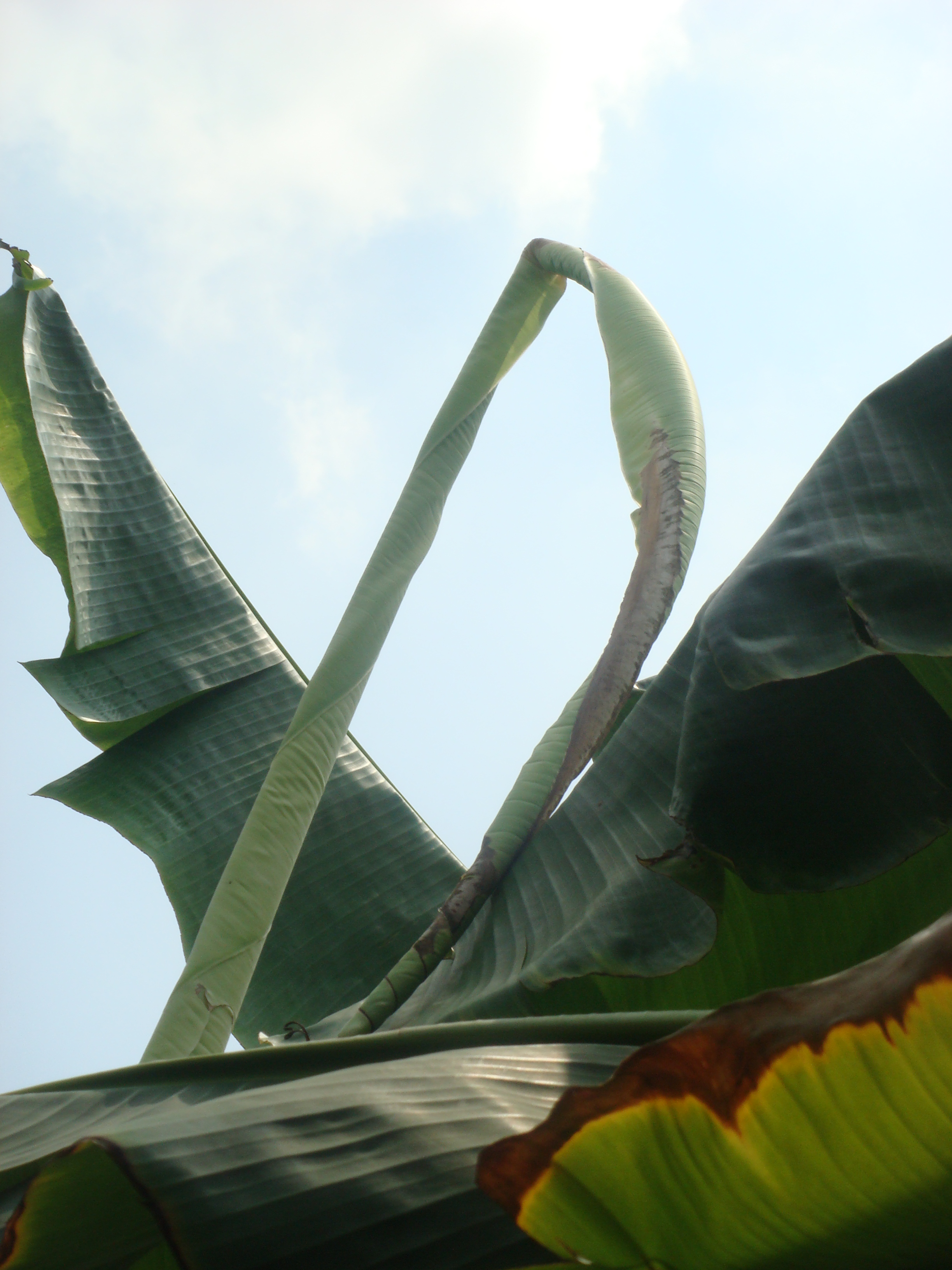
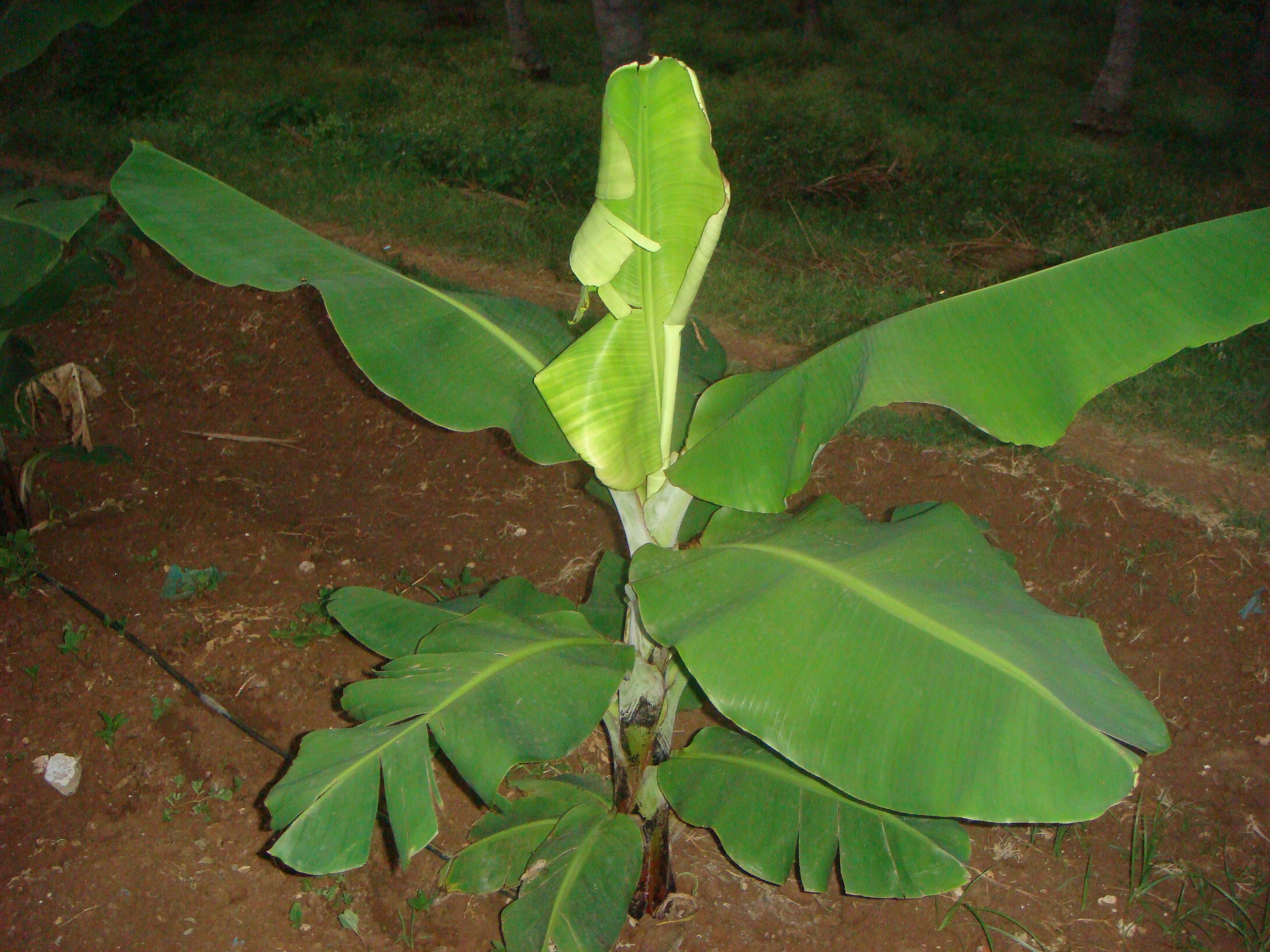
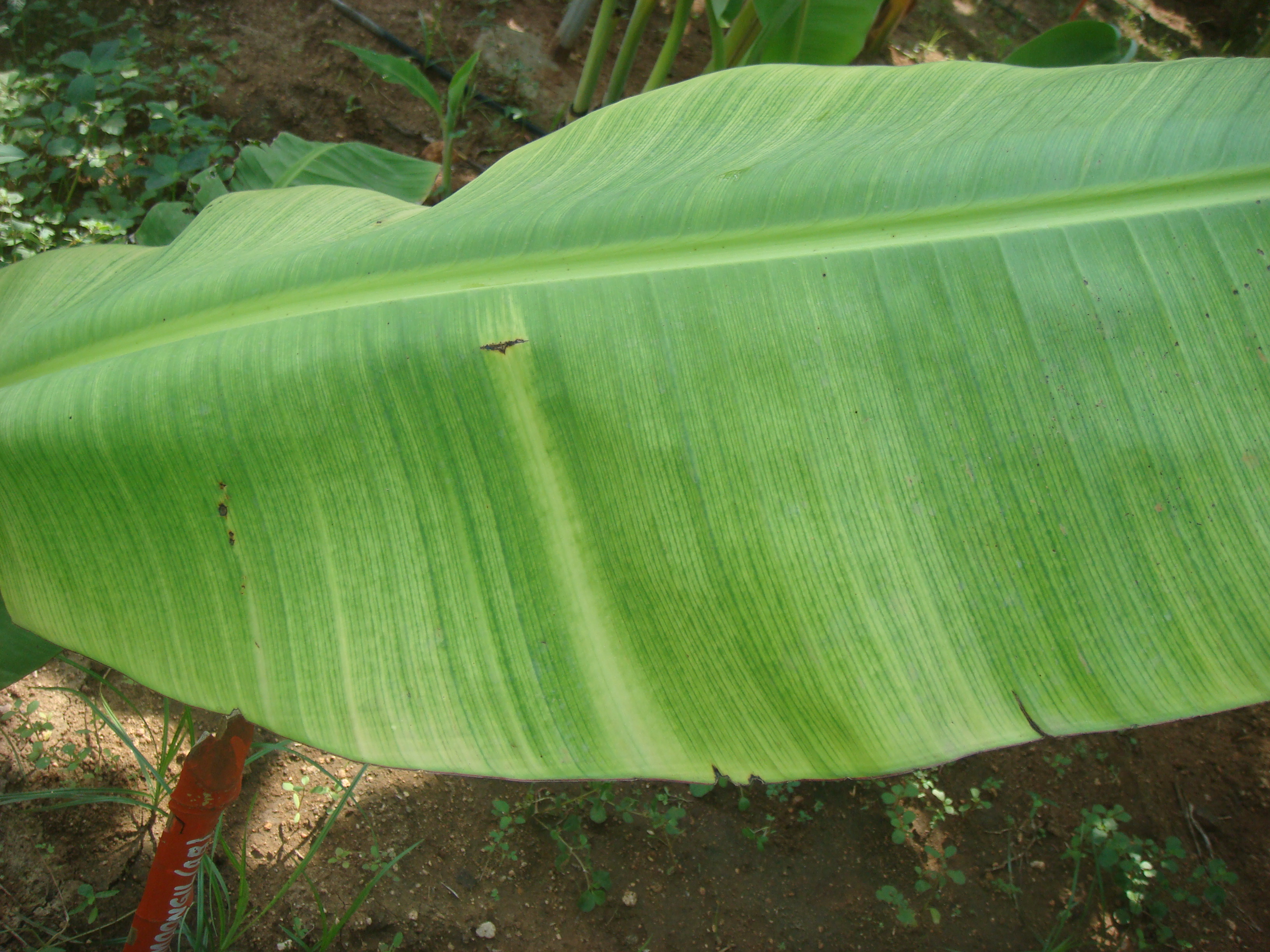
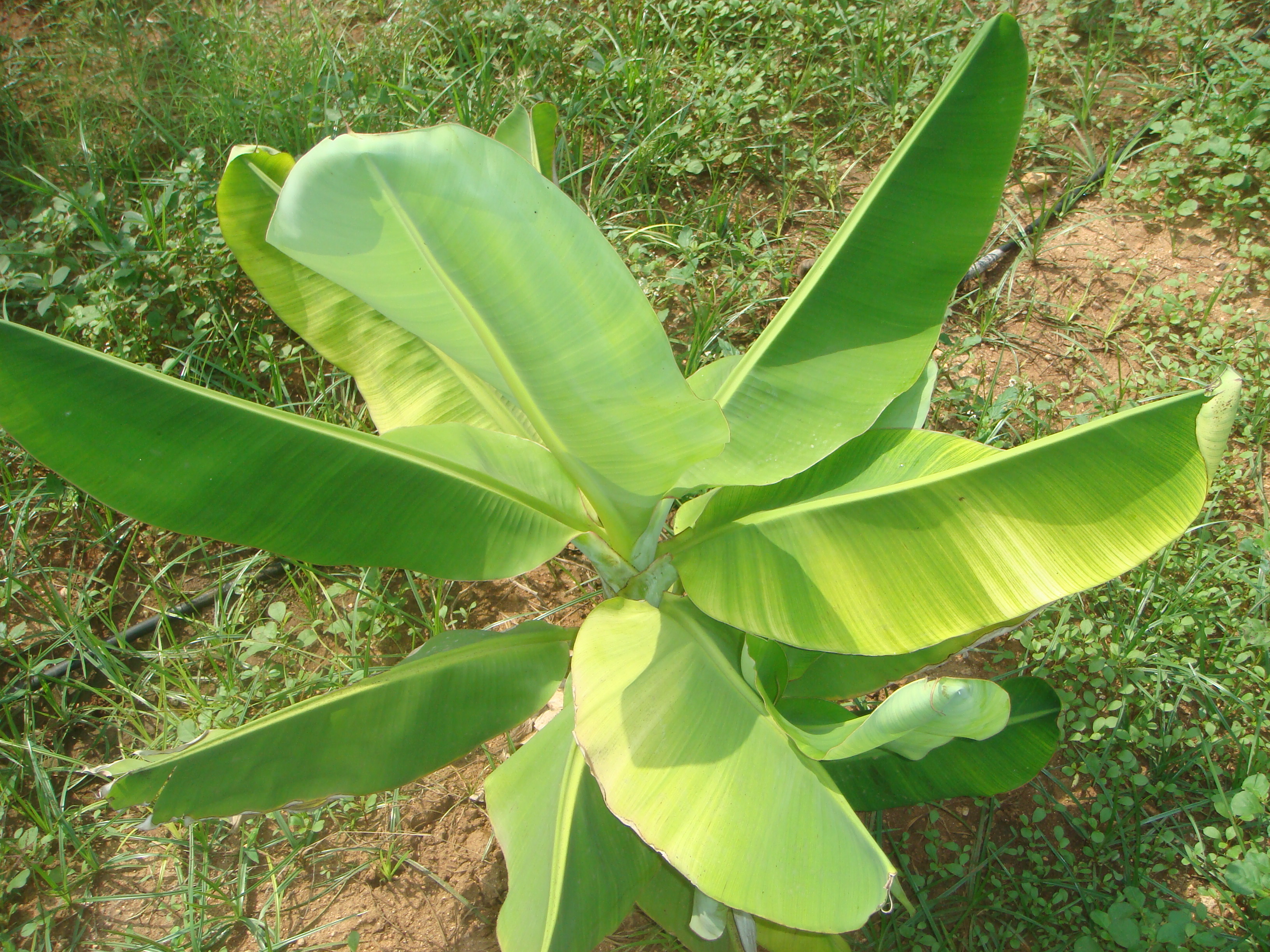
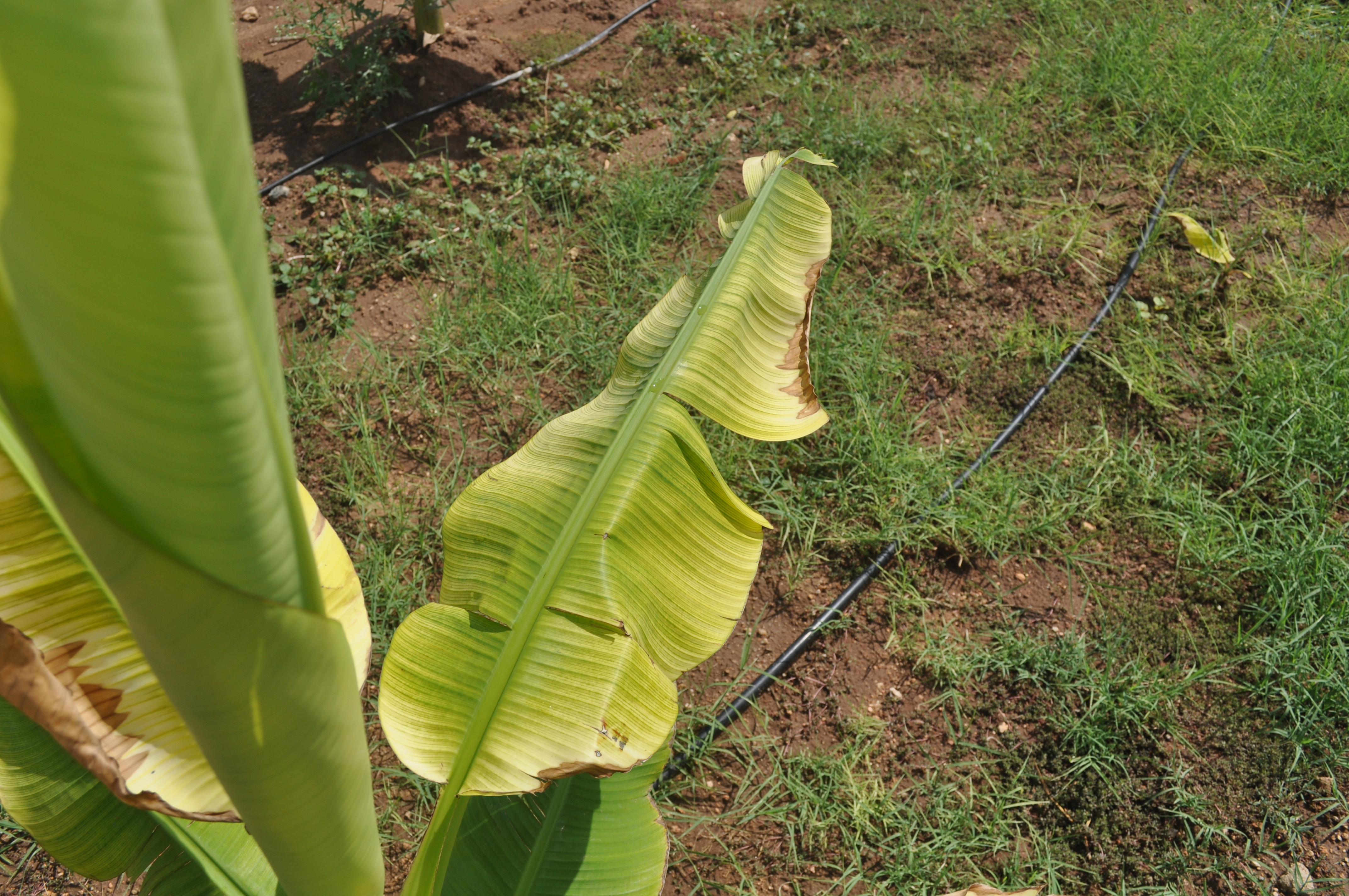
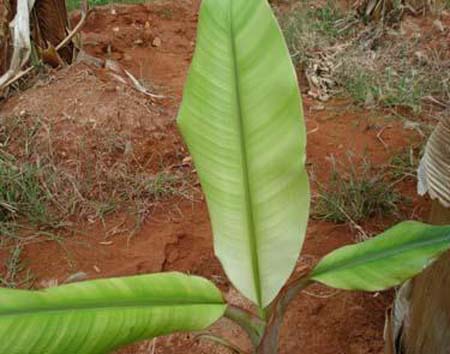
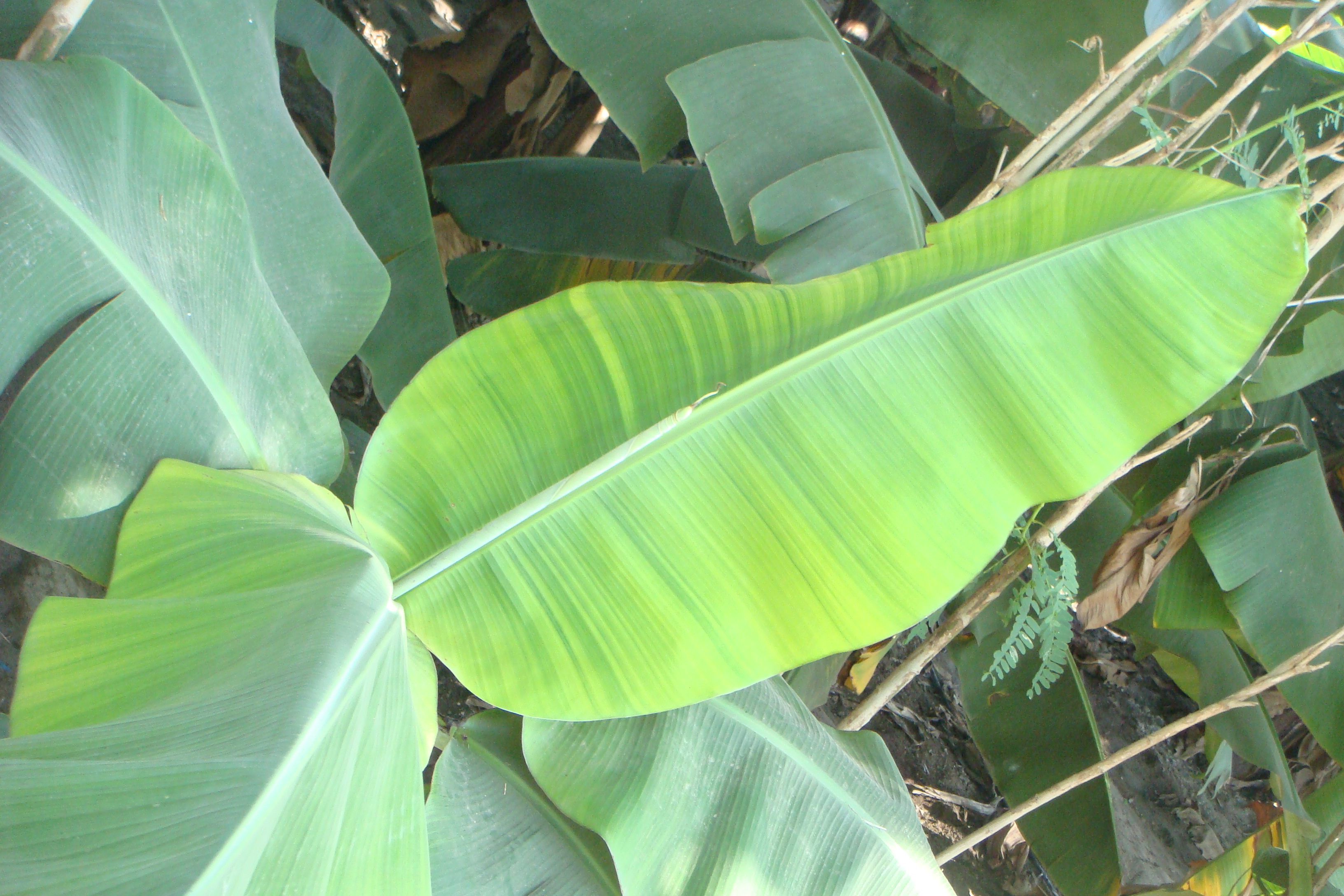
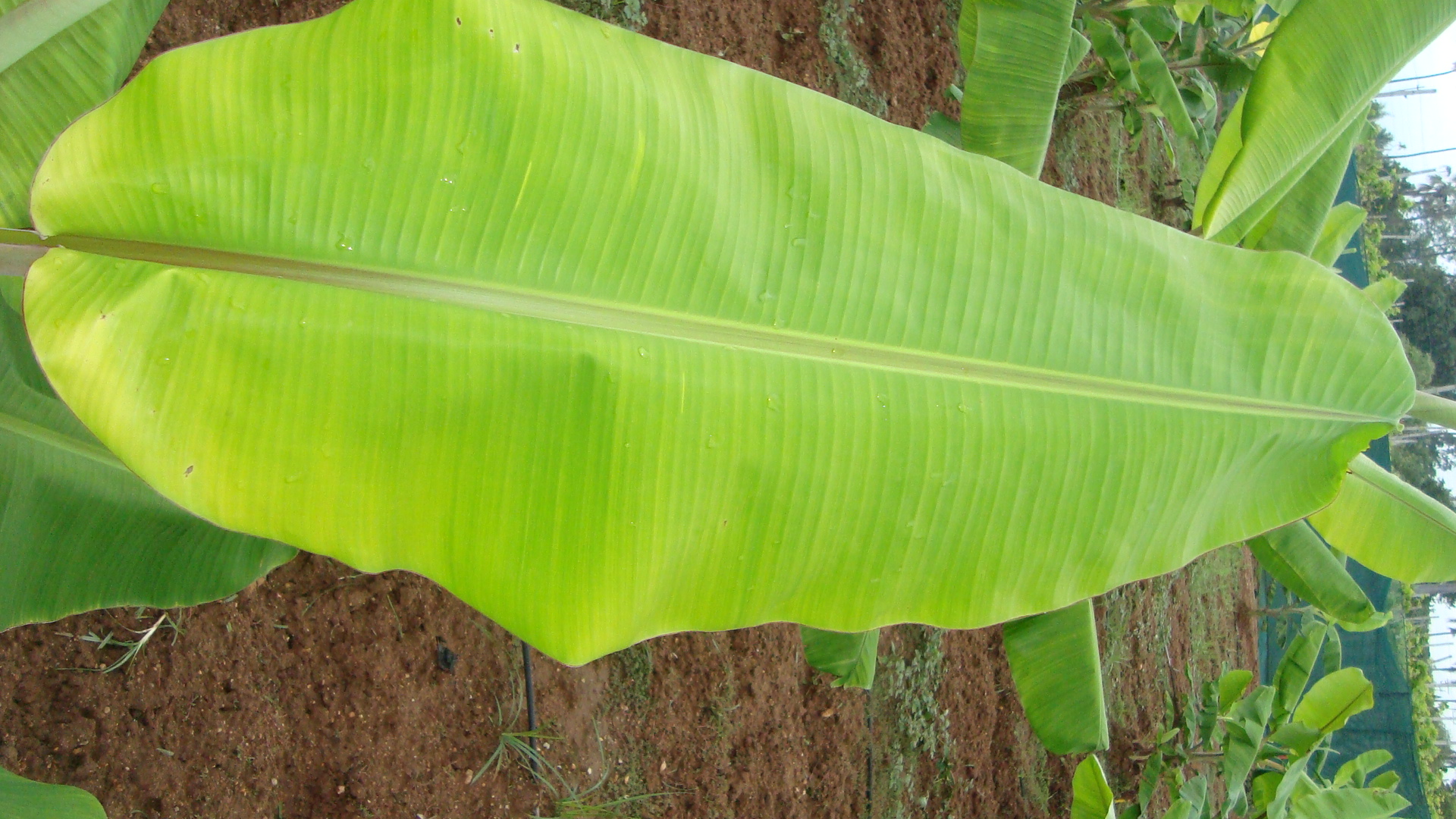
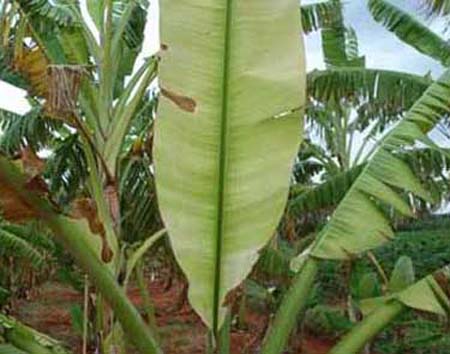
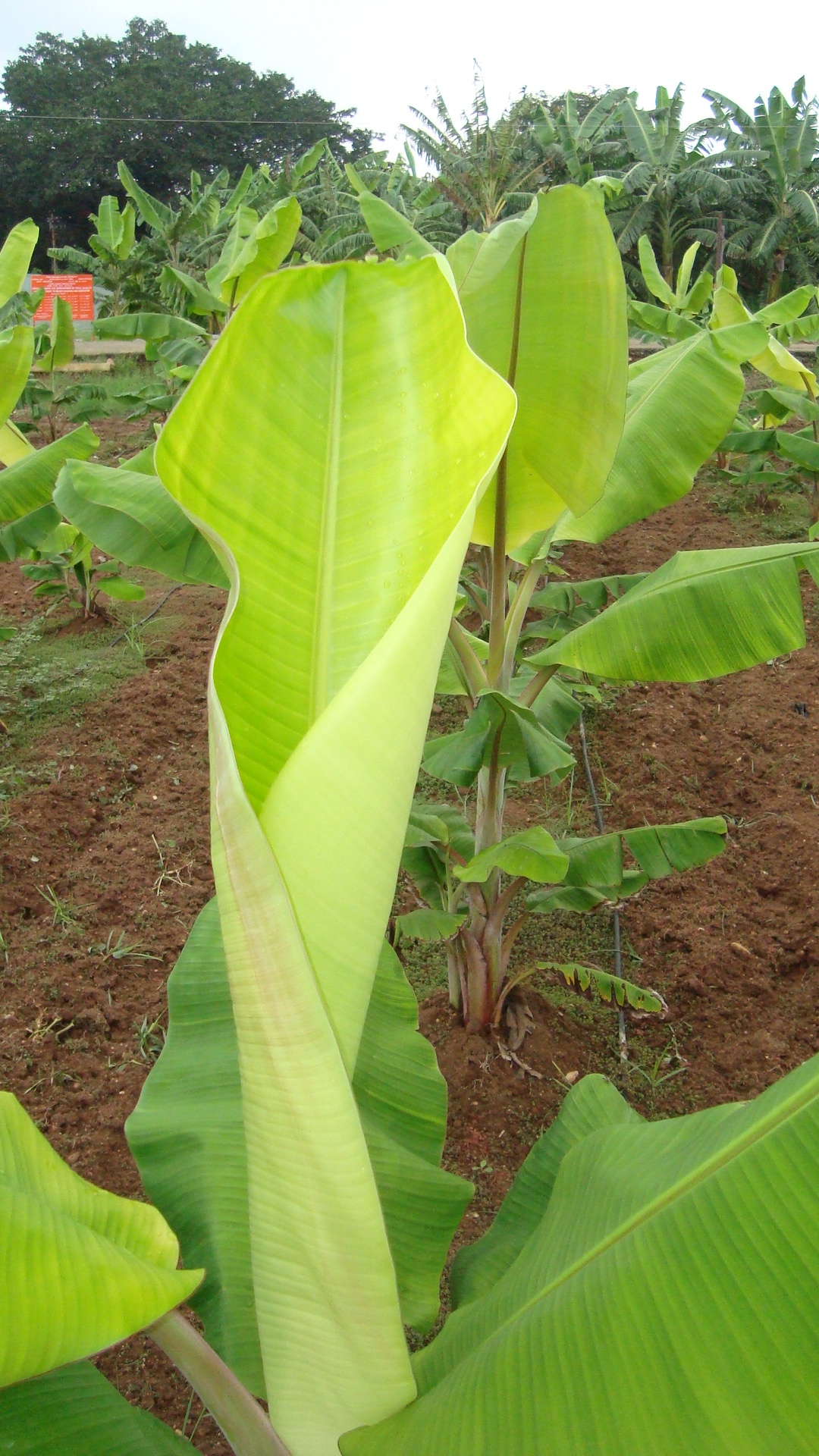
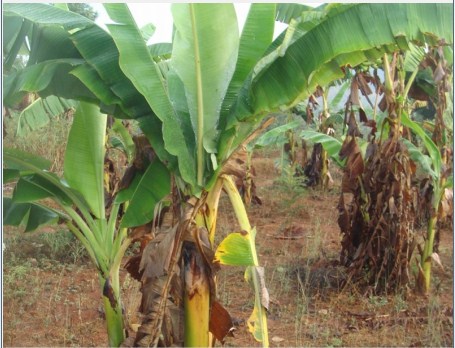
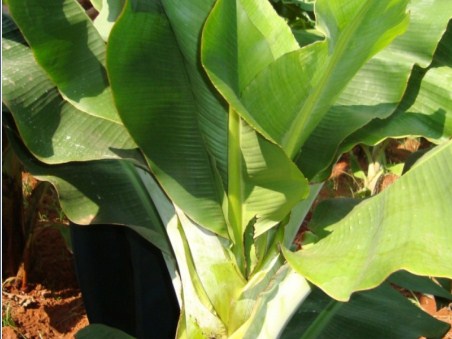
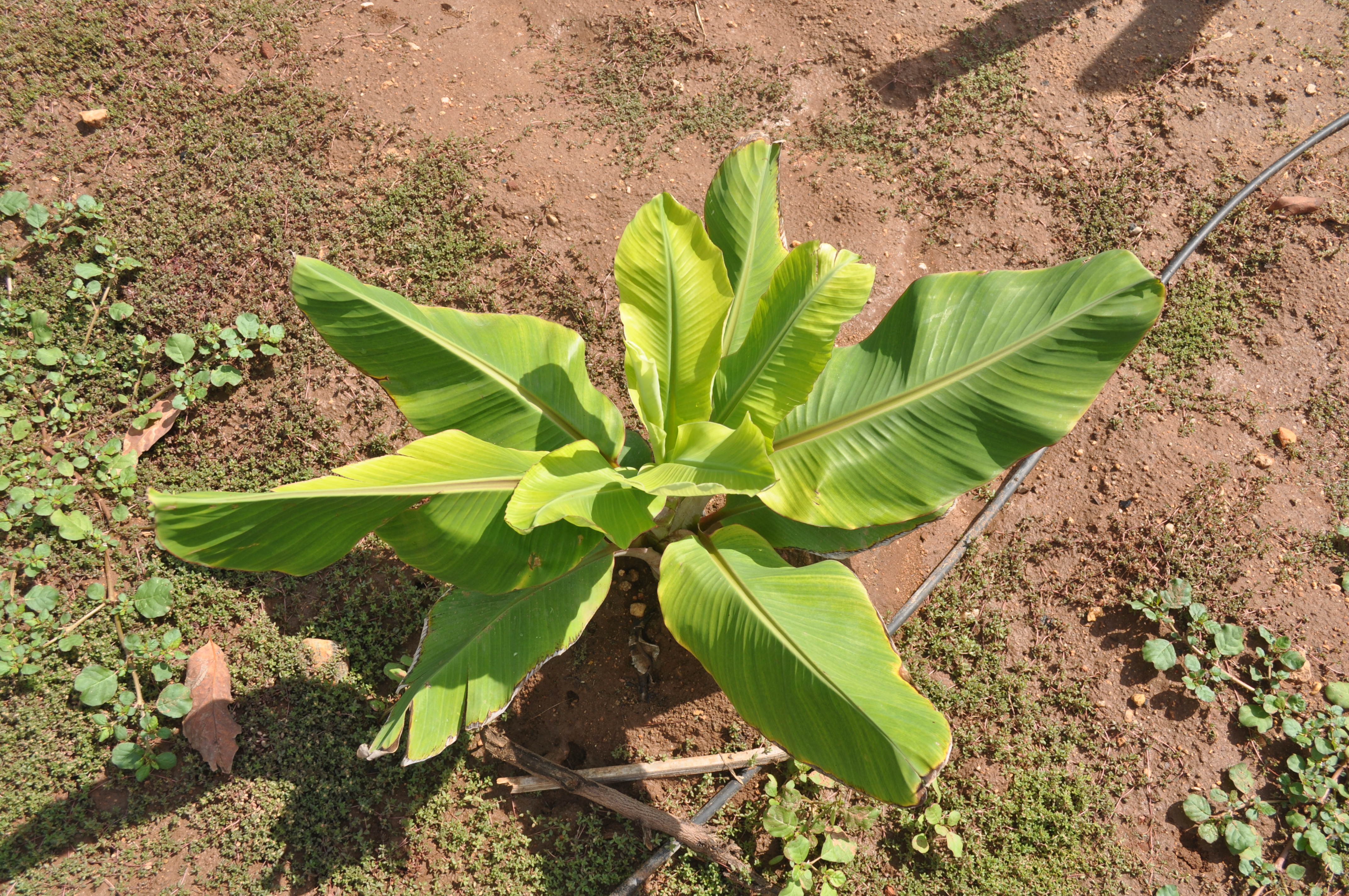
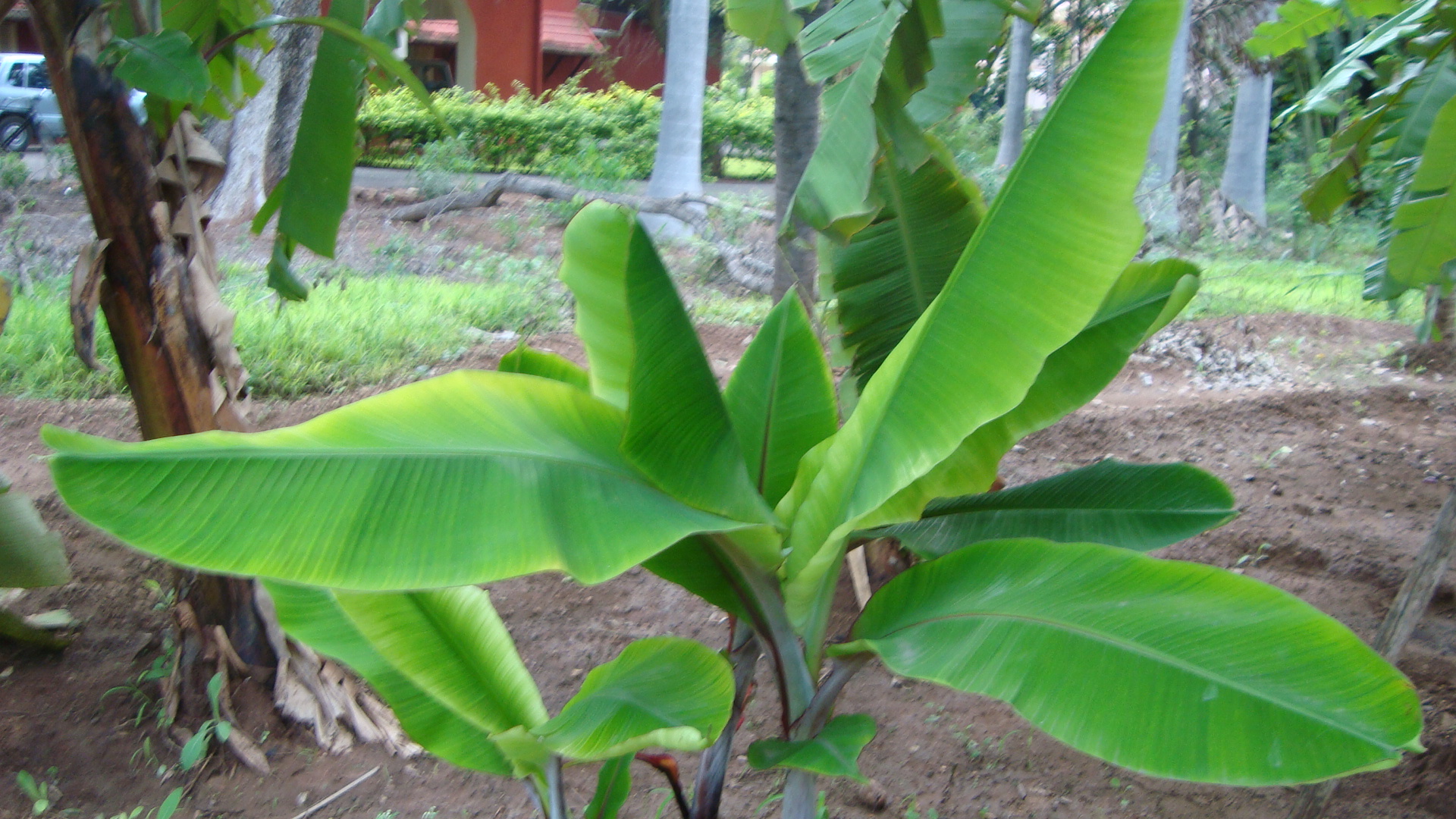
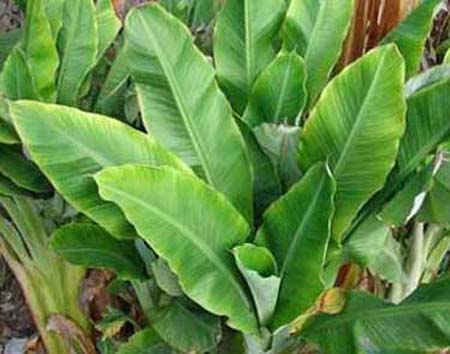
Symptoms of deficiency appear on mature and lower leaves.
Nitrogen Deficiency reduces green production and causes yellowing of leaves.
Severely affected leaves turn pink.
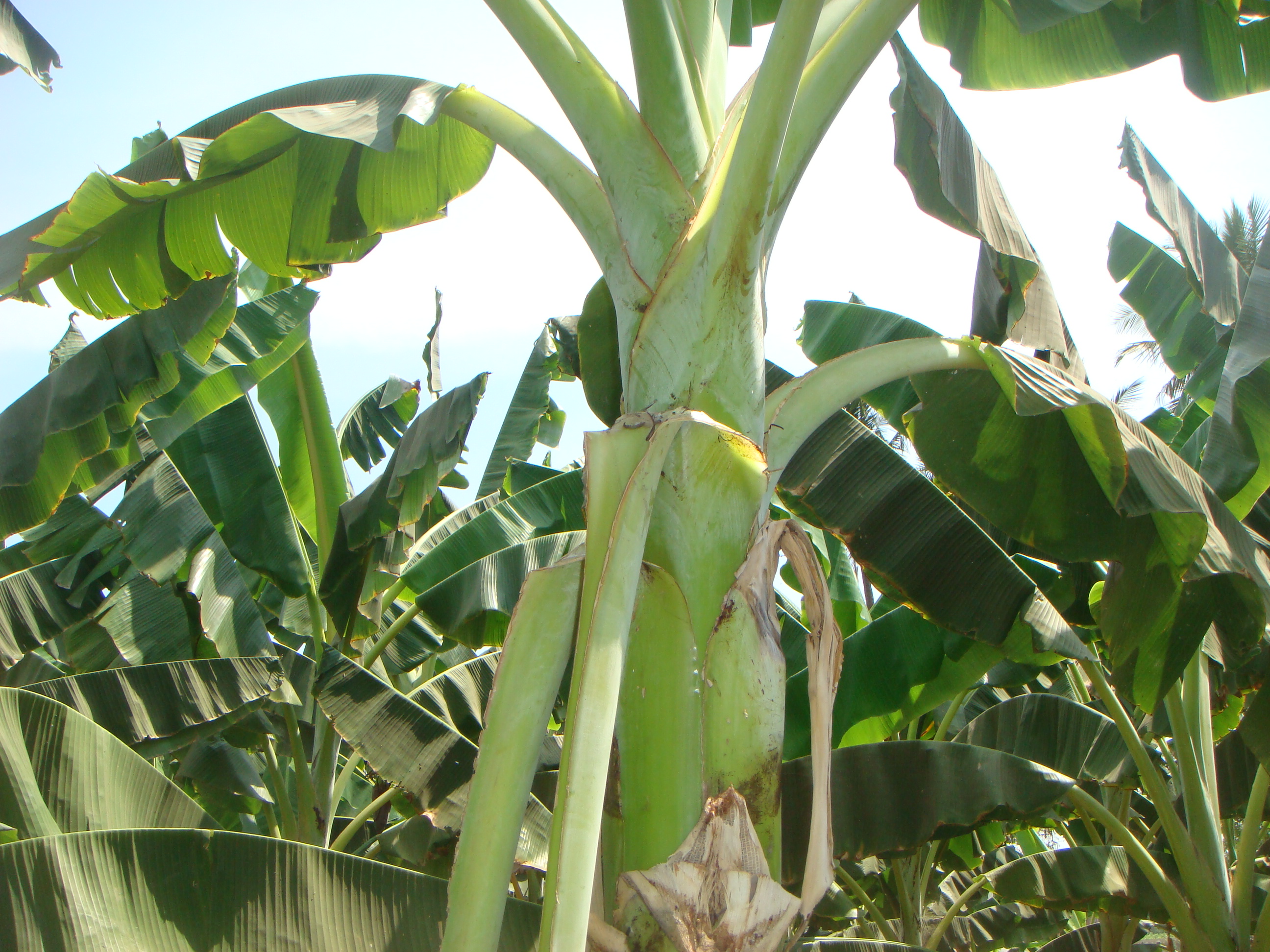
Stunted plant growth.
Decreased leaf and stem growth rate.
Bunch weight and quality decrease.
Reduces the production of rhizome
Management
For determining the severity of the deficiency, soil analysis has to be done
Application of quick releasing nitrogen fertilizer like urea, according to the results of the soil test.
Frequent application of organic growth boosters is also beneficial
Phosphorus (P)
Symptoms
Deficiency of phosphorus affects nutrient uptake as it is an essential nutrient for root growth.
Banana height is limited to 2 feet.
Yellowing of leaf margins, leaf curling, bluish-green coloration of new leaves and browning of leaves are the main symptoms.
Bunch weight and quality decrease
Management
Ensure that recommended amount of fertilizer is applied on regular time.
For determining the severity of the deficiency, soil analysis is to be done
Use fertilizers such as single superphosphate for quick correction or bone meal or rock phosphate for long-term correction.
In the pH range of 6.2-7.0, phosphorus is readily absorbed by the roots.
Addition of biofertilizers including phosphorus solubilizing bacteria along with organic manure helps to increase the availability of phosphorus
Potassium (K)
Symptoms
Symptoms of deficiency appear on mature and lower leaves.
Symptoms are yellowing from outer to inner leaf and subsequent defoliation
Under severe deficiency conditions, brown areas with moisture are seen on the banana shoots.
Produces malformed fruits.
The quality of fruits decreases
Management
In the pH range of above 6, Potassium is readily available.
Maintain pH by addition of lime/dolomite
Improve the soil fertility by adding organic matter and wood ash.
For determining the severity of the deficiency, soil analysis is to be done
Use Muriate of Potash (MOP) according to the results of the soil test. Split application is preferable.
Apply foliar sprays of sulphate of potash (SOP) (10 gm/litre of water) and wetting agents in the morning as an immediate remedy
Calcium (Ca)
Symptoms
Symptoms appear on new leaves.
Abnormally shaped leaves
Thickened leaf veins on new leaves
Yellowing of leaf margins
Management
Analysis of pH in the soil
If the soil is acidic apply lime 1kg/plant (4 split doses 250 gram each)
High phosphorus levels lead to calcium deficiency.
In alkaline soil application of Gypsum is preferable
Boron is needed for calcium utilization So a its deficiency can also lead to calcium deficiency.
Magnesium (Mg)
Symptoms
The center of the leaves is yellow and the edges are green.
Severely affected leaves develop yellowing and browning followed by leaf death.
The leaf blades are separated from the banana plant.
Plants are susceptible to disease
Management
Do the soil analysis and confirm the deficiency.
Addition of Magnesium sulphate (32 kg/ acre) in bands near plants.
Long-term usage of dolomite will reduce magnesium deficiency
Magnesium and potassium fertilizers should not be applied together
Sulphur(S)
Symptoms
Deficiency symptoms first appear on younger leaves.
Younger leaves turn yellow and older leaves appear green.
Small bunches are formed
Edges of floor burn as deficiency increases
Management
Application of sulphur-containing fertilisers, such as Factamfos, Ammonium sulphate, Single superphosphate, etc., reduces the deficiency.
In sulphur deficient soils, apply sulphur dust (10 kilogrammes per acre).
Deficiency in alkaline soil can be reduced by application of gypsum
Addition of organic material improves sulphur availability in the soil.
Burning of organic waste leads to sulphur deficiency
Boron (B)
Symptoms
Young leaves show yellowing along the veins.
Stunted plant growth.
Leaves bloom late
Poor quality fruits
Management
Analysis of soil to confirm the deficiency.
Application of borax (4 kg/ acre) into the soil
Addition of borax (1 gram / litre of water) as foliar spray.
Avoid the combined application of Boron and calcium.
Application of borax with ammonium fertilizers should be avoided.
Copper (Cu)
Symptoms
Both young and old leaves show symptoms of chlorosis and curve towards the base, which gives an umbrella like appearance to the plant
Size of leaves reduced.
Management
Soil testing and analysis
Addition of organic matter
Apply copper sulphate 800 gram/acre
Iron (Fe)
Symptoms
Deficiency symptoms first appear on younger leaves.
Deficiency is more common in alkaline soils
Leaves turn yellow and veins appear dark green
Management
Iron content in Kerala soils is often high. So, get a soil test to determine the reason for the problem
Low potassium levels lead to iron deficiency
Addition of Ferrous Sulphate (6 kg/ acre) into the deficient soils.
Manganese (Mn)
Symptoms
Margins of younger leaves turn yellow.
Black spots appear on the fruits.
Management
Soil Analysis
Application of Manganese Sulphate ( 5 gram per litre of water) as foliar spray
Zinc (Zn)
Symptoms
Deficiency symptoms first appear on younger leaves
Yellowing occurs between the leaf veins
Leaves are lance shaped
Yield and quality decrease
Magenta color is seen on the underside of the leaf near the tip
Management
The optimal pH range for zinc availability is 5 to 7.5.
Confirm deficiencies by doing soil testing.
Apply zinc sulphate to deficient soils (8 kg/ acre)
Avoid the application of zinc and phosphate fertilizers at the same time
In severe cases, foliar spraying of Zinc sulphate (2 gram/litre of water) with Calcium carbonate (2.5 gram/litre of water) can be advocated in morning hours.