

Papaya (Carica papaya)
Papaya Leaf Curl (Papaya leaf curl virus)
- Transmission: white flies (Bemisia tabaci)
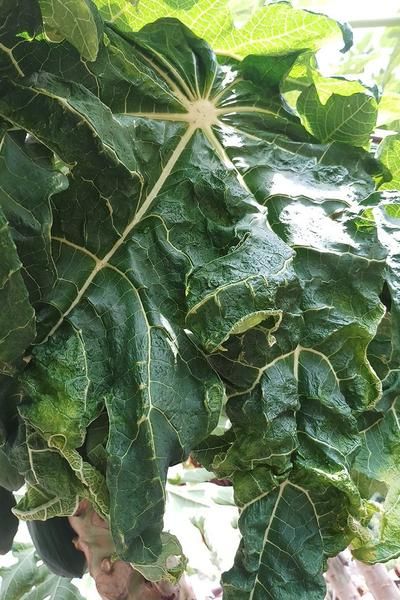
Symptoms
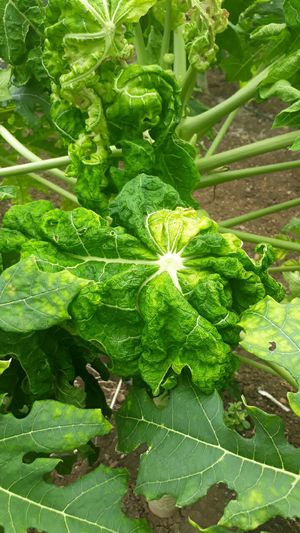
- Curling, crinkling and distortion of leaves
- Reduction of petiole, internodes and main stem
- Leaves reduce in size and show vein clearing
- Leaf margins are rolled downwards and inwards in the form of inverted cups
- Leaves of infected plants turn dark green and become leathery and brittle
- The interveinal areas of the affected leaves are raised on the upper surface due to uneven growth and twisting of veins
- Petioles- twisted in zig zag manner and bends towards the main trunk
- Enations are produced on the lower surface of the leaves
- Affected plants fail to flower and in case of occasional flowering – few, small and abnormal fruits are produced
- In advanced stages of diseases- defoliation take place and plant growth is arrested
Management
- Uproot the virus affected plants
- Avoid growing tomato, tobacco near papaya.
- Control whitefly vector.
- Removal and destruction of the affected plants is the only control measure to reduce the spread of the disease.
- The field should be kept weed free. Tobacco, tomato. sunnhemp, cape gooseberry, chilli, petunia, Datura stramonium, Zinnia elegans etc. should not be grown nearby papaya field.
Chemical Control
| Sl.No | Generic Name | Trade Name | Color code | Dosage/litre | Knapsack Sprayer (Capacity 10L) | Recommendation | Remarks | |
|---|---|---|---|---|---|---|---|---|
| Per acre (200 L) | Per hectare (500 L) | |||||||
| 1 | Dimethoate 30 EC | Nugor, Rogor, Tagor, Tara 909 | Yellow | 2 ml/ litre of water | 20 ml | 400 ml | 1000 ml | |
| 2 | Malathion 50 EC | Agromala, Agromala Malathion, Celthion, Hilmala, Kthion, Malaacid, Simala Milthion, Tagthion Malamar, Thisol | Blue | 2 - 3 ml/ litre of water | 20 - 30 ml | 400 - 600 ml | 1000 - 1500 ml | |
Extremely Toxic

Highly Toxic

Moderately Toxic