

Chrysanthemum (Chrysanthemum indicum)
Stem Rot (Fusarium solani)
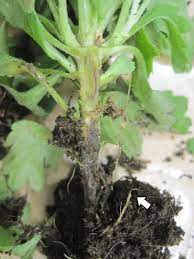
Symptoms
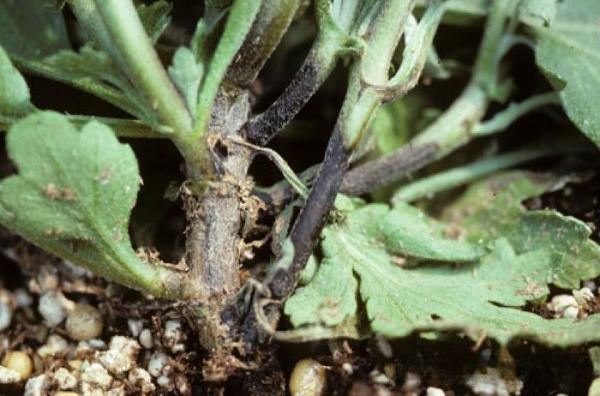
- The disease is noticed in cuttings, stock plants and flowering plants.
- It is serious during rainy weather.
- The affected plants show different symptoms such as leaf chlorosis, necrosis, decay and discoloration of internal portion of the stem.
- When the flower buds are about to open, small dark streaks are seen at the base of the stem.
- Root decay is noticed only in advanced stages of infection.
- In many cases the infection is devoid of any external symptoms and roots also look healthy.
- In some cases stem and root rot are confined to one side of the stem, the other side remaining healthy.
Management
- Cuttings should be taken from healthy plants.
- Following strict field sanitation, rouging of infected plants and crop rotation helps to minimize the disease incidence.
Chemical Control
| Sl.No | Generic Name | Trade Name | Color code | Dosage/litre | Knapsack Sprayer (Capacity 10L) | Recommendation | Remarks | |
|---|---|---|---|---|---|---|---|---|
| Dosage/acre (200 L) | Dosage/hectare (500 L) | |||||||
| 1 | Carbendazim 50 WP | Bavistin, Benfil, Bengard, Benlate, Benmain, Bensaan, Carben, Carziim50, Dhanustin, Dhanustin 50 WP, Fungiguard, Gancarzin50, Glizim, Mintho, Tagstin, Tiara, Zoom | Green | 2 g/ litre of water | 20 g | 400 g | 1000 g | |
Extremely Toxic

Highly Toxic

Moderately Toxic