
Orchid (Dendrobium sp.)
Anthracnose (Colletotrichum sp. and Glomerella sp)
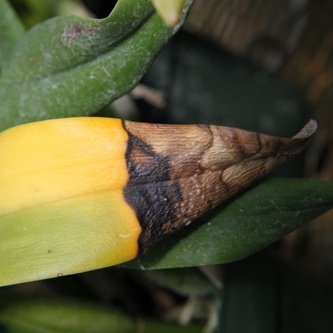
Symptoms
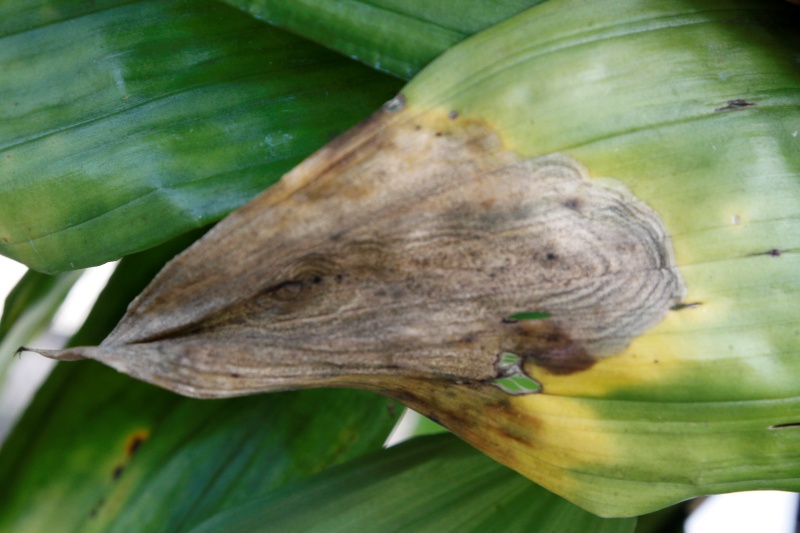
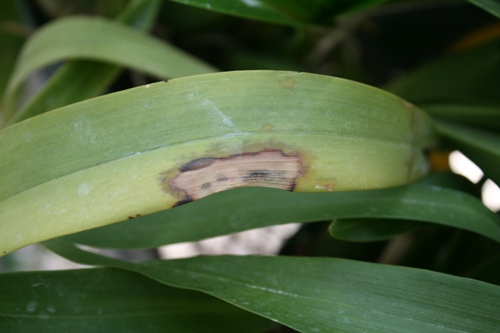
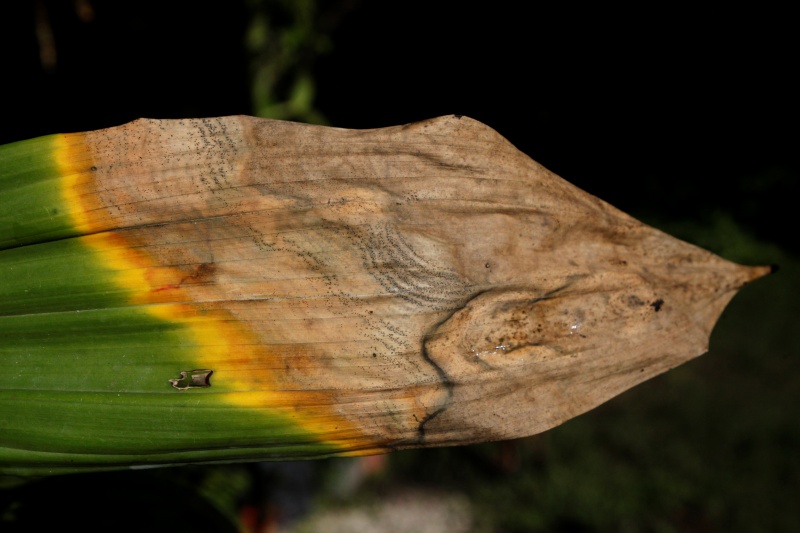
- Cause dark, sunken lesions on leaves, stems, and flowers.
- Leaves are mostly attacked.
- Leaf tips turn brown beginning at the apex, proceeding towards the base.
- Dark brown or light gray patches develop.
- Concentric rings or as numerous dark bands across the leaf are seen.
- Flowers develop watery, black or brown pustules which are usually raised and occur on the underside of older sepals and petals.
Management
- Adopt field sanitation, good air movement, and lower temperatures (if possible) and increased light to reduce the spread of this disease.
Chemical Control
| Sl.No | Generic Name | Trade Name | Color code | Dosage/litre | Knapsack Sprayer (Capacity 10L) | Recommendation | Remarks | |
|---|---|---|---|---|---|---|---|---|
| Dosage/acre (200 L) | Dosage/hectare (500 L) | |||||||
| 1 | Carbendazim 50 WP | Bavistin, Benfil, Bengard, Benlate, Benmain, Bensaan, Carben, Carziim50, Dhanustin, Dhanustin 50 WP, Fungiguard, Gancarzin50, Glizim, Mintho, Tagstin, Tiara, Zoom | Green | 1 g/ litre of water | 10 g | 200 g | 500 g | 2 | Mancozeb 75 WP | Devidayal M-45, Dhanuka M 45, Dhanuka M-45, Dithane, Dithane M-45, Hilthane, Hindustan M 45, Indofil M 45, Izeb M-45 Manzate, Luzen-45, Macoban, Macoban M-45, Mancosaan, Mancosaan M-45, Maneb Manzane, M-Guard, Savour M 45, Tata M-45 Eurofil-NT, Uthane M-45, Veera, Zinthane | Green | 3 g/ litre of water | 30 g | 600 g | 1500 g |
Extremely Toxic

Highly Toxic

Moderately Toxic