

Cashew (Anacardium occidentale)
Tea Mosquito Bug (Helopeltis spp)
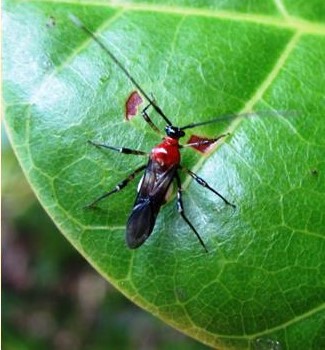
Symptoms
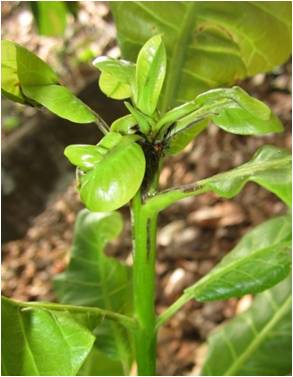
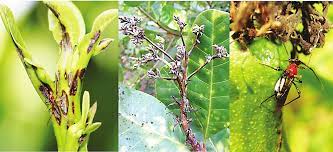
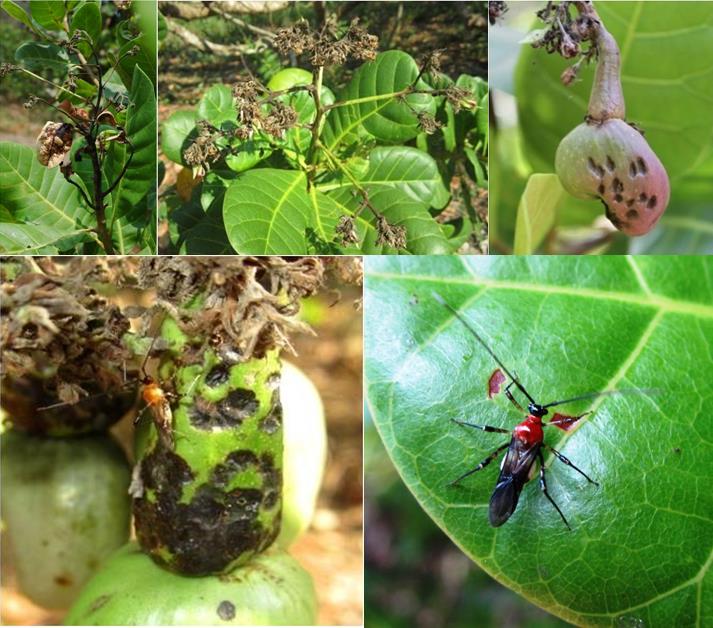
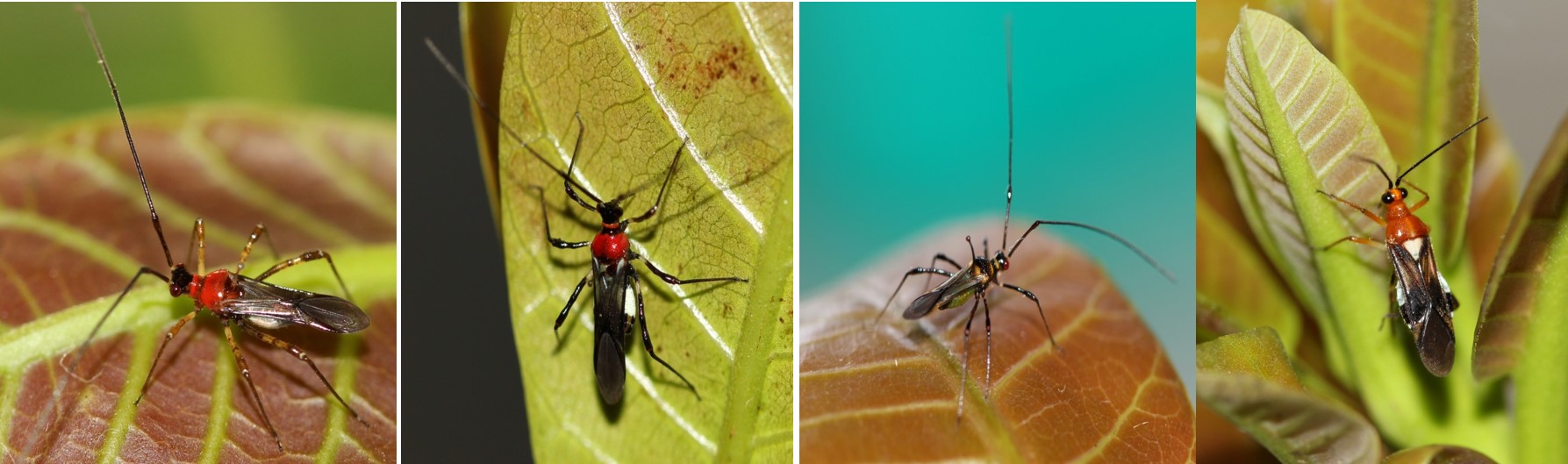
- Pest usually appears with the emergence of new flushes and panicle.
- Drying of inflorescence and dieback of shoots are the symptoms.
- Typical feeding damage symptom is the formation of necrotic lesion around the point of infestation.
- The lesions on shoots and panicles coalesce and ultimately result in shoot blight or blossom blight
Management
- Spray Pongamia oil (2 ml/litre of water) or Beaveria bassiana (20 gram/litre of water)
- Remove the volunteer neem plants in and around cashew plantation.
- The eggs of the mosquito bug are naturally parasitized by Telenomus spp. and Erythmelus helopeltidis.
- Spiders such as Oxyopes schireta and Hyllus spp. are efficient predators of mosquito bug.
- Red ant Oecophylla smaragdina should be encouraged in cashew plantation as it will repel the pest.
Chemical Control
| Sl.No | Generic Name | Trade Name | Color code | Dosage/litre | Knapsack Sprayer (Capacity 10L) | Recommendation | Remarks | |
|---|---|---|---|---|---|---|---|---|
| Dosage/acre (200 L) | Dosage/hectare (500 L) | |||||||
| 1 | Lamda cyhalothrin 5 EC | Agent, Excel Glow Constant, Kabhaddi, Kunfu, Lambda 2.5, Lambda Star Veera, Lancer Lamdex, Marsjudo, Ninja-R, Reeva, Samurai Tag Demand, Santri | Yellow | 0.6 ml | 6 ml | 120 ml | 300 ml | Avoid spraying Lambda cyhalothrin at the time of flowering, as they are highly toxic to honey bees. |
| 2 | Quinalphos 25 EC | Agroquin, Anuphos, Guin Guard, Tagquin, H.LX, Hilquin Geelux, Kinalaux Exalux, Krilux, Quinaswan Flash, Quincid Starlux, Rambalux Quinolux | Yellow | 2 ml | 20 ml | 400 ml | 1000 ml | First spray: Apply when new leaves start growing in October–November.
Second spray: Apply when flower clusters (panicles) start appearing in December–January. Third spray: Apply after flowering is complete or when fruits start forming in January-February. |
| 3 | Thiamethoxam 5 WG | ACT 150, Actara, Click, Exaam, Krioxam, Maxima, Renova, Slayer, Suckgan, Tagsulf, Tagxone, Theme, Wonderex | Blue | 0.2 g | 2 g | 40 g | 100 g | First spray: Apply when new leaves start growing in October–November.
Second spray: Apply when flower clusters (panicles) start appearing in December–January. Third spray: Apply after flowering is complete or when fruits start forming in January-February. |
Extremely Toxic

Highly Toxic

Moderately Toxic