

Marigold (Tagetes spp.)
Powdery Mildew(Oidium sp)
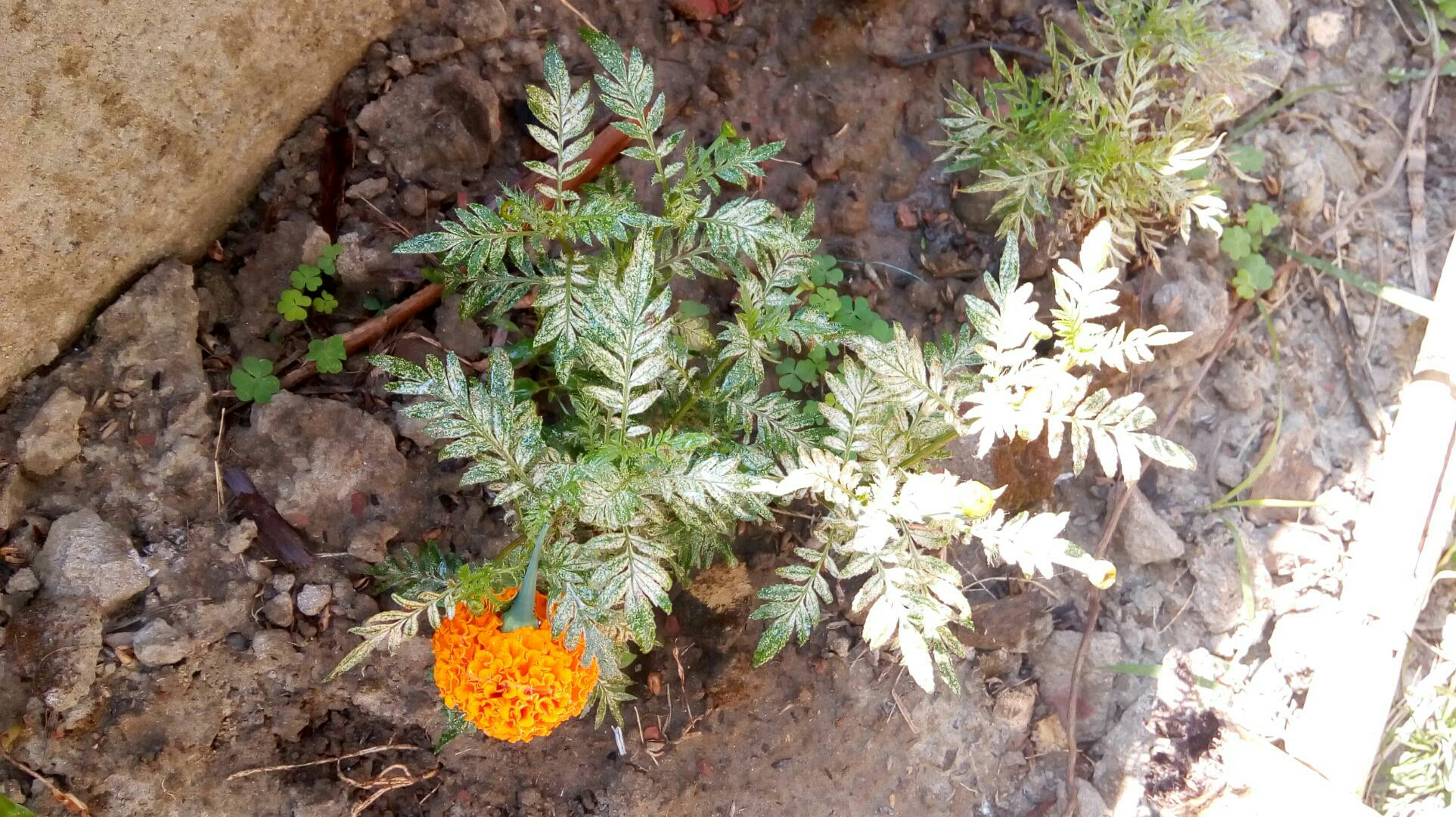
Symptoms
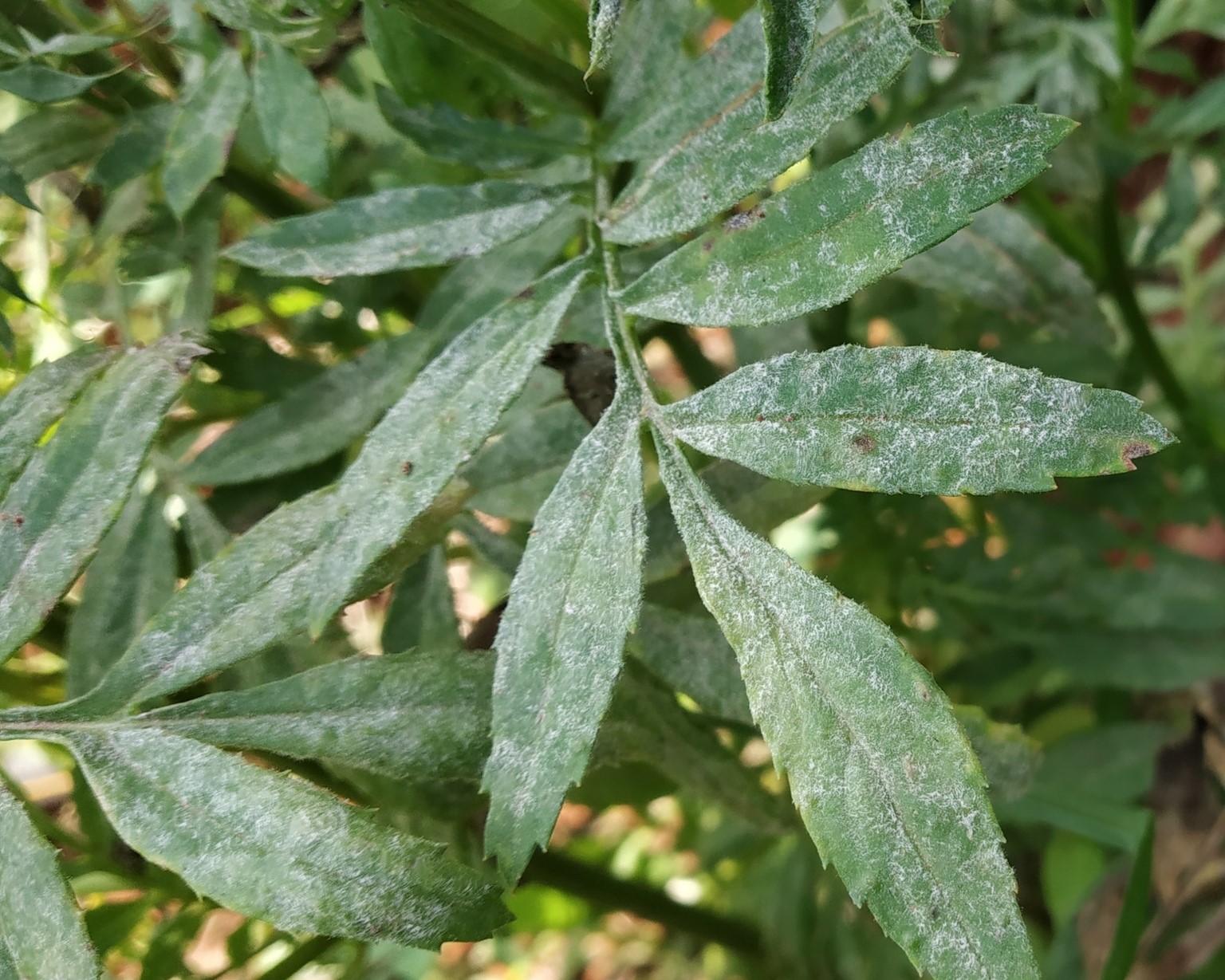
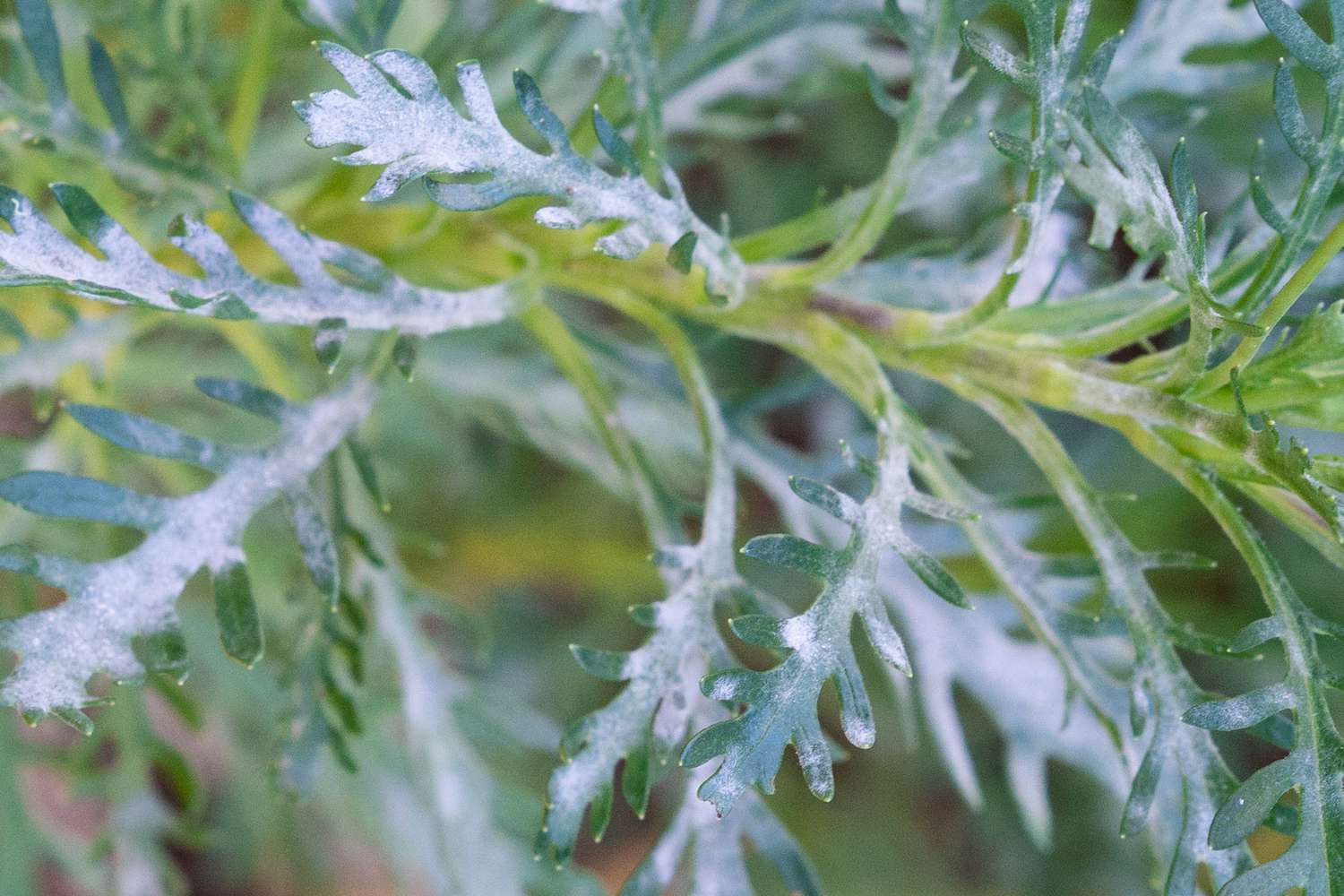
- Superficial white powdery growth on stems and leaves.
- Lower leaves are mostly affected.
- Cottony white spots appear on the infected leaves.
- Heavily infected leaves become yellow, and then become brown and dry.
- Infected tissues are distorted and show crinkling.
Management
- Sulphur dusting (8 kg / acre) in the morning hours to control the disease.
- The practice of using Baking soda (5 gram/litre of water) is also found effective.
Chemical Control
| Sl.No | Generic Name | Trade Name | Color code | Dosage/litre | Knapsack Sprayer (Capacity 10L) | Recommendation | Remarks | |
|---|---|---|---|---|---|---|---|---|
| Dosage/acre (200 L) | Dosage/hectare (500 L) | |||||||
| 1 | Wettable sulphur 80 WP | Dhanusul 80 WP , Dhanusulf, Ganesulf, Insulf, Microsul, Sulfex, Sulfix 80 WPSulfex80, Tagsulf, Thiovit, Wettasul | Green | 2 g/ litre of water | 200 g | 400 g | 1000 g | 2 | Dinocap 48 EC | Arathane, Karathane | Blue | 2 ml/ litre of water | 20 ml | 400 ml | 1000 ml | 3 | Carbendazim 50 WP | Bavistin, Benfil, Bengard, Benlate, Benmain, Bensaan, Carben, Carziim50, Dhanustin, Dhanustin 50 WP, Fungiguard, Gancarzin50, Glizim, Mintho, Tagstin, Tiara, Zoom | Green | 1 g/ litre of water | 10 g | 200 g | 500 g |
Extremely Toxic

Highly Toxic

Moderately Toxic