
Rose (Rosa rubiginosa)
Black leaf spot (Diplocarpon rosae )
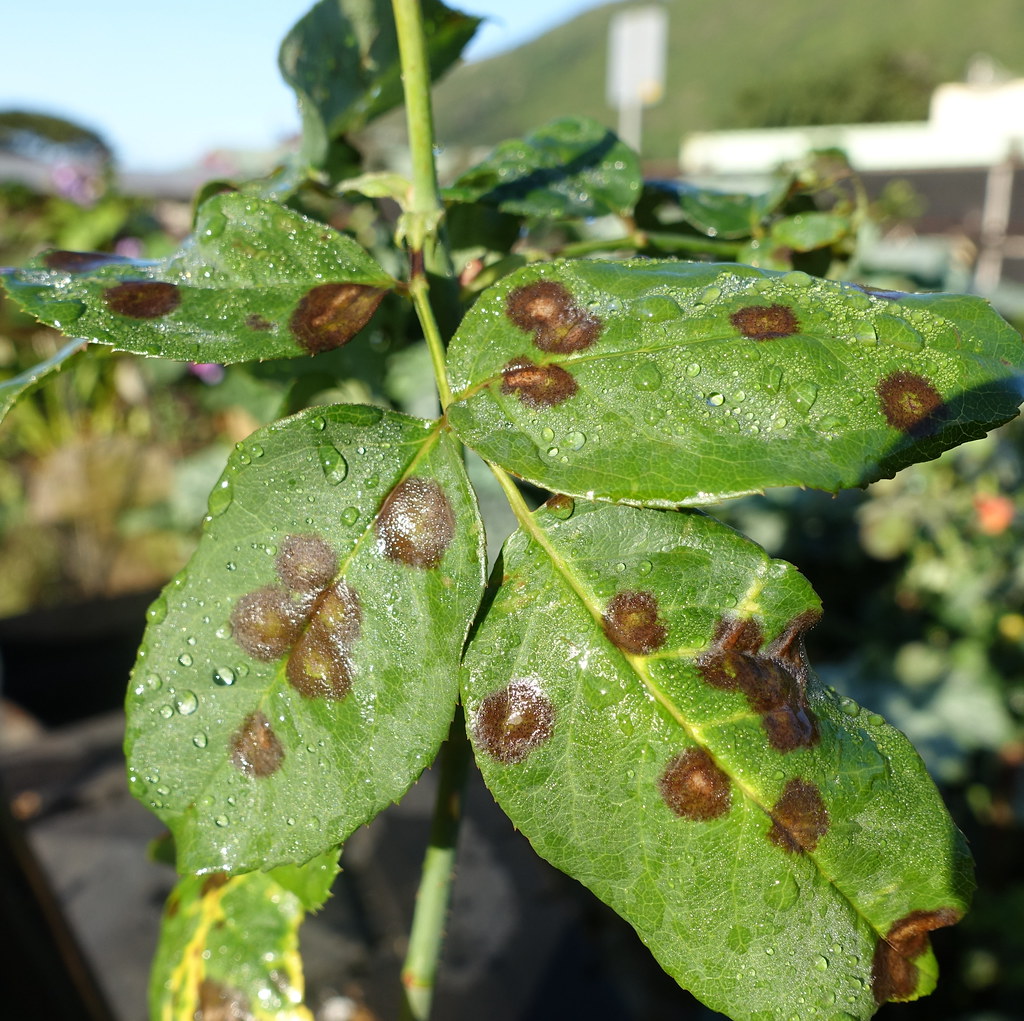
Symptoms
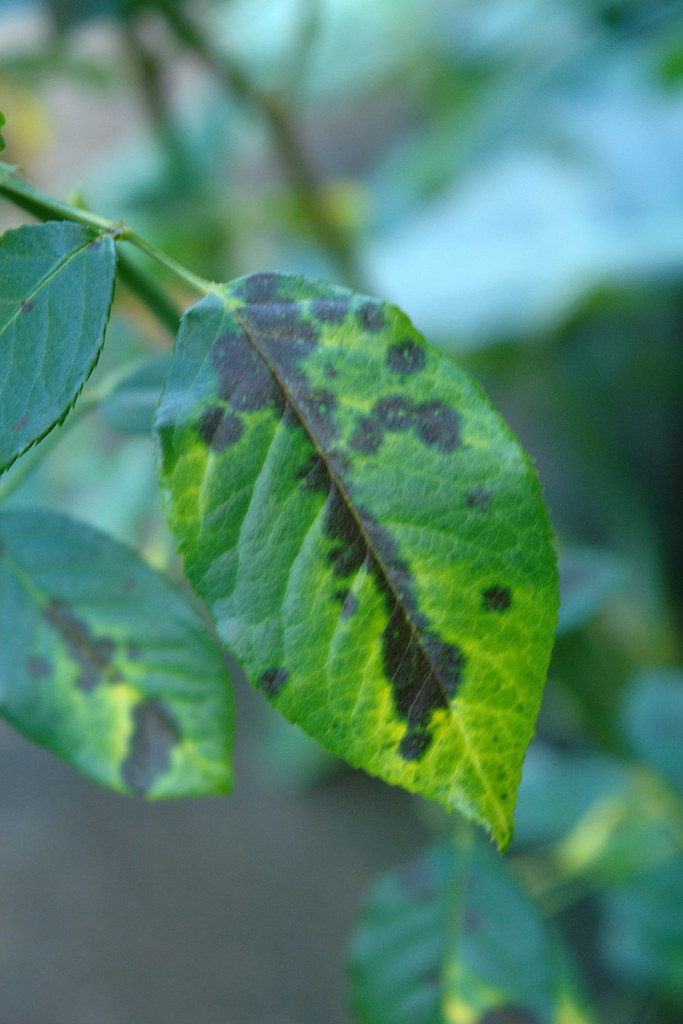
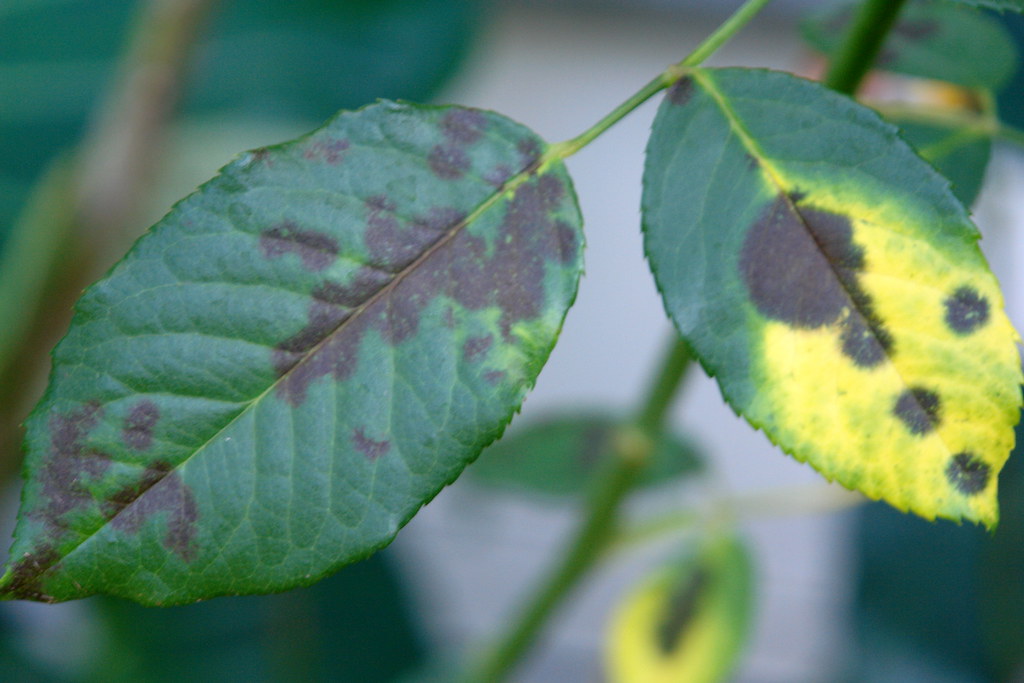
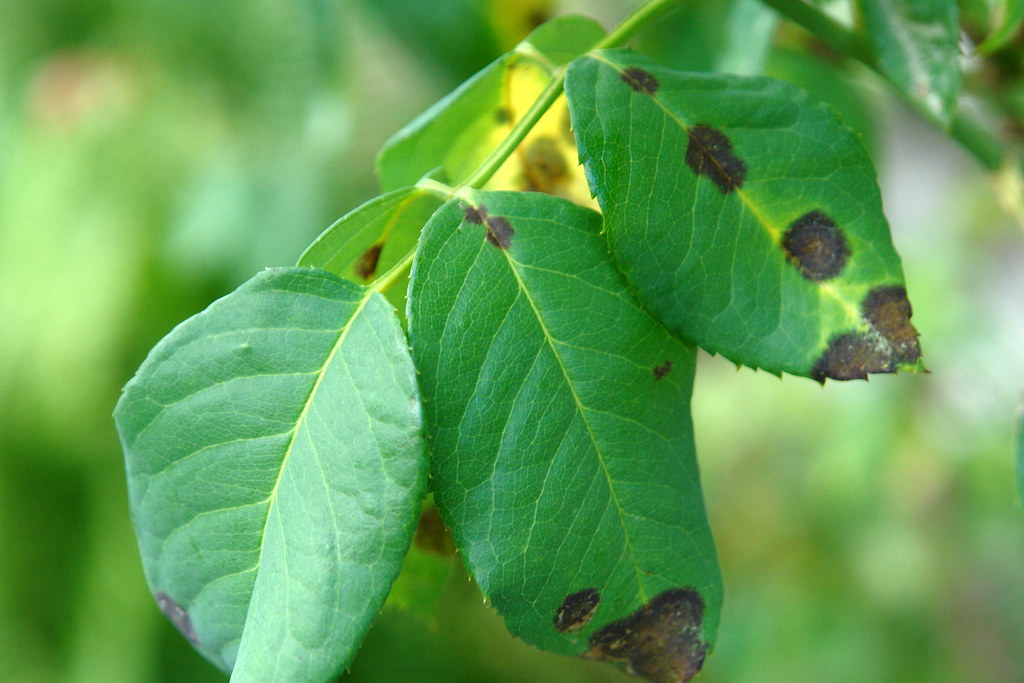
- Symptoms appear in the form of circular black spots ranging from 1/16 inch to 1/2 inch in diameter on the surface of leaves.
- The spots are frequently surrounded by a yellow halo.
- Infected leaves characteristically turn yellow and fall prematurely.
- This leaf spot can be distinguished from other leaf spots by characteristic fringed margin.
- The disease can cause almost complete defoliation of bushes.
- Cane may also get infected and develop reddishpurple raised irregular spots.
- The infected bush become weak and prone attack by cane dieback, stem canker and winter injury.
Management
- Observe good hygiene in the field.
- Collect diseased plant debris with a garden rake and destroyed it.
- Give pruning cuts at least one inch deep into the healthy wood.
Chemical Control
| Sl.No | Generic Name | Trade Name | Color code | Dosage/litre | Knapsack Sprayer (Capacity 10L) | Recommendation | Remarks | |
|---|---|---|---|---|---|---|---|---|
| Dosage/acre (200 L) | Dosage/hectare (500 L) | |||||||
| 1 | Carbendazim 50 WP | Bavistin, Benfil, Bengard, Benlate, Benmain, Bensaan, Carben, Carziim50, Dhanustin, Dhanustin 50 WP, Fungiguard, Gancarzin50, Glizim, Mintho, Tagstin, Tiara, Zoom | Green | 1g/ litre of water | 10 g | 200 g | 500 g | |
| 2 | Mancozeb 75 WP | Devidayal M-45, Dhanuka M 45, Dhanuka M-45, Dithane, Dithane M-45, Hilthane, Hindustan M 45, Indofil M 45, Izeb M-45 Manzate, Luzen-45, Macoban, Macoban M-45, Mancosaan, Mancosaan M-45, Maneb Manzane, M-Guard, Savour M 45, Tata M-45 Eurofil-NT, Uthane M-45, Veera, Zinthane | Green | 3 g/ litre of water | 30 g | 600 g | 1500 g | |
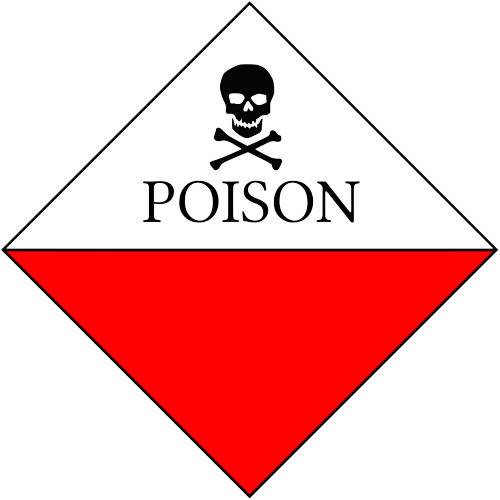
Extremely Toxic

Highly Toxic

Moderately Toxic