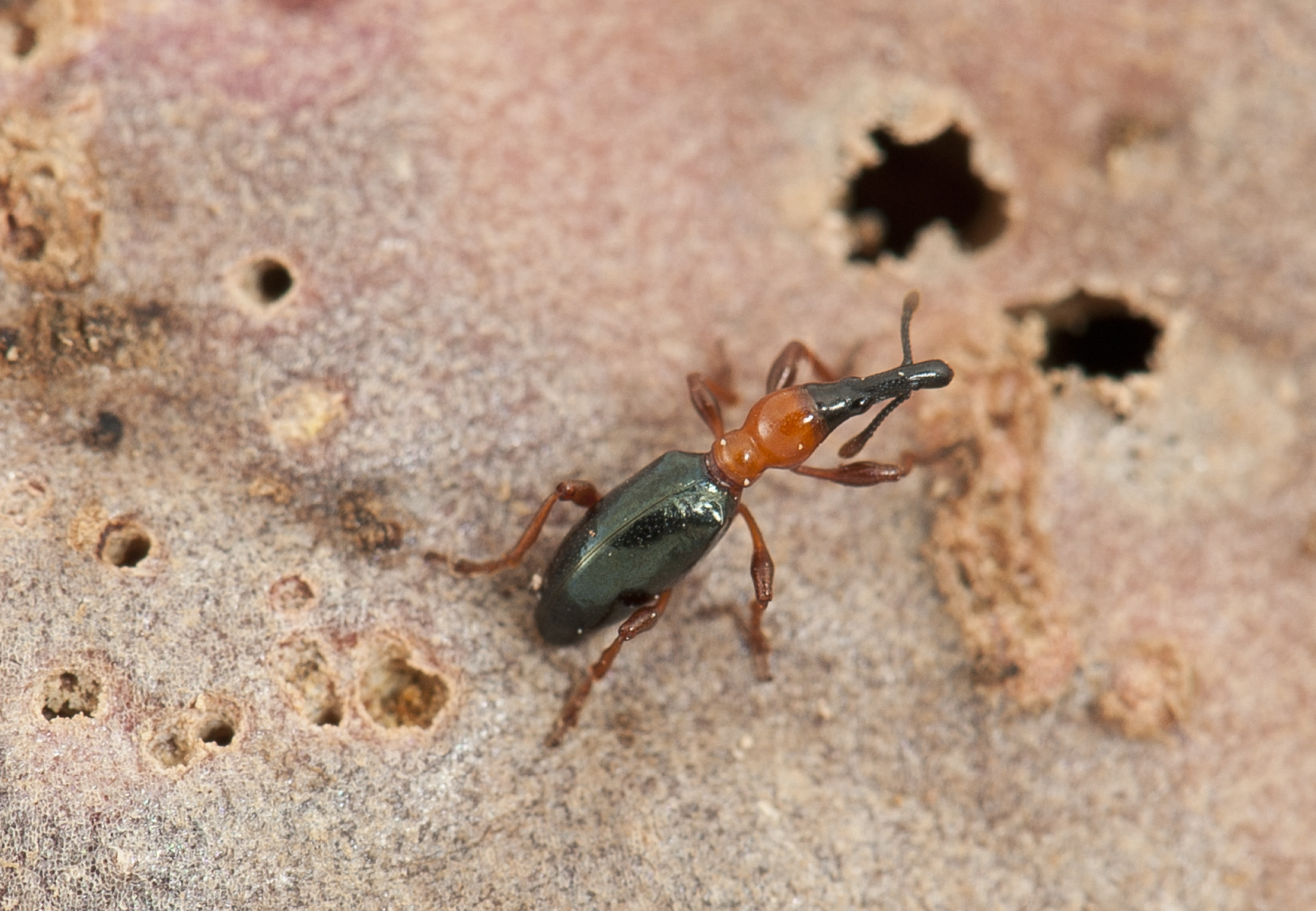
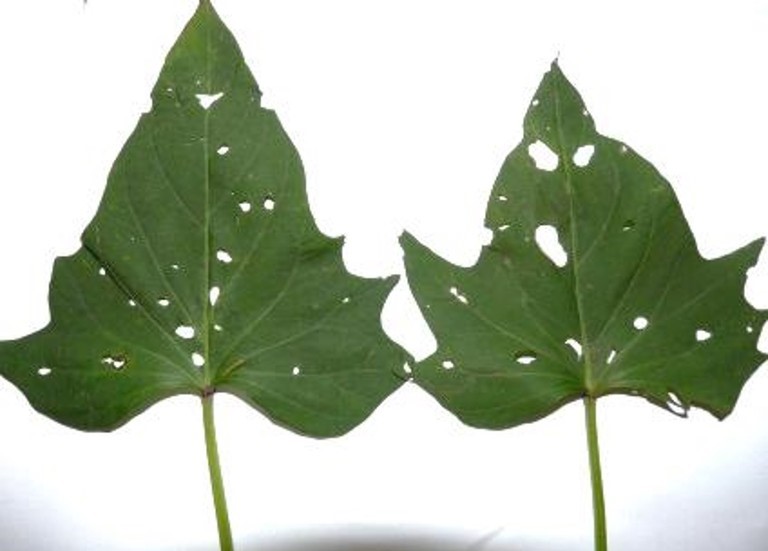
The grubs of the pest bore into the stem and feed on the soft tissues
It causes thickening and malformation of vines and often cracking of the tissue.
Discoloration, cracking, or wilting of damaged wines
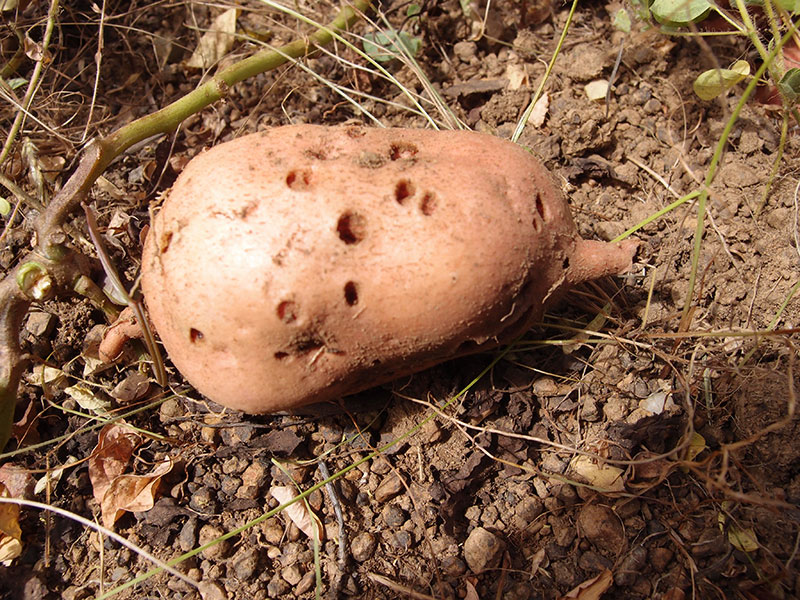
Adult weevils and the grubs bores into the tubers and make tunnels
Attacked tubers become spongy, brownish to blackish in appearance
Start rotting form the top and develop an unpleasant smell and a bitter taste
The tubers become unfit for human consumption
Management
Avoid planting sweet potatoes in the same area 2 years in a row, and plant well away from infested crops.
Select "clean" cuttings (25-30 cm long) from fresh young growth to reduce the spread of weevils.
Use varieties which set their roots deep in the soil, and/or plant vines deeply.
Hill-up around the plants, to cover any cracks that have appeared in the soil. Weevils usually access roots via cracks in the soil. Also, prevent cracking by spreading mulch to keep the soil moist.
Destroy crop residues left in the field after harvest, as weevils survive in discarded storage roots and also in the stems of harvested vines
Harvest the crop immediately after maturity
Apply Eupatorium odoratum leaves as mulch @ 3 t/ha at 30 days after planting.
Trap adult weevils using sweet potato pieces (of about 6 cm diameter) of 100 g size, kept at 5 m apart during 50 to 80 days after planting at 10 days interval. Tubers may be cut and kept inside wire cages to avoid rat damage.
Use pheromone traps (3Z Dodecenyl 2E butenoate) for early detection and mating disruption.
Dip the vines in 0.05% Fenthion or Fenitrothion suspension for 5 to 10 minutes prior to planting.
Drench with 0.05% Fenthion or Fenitrothion at 65 days after planting and earthing up at 80 days after planting.