

Amaranthus (Amaranthus spp.)
Amaranthus leaf blight(Colletotrichum gloeosporioides; Rhizoctonia bataticola)
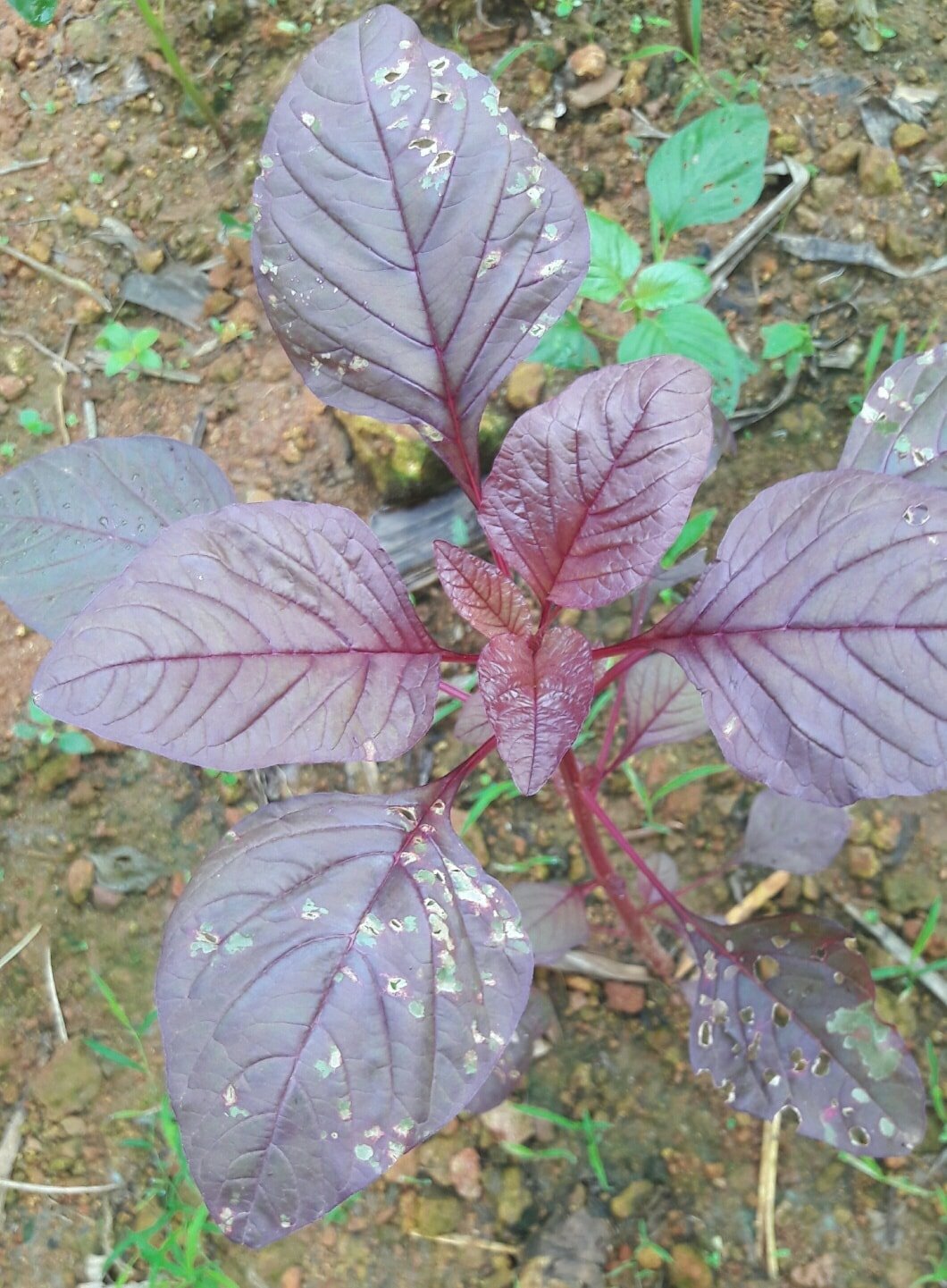
Symptoms
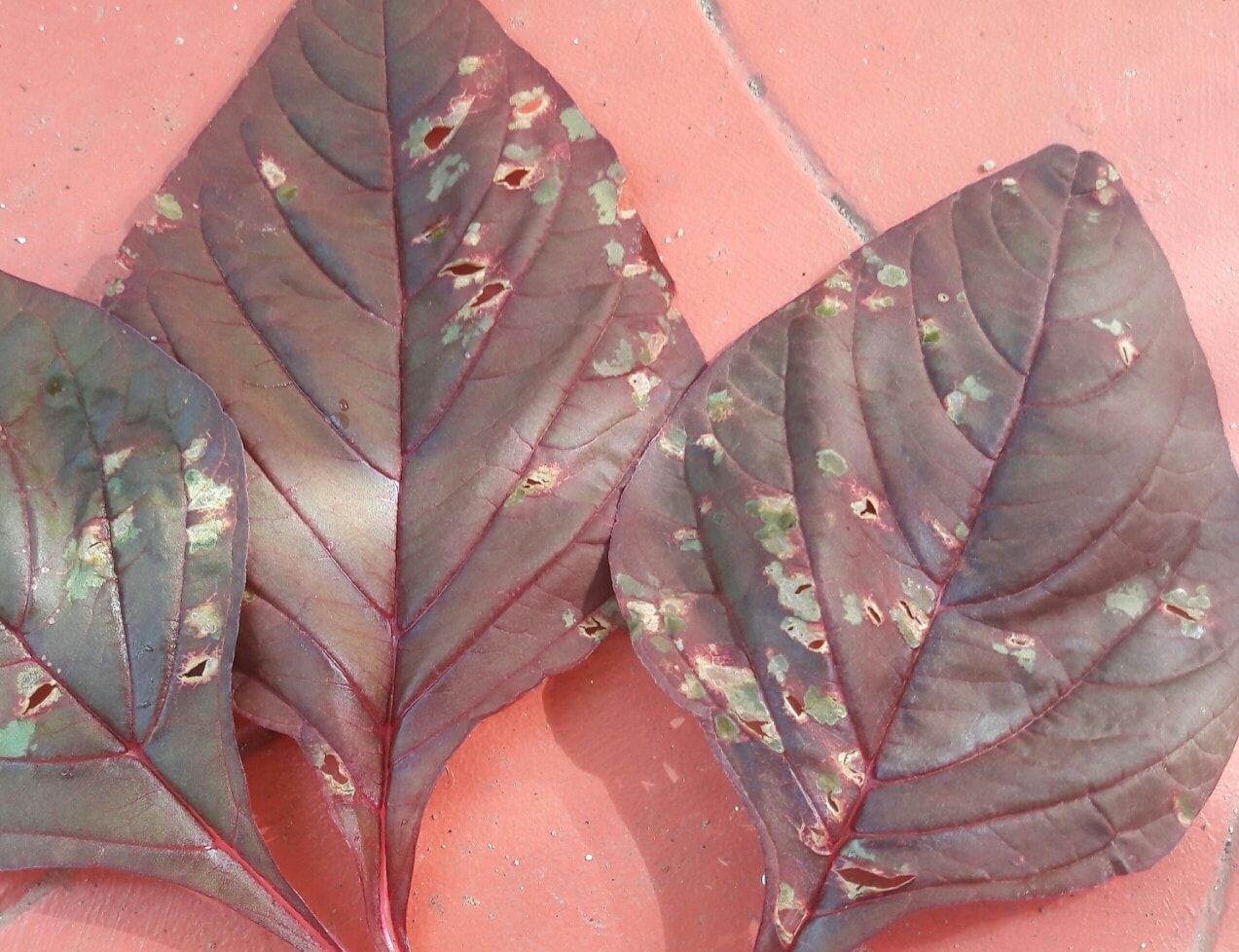
- The initial symptoms are small grey or white or straw coloured lesions on the leaf of young plants.
- Later these lesions enlarge to irregular lesions with black dots or olive green sporulations.
- Irregular lesions coalesce to cover larger leaf area and the leaf become blighted.
- The affected parts will later transform to shot holes.
- The infected foliage cannot be marketed and reduces the commercial value.
Management
- Grow the green type CO-1 which is resistant to the disease.
- Grow red and green varieties alternatively in the same field
- Avoid splash irrigation
- Seed treatment with Pseudomonas fluorescens or Trichoderma spp. (20 g/litre of water for 1 kg of seed).
- Spray Pseudomonas fluorescens (20 gram/litre with 20 gram cow dung slurry supernatant) after allowing settling the mud.
Chemical Control
| Sl.No | Generic Name | Trade Name | Color code | Dosage/litre | Recommendation | Remarks | |
|---|---|---|---|---|---|---|---|
| Dosage/acre (200 L) | Dosage/hectare (500 L) | ||||||
| 1 | Copper hydroxide 77 WP | HiDice, Kocide 101 | Blue | 1 g/ litre of water | 200 g | 500 g | - |
| 2 | Mancozeb 75 WP | Devidayal M-45, Dhanuka M 45, Dhanuka M-45, Dithane, Dithane M-45, Hilthane, Hindustan M 45, Indofil M 45, Izeb M-45, Manzate, Luzen-45, Macoban, Macoban M-45, Mancosaan, Mancosaan M-45, Maneb, Manzane, M-Guard, Savour M 45, Tata M-45, Eurofil-NT, Uthane M-45, Veera, Zinthane | Green | 3 gm/ litre | 600 g | 1500 g | Mix with 20 gram cowdung slurry supernatant |
Extremely Toxic

Highly Toxic

Moderately Toxic