

Ash gourd (Benincasa hispida)
Anthracnose (Colletotrichum lagenarium)
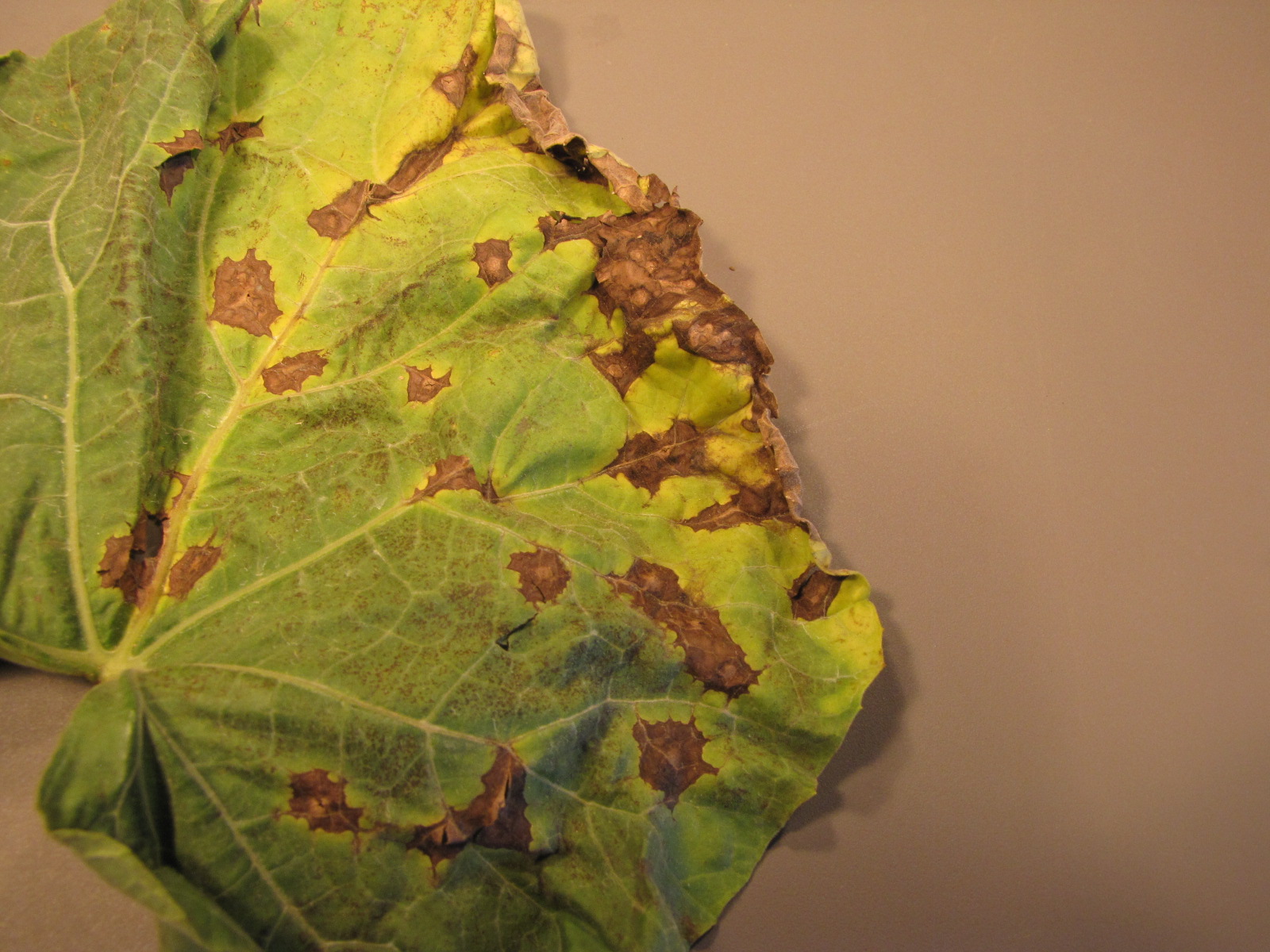
Symptoms
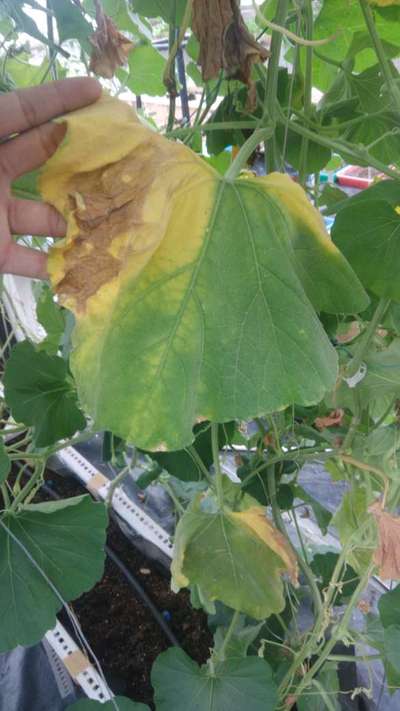
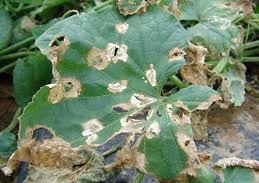
- The symptom starts with water soaked lesions which later turns brown or black spots.
- These lesions coalesce and result in extensive leaf blight.
- The young fruits will darken, shrivel, rot and die on infection.
- Under wet conditions, pinkish-colored spore masses can be seen oozing out of the sunken spots
Management
- Deep ploughing of crop residues immediately after harvest.
- Use healthy seeds.
- Field sanitation - destroy the plant debris
- Hot water treatment of seeds @ 57.2°C for 20 min
- The diseased twigs should be pruned and burnt along with fallen leaves.
- Seed treatment with Pseudomonas fluorescens or Trichoderma spp. (20 g/litre of water for 1 kg of seed).
- Spray Pseudomonas fluorescens (20 g/litre of water).
Chemical Control
| Sl.No | Generic Name | Trade Name | Color code | Dosage/litre | Recommendation | Remarks | |
|---|---|---|---|---|---|---|---|
| Dosage/acre (200 L) | Dosage/hectare (500 L) | ||||||
| 1 | Carbendazim 50 WP | Bavistin, Benfil, Bengard, Benlate, Benmain, Bensaan, Carben, Carziim50, Dhanustin, Dhanustin 50 WP, Fungiguard, Gancarzin50, Glizim, Mintho, Tagstin, Tiara, Zoom | Green | 2 g/ litre of water/kg of seed | 400 g | 1000 g | Seed treatment before sowing |
| 2 | Mancozeb 75 WP | Devidayal M-45, Dhanuka M 45, Dhanuka M-45, Dithane, Dithane M-45, Hilthane, Hindustan M 45, Indofil M 45, Izeb M-45, Manzate, Luzen-45, Macoban, Macoban M-45, Mancosaan, Mancosaan M-45, Maneb, Manzane, M-Guard, Savour M 45, Tata M-45, Eurofil-NT, Uthane M-45, Veera, Zinthane | Green | 3 gm/ litre | 600 g | 1500 g | Mix with 20 gram cowdung slurry supernatant |
Extremely Toxic

Highly Toxic

Moderately Toxic