Carrot (Daucus carota)
Watery soft rot (Sclerotinia sclerotiorum)
Symptoms
- The disease is present in soil or storage and often shows up after the crop has been harvested.
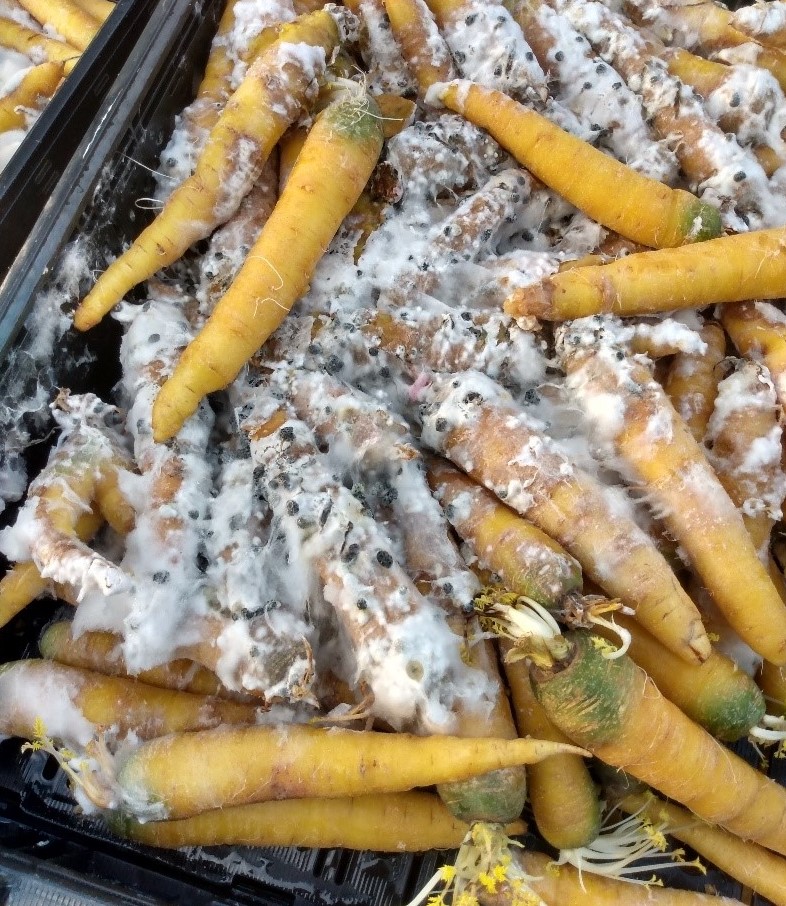
- Symptoms can be identified in the field as characteristic white mold with black sclerotia present on the crown of infected carrots.
- Symptoms on foliage are water soaked, dark olive-green lesions associated with collapsed tissues.
- Lesions expand rapidly over the entire leaf, petiole, and rosette with infected tissues
- Covered by abundant cottony, white mycelium.
- Only a small percentage of the roots may be initially infected but the fungus mycelium can move very rapidly from carrot to carrot.
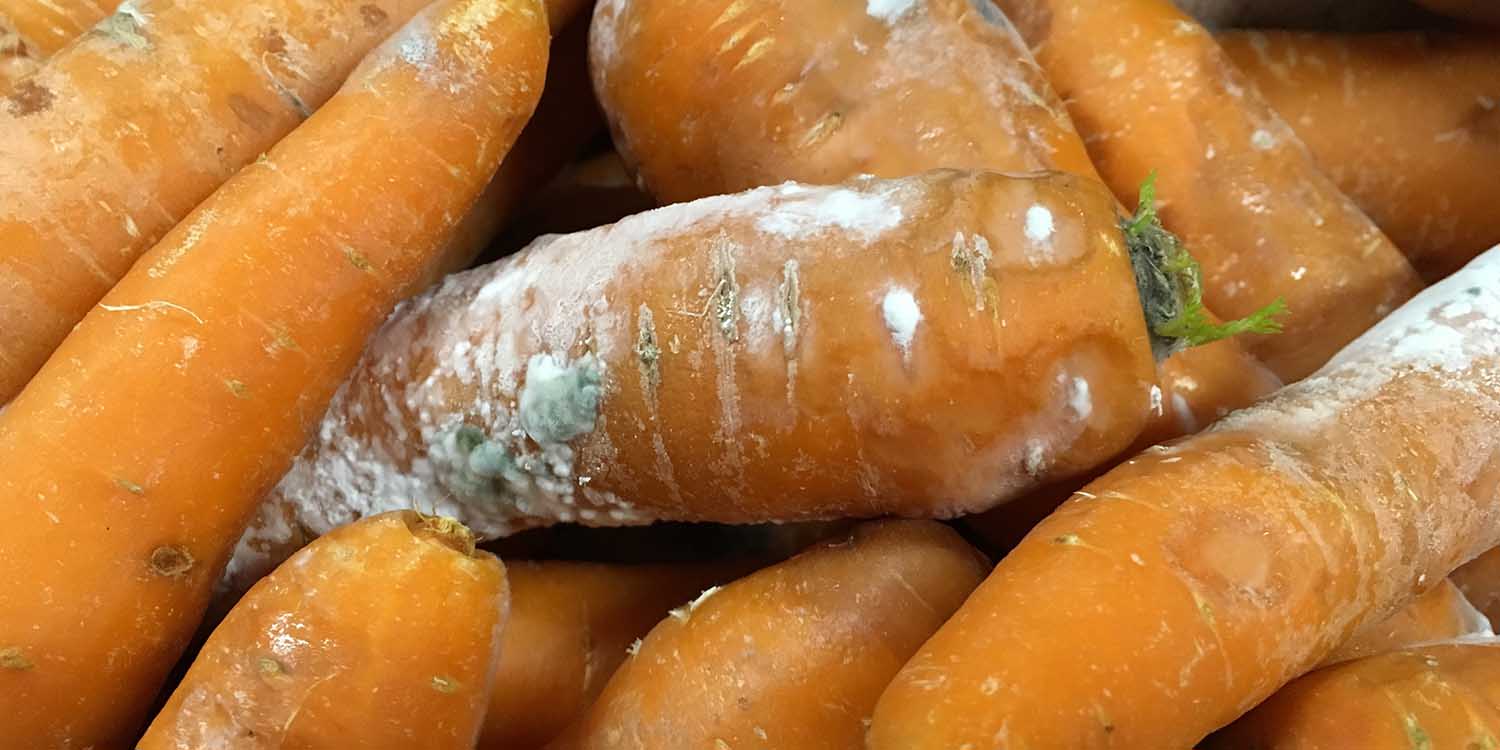
- In storage, a soft, watery rot with white mold and black sclerotia characterizes the disease.
- In a matter of weeks the whole storage container may become a mass of white mold and black sclerotia surrounding each and every carrot.
Management
- Crop rotation.
- Weed control (to improve air circulation)
- Planting on raised beds
- Rapid cooling prior to storage and meticulous sanitation of all storage components
- Frequent inspection in storage