

Cashew (Anacardium occidentale)
Leaf and blossom Webbers (Lamida moncusalis)
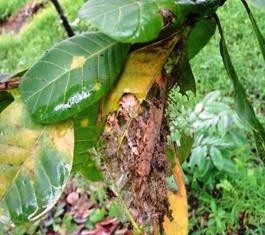
Symptoms
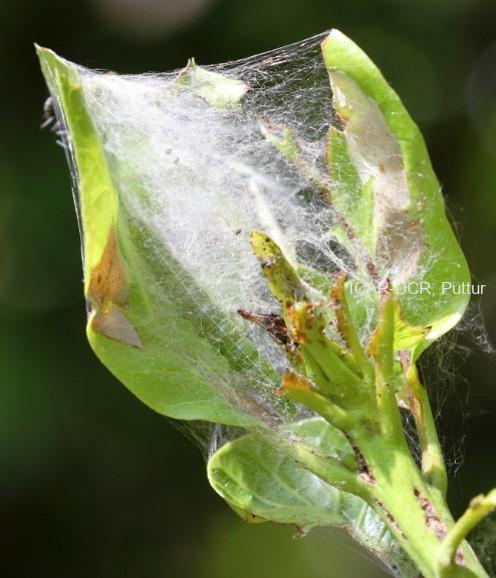
- The caterpillars feed on the terminal leaves of new shoots and blossoms after webbing them.
- Presence of webbing on terminal portions, with clumped appearance, and drying of webbed shoot/ inflorescences.
- Galleries of silken webs reinforced with plant scraps and castings, indicate the presence of caterpillars.
- It occurs sporadically and can cause damage between 25-60 per cent
Management
- In east coast regions, Braconids (Apanteles sp.), Elasmids (Elasmus sp., Elasmus johnstonii F.) and Tachinid (Blepharella lateralis) can cause larval parasitism up to 50 per cent.
- Apanteles sp., Avga choaspis (Nixon) (Braconidae) parasitize leaf and blossom webber larva in Kerala.
- Green lace wing, Chrysoperla sp. also predate in this pest.
Chemical Control
| Sl.No | Generic Name | Trade Name | Color code | Dosage/litre | Knapsack Sprayer (Capacity 10L) | Recommendation | Remarks | |
|---|---|---|---|---|---|---|---|---|
| Dosage/acre (200 L) | Dosage/hectare (500 L) | |||||||
| 1 | Lamda cyhalothrin 5 EC | Agent, Excel Glow Constant, Kabhaddi, Kunfu, Lambda 2.5, Lambda Star Veera, Lancer Lamdex, Marsjudo, Ninja-R, Reeva, Samurai Tag Demand, Santri | Yellow | 0.6 ml | 6 ml | 120 ml | 300 ml | |
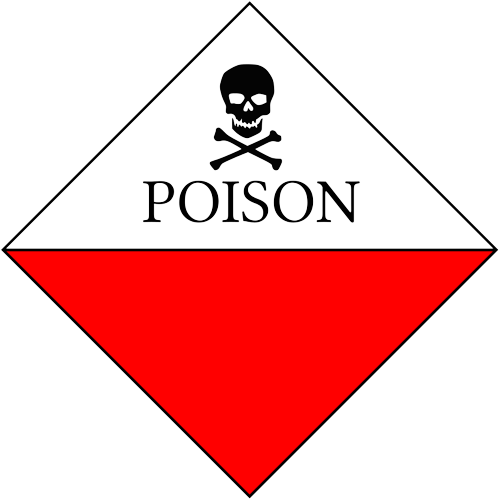
Extremely Toxic

Highly Toxic

Moderately Toxic