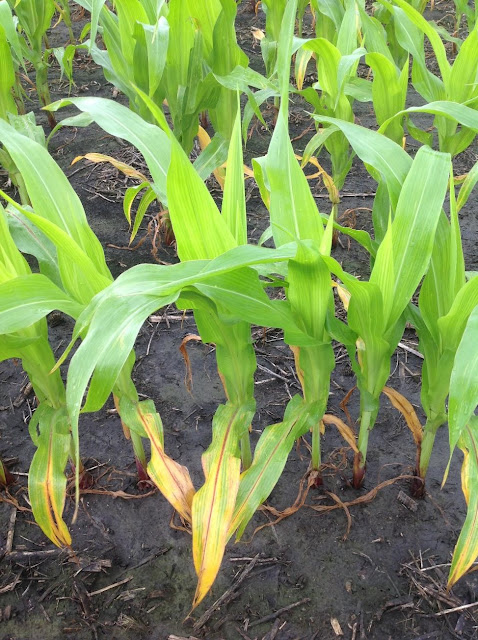
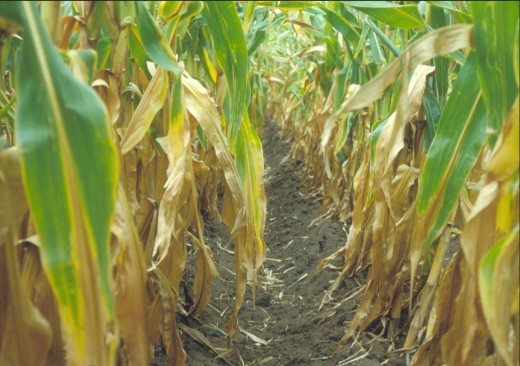
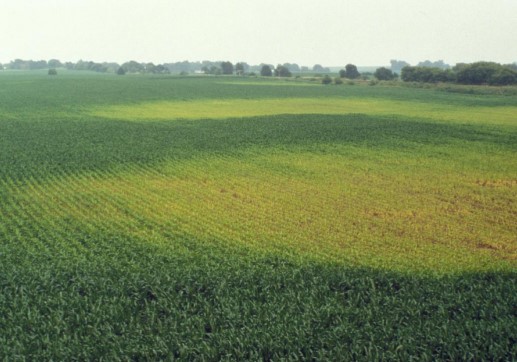
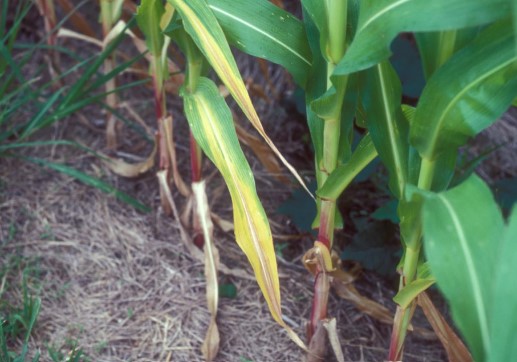
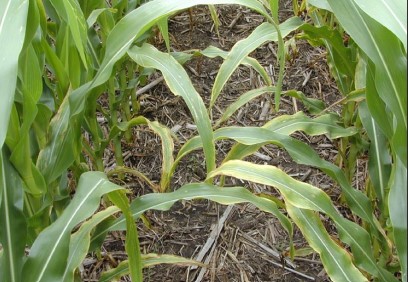
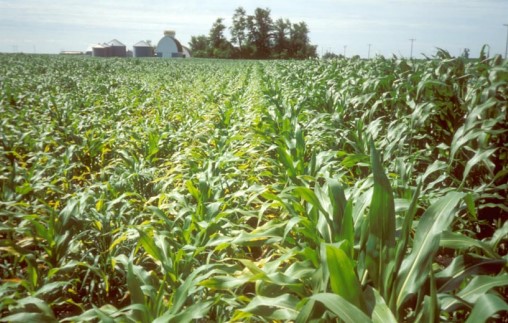
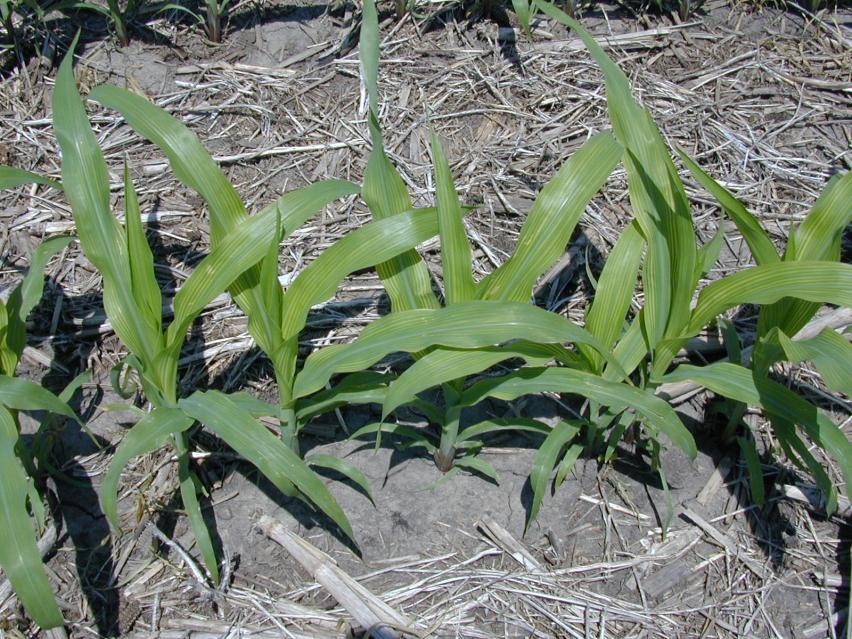
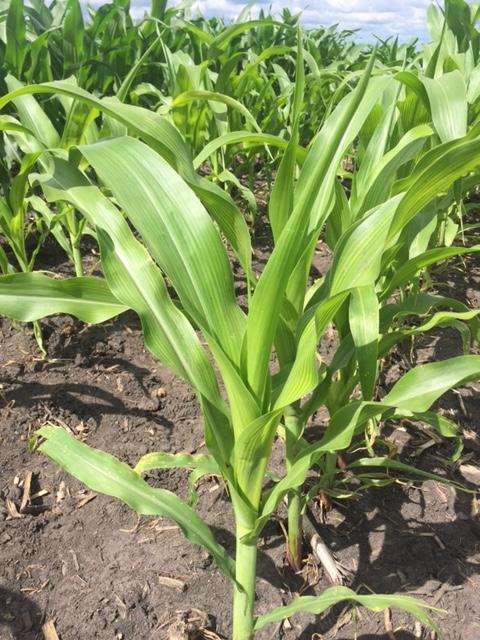
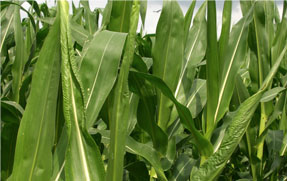
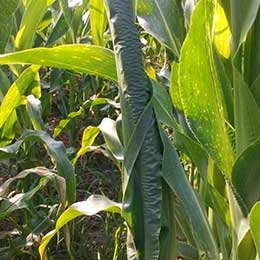
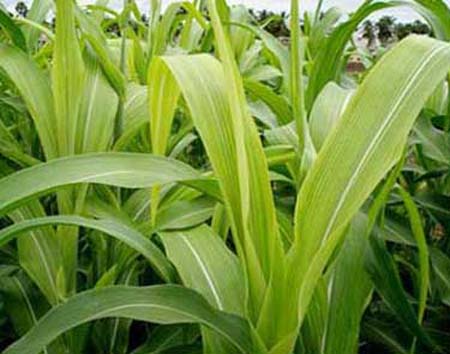
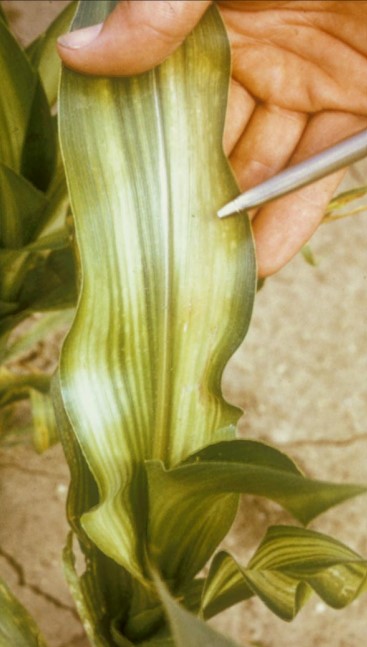
Nitrogen is a highly mobile element in plant. So, when the soil become deficient in available nitrogen, nitrogen from lower leaves will get transferred to growing points. Hence, deficiency symptoms will be first noticed in older and lower leaves.
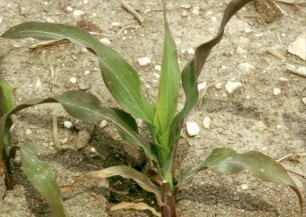
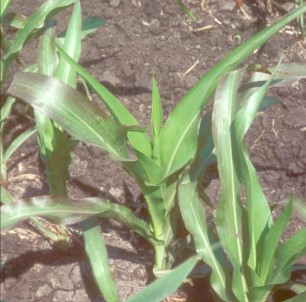
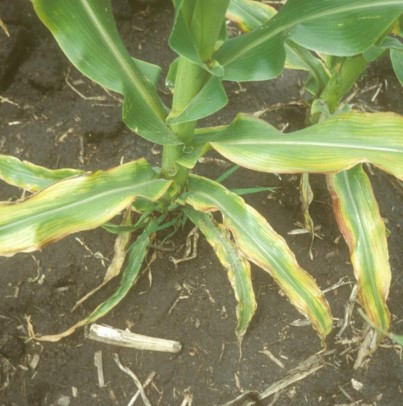
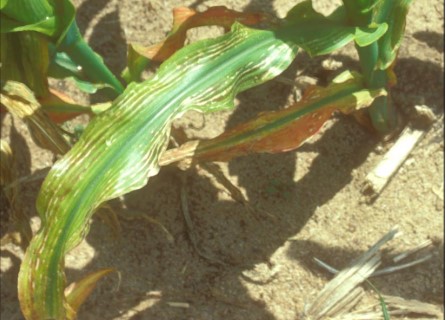
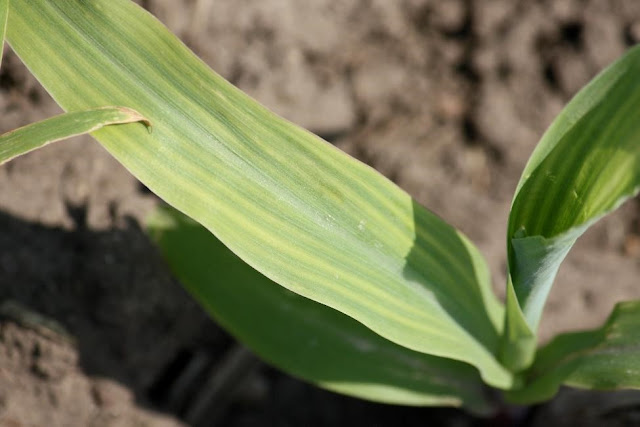
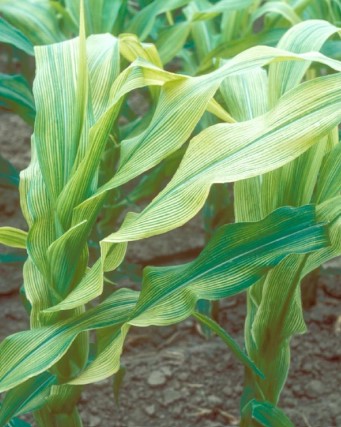
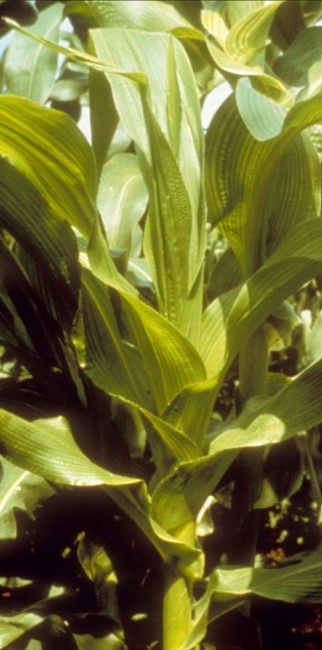
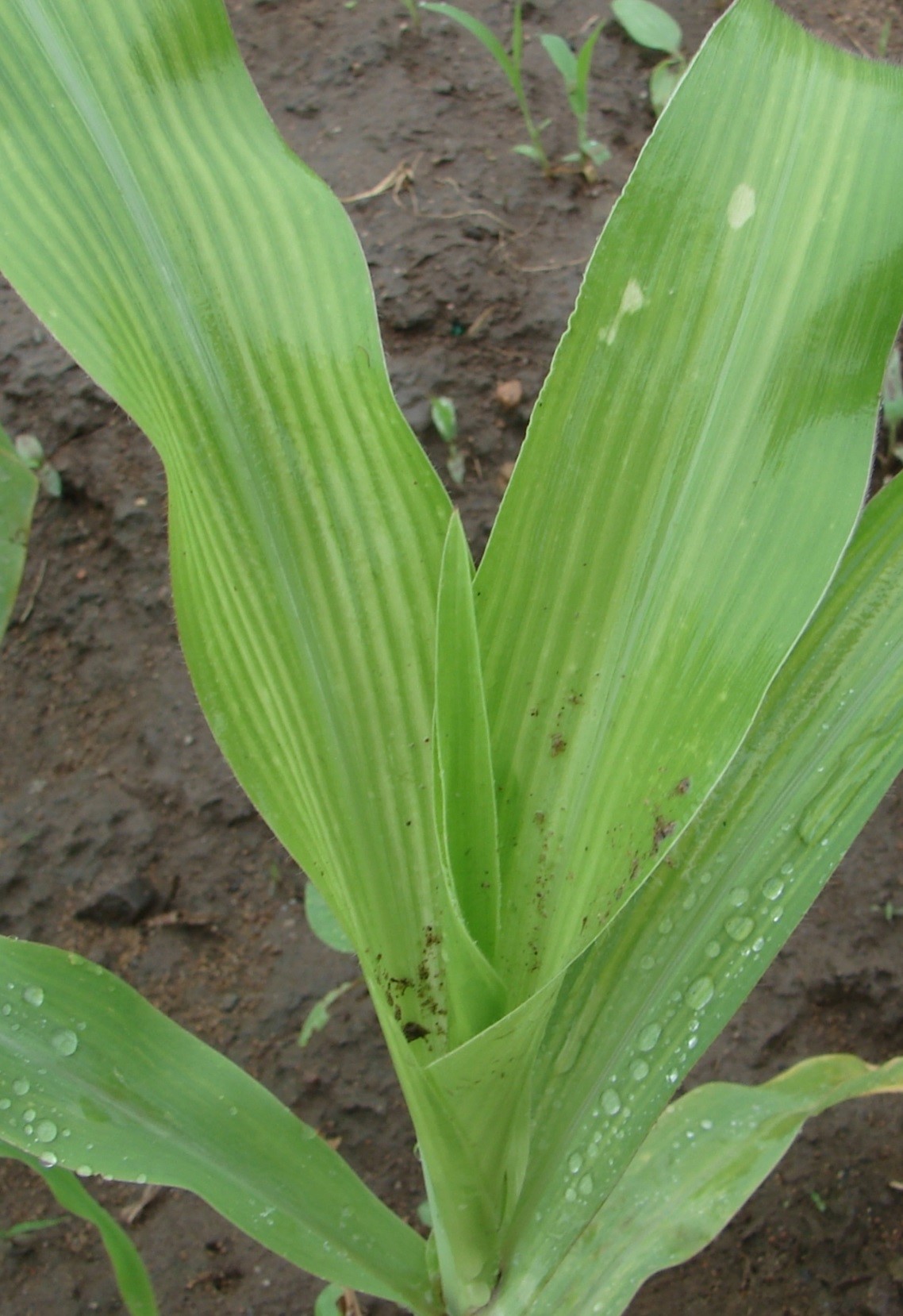
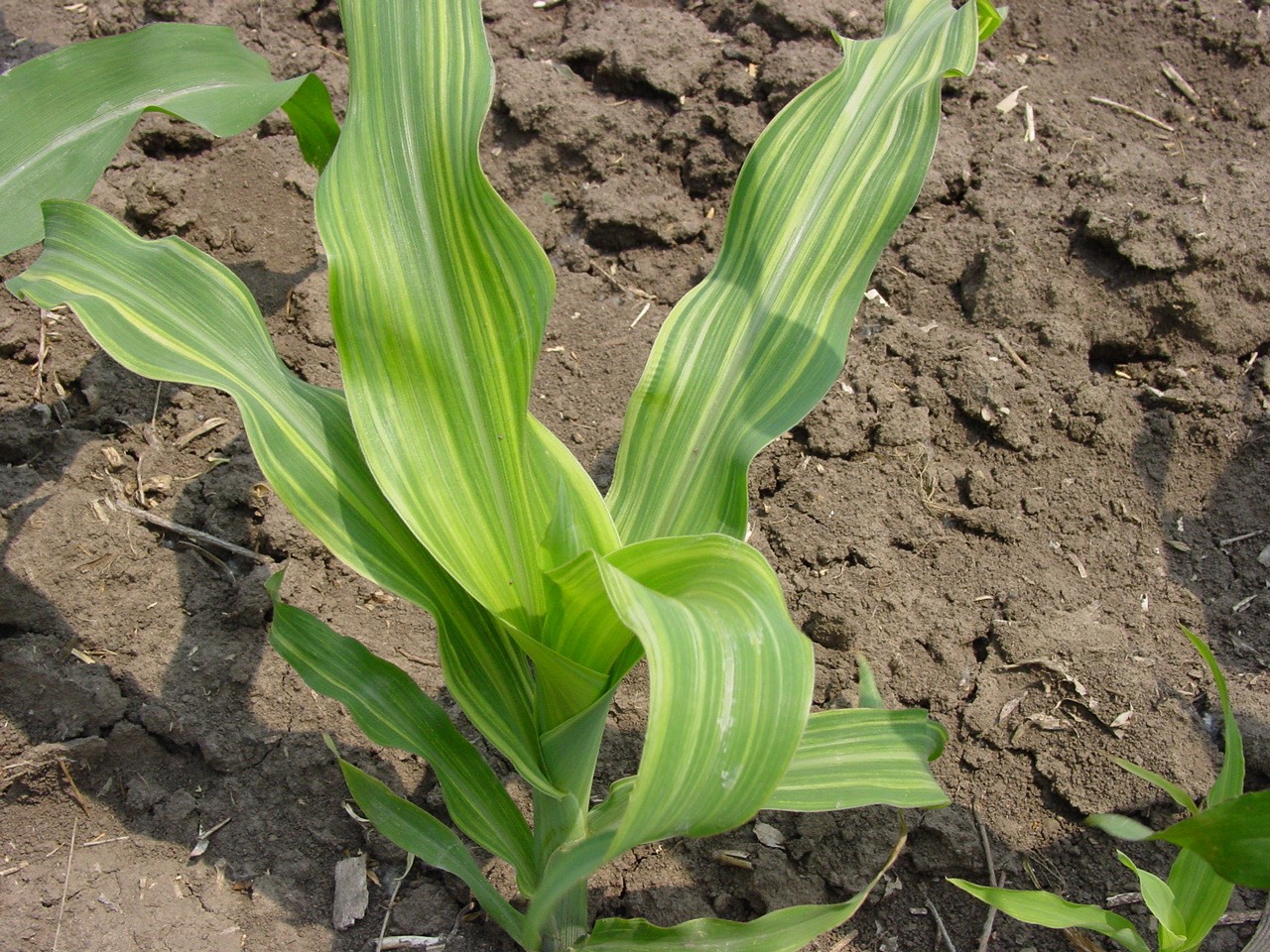
The initial symptoms will be yellowing of leaf in a V shape pattern.
The colour change normally starts from the leaf tip and progress to leaf collar. This later transfers to other leaves also.
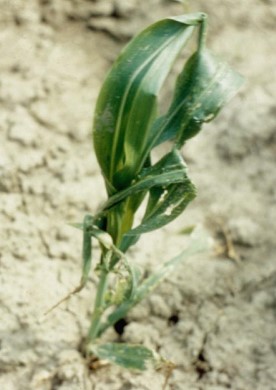
The stalks of the affected plant become slender.
The plants also show stunted growth.
Management
Add organic matter to the soil at the time of planting.
Treat the planting materials with bio fertilizers like Azotobacter, Azospirillum etc.
Check whether the recommended quantity of fertilizers is applied in time.
Go for soil analysis and understand the extent of deficiency.
Apply quick release nitrogen fertilizers like urea as per soil test result in split doses.
As an immediate solution applies urea as foliar spray (5 gram /liter of water) once in 15 days till the deficiency is over.
Phosphorus(P)
Symptoms
Root growth is influenced by phosphorous nutrition.
In deficient situations, the root cap becomes dry. This results in poor uptake of needed nutrients.
The deficiency symptoms will be first noticed in older and lower leaves.
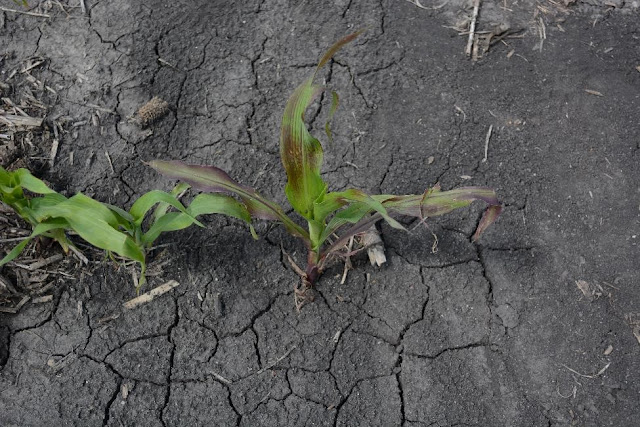
Young plants are dwarfed and thin with dark green leaves.
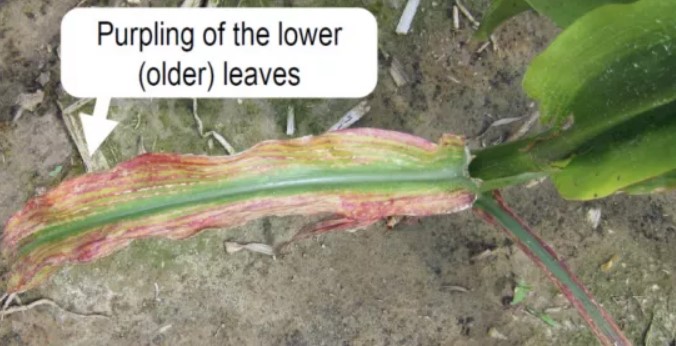
Leaf margins, veins and stems show purple tints which may spread over the whole leaf blade.
The older leaves will have a purple coloration, particularly on the underside.
The affected plants will show stunted growth.
Management
Phosphorus is best absorbed by the roots in the pH range 6.5-7.5. So adjust pH in acidic soils by adding lime/ dolomite.
Add bio fertilizers containing phosphorous solubilizing bacteria along with organic manure to increase phosphorous availability.
Check whether the recommended quantity of fertilizers is applied in time.
An excess of Iron and Zinc may also cause the symptoms of phosphorus deficiency.
Go for soil analysis and understand the extent of deficiency.
Apply fertilizers such as single superphosphate for immediate correction or bone meal or rock phosphate for long term correction as per the soil test report.
Potassium(K)
Symptoms
Potassium is a highly mobile element in plant. So, the deficiency symptoms will be first noticed in older and lower leaves.
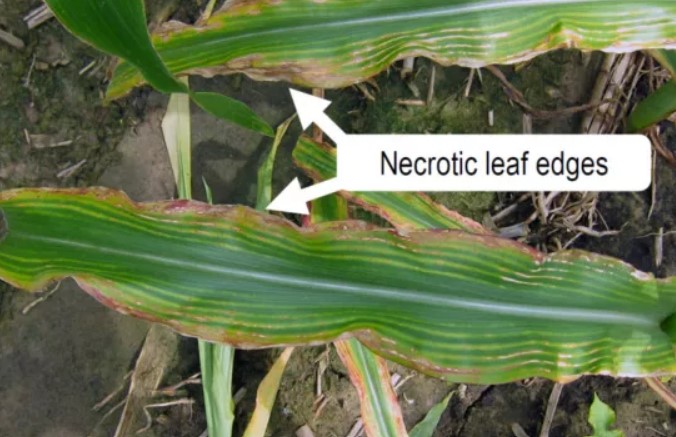
Deficiency symptoms first appear as pale to lemon yellow margins on older leaves.
This is followed by browning and necrosis of leaf margins.
In severe cases, the leaves appear dry and scorched along the edges and tips.
The symptoms slowly progress to the upper leaves also.
The deficiency also influences tillering/branching of plant as well as size and weight of grain.
It is more severe during reproductive and maturity stages.
Management
Optimum availability of potassium is at soil pH above 6.0. So correct soil pH in acidic soils by adding lime/ dolomite.
Add organic matter and wood ash to the soil.
Check whether the recommended quantity of potash fertilizer is applied in time.
Go for soil analysis and understand the extent of deficiency.
Apply Muriate of Potash (MOP) as per soil test report.
Split application is more beneficial.
As an immediate solution apply Sulphate of Potash (SOP) as foliar spray (10 g/litre of water) during morning hours along with wetting agents.
Calcium(Ca)
Symptoms
Calcium is an immobile element in plant. Hence, calcium deficiency is seen mainly in growing points, younger leaves and developing fruits.
Young leaves remain rolled and joined together at their tips.
The leaf edges become serrated and curl.
The appearance of the so‐called “bull‐whip” has been recognized as a calcium deficiency symptom.
The leaf becomes leathery and brittle.
Boron is needed for calcium utilization. So, a boron deficiency can also lead to calcium deficiency.
Management
Check the pH of the soil.
If the soil is extremely acidic (pH between 3.5 and 4.5), apply lime @ 3.4 kg/cent in two split doses. And in areas of moderate acidity (pH between 5.5 and 6), apply lime @1 kg/cent.
Dolomite can be used as cheap substitute of lime.
High levels of phosphorous can also induce calcium deficiency.
In alkaline soil go for application of Gypsum.
Magnesium(Mg)
Symptoms
The bottom leaves are always affected first.
As the deficiency becomes more acute, the symptoms progress up the plant.
Typical early symptoms include interveinal chlorosis, or yellow to white coloring between the veins of older leaves.
Severe deficiency symptoms can lead to reddish-purpling of older leaves, necrosis of leaf tips and edges, and stunted plant growth.
Management
Go for soil analysis and confirm the deficiency.
Apply Magnesium sulphate (32 kg/ acre) in bands near plants.
Application of dolomite will also reduce magnesium deficiency in long run.
Sulphur(S)
Symptoms
Deficiency symptoms first appear in the upper and younger leaves.
The symptoms are chlorosis followed by general yellowing.
An acute sulphur deficiency causes the entire plant to turn yellow.
The tips of the young leaves may show necrotic symptoms.
The affected plants show stunted growth.
Management
Apply organic matter to increase sulphur availability.
Avoid burning of organic wastes.
Application of fertilizers like Factamfos, Ammonium sulphate, Single superphosphate etc. that contain sulphur reduces the deficiency.
Apply sulphur dust (10 kg/ acre) in the soil.
The application of gypsum will also
Boron(B)
Symptoms
Boron deficiency is seen mainly in growing points, younger leaves and developing fruits.
The leaves show as zig zag appearance and plant height is reduced.
Those plants affected with boron deficiency at panicle initiation stage fails to produce panicles.
The yield will be reduced due to poor grain setting.
Management
Boron deficiency is seen more in dry soils.
High available phosphorous in soil also hinders boron absorption.
Apply borax (4 kg/ acre) into the soil.
For immediate result spray Borax (1 gram / litre of water) as foliar spray. Excess concentration may result in toxicity.
Borax should not be applied with ammonium fertilizers.
Iron(Fe)
Symptoms
Deficiency symptoms appear on the new growth first.
The symptoms will be yellow leaves with dark green veins (interveinal chlorosis) with eventual bleaching of the new growth.
When severe, the entire plant may be light green in color.
Management
Good drainage and soil aeration favors iron availability.
Low levels of potassium can increase Iron deficiency.
In deficient soils, apply Ferrous Sulphate (6 kg/ acre) into the soil.
Manganese(Mn)
Symptoms
The leaves develop interveinal chlorosis
They begin with a light chlorosis of the young leaves and netted veins of the mature leaves especially when they are viewed through transmitted light.
Management
Kerala soils in general have high levels of manganese.
High amount of iron may induce manganese deficiency.
So go for soil testing to understand the real reason for the problem.
In deficient soils, apply Manganese Sulphate (5 gram /litre of water) as foliar spray.
Zinc(Zn)
Symptoms
Younger leaves become chlorotic.
The affected plants will show stunted growth.
Management
The ideal pH range for zinc availability is 5 to 7.5.
Undertake soil testing to confirm deficiency. In deficient soils, apply zinc sulphate (8 kg/ acre) in the soil.
Zinc fertilizers and phosphate fertilizers should not be used simultaneously
In severe cases, foliar spraying of zinc sulphate (2 gram/litre of water) with calcium carbonate (2.5 gram/ litre of water) can be advocated in morning hours.