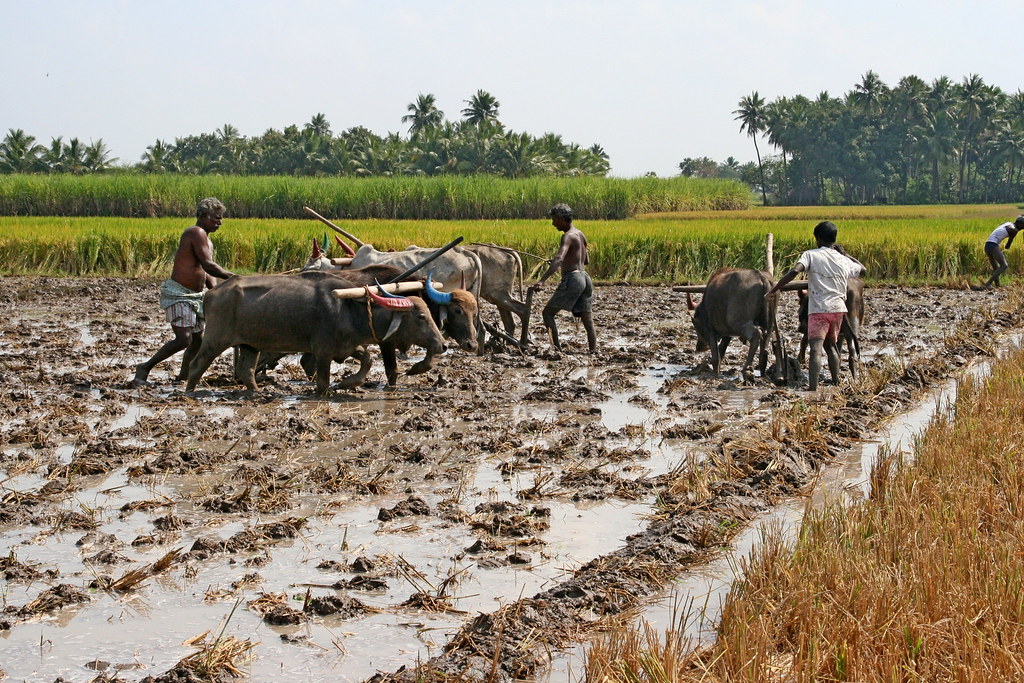
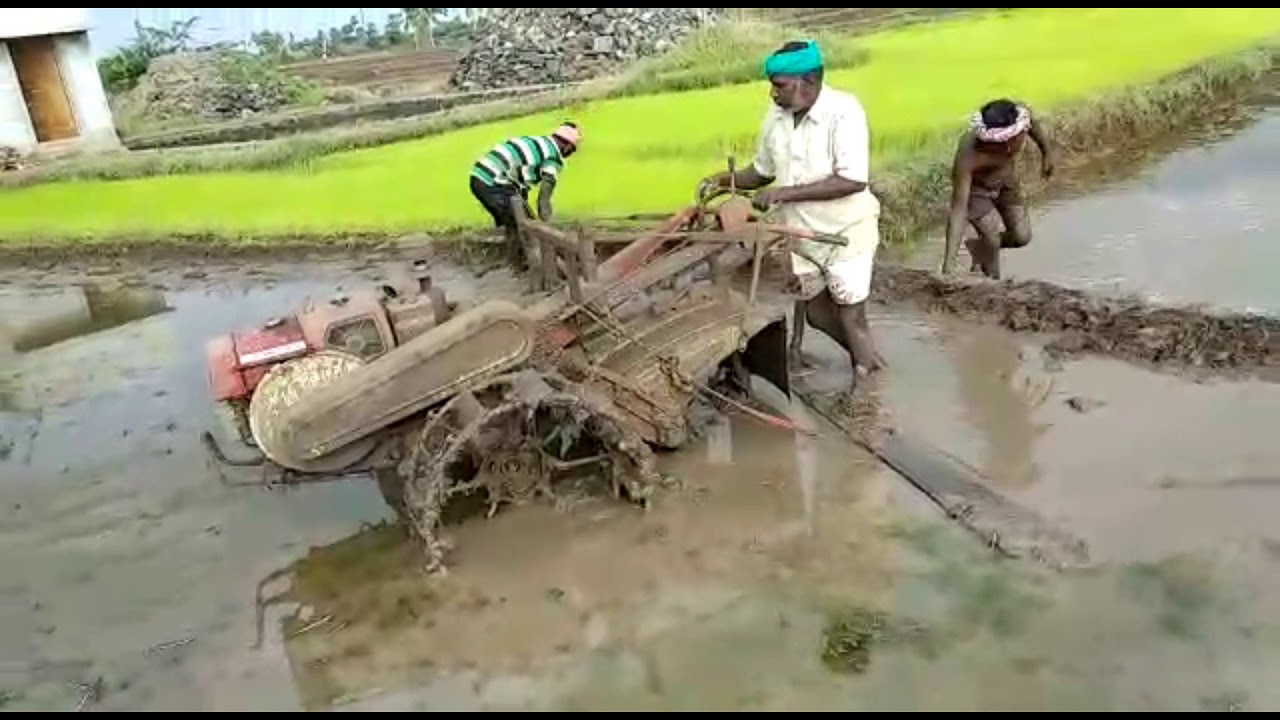
Plough the field thoroughly to incorporate the weeds and straw into the soil.
Ensure a smooth level field for transplanting the seedlings.
Better to transplant seedlings 10-15 days after incorporating organic manure.
Apply manures and fertilizers at the rates specified for each region and varieties.
Apply fertilizers on the drained soil at the time of final ploughing and levelling and thoroughly mix into the soil.
Kuttanad
Drain out standing water from the field.
Plough the field thoroughly to incorporate the weeds in the field.
Ensure a smooth and levelled field.
Maintain a thin film of water to facilitate sowing so that the germinated seeds are not covered with loamy soil, which affects seedling establishment.
Kari soil
In Kari soils, avoid cracking of soils by prolonged drying since it will lead to severe acidity.
Provides surface drains of 20 cm width and depth with in the field at 10-20 cm interval or running diagonally (kachals) and join them with surface drain of 30 cm width and depth taken along the perimeter of the field (vachals).
Kole
For First crop, after cessation of heavy monsoon, dewatering is affected by 'Petti and Para' or centrifugal pump and rarely by 'chakkram'.
Land is ploughed thoroughly and transplanting is done.
For the second crop, land is prepared thoroughly and direct sowing of sprouted seeds or transplanting is done.
Onattukara
With the onset of pre-monsoon showers, land is ploughed thoroughly.
Dibbling of unsprouted seeds behind the country plough is the common practice.
Pokkali , Kaipad
By April, the bunds are strengthened and sluices repaired for regulating water level.
Fields are then drained during low tide and the sluices are closed.
When the soil in the field becomes dry, raise mounds of 1 m base and 0.5 m height
Mounds act as elevated insitu nursery and protect the seedlings from flash floods.
Special method for sprouting the seeds
The seeds are tightly packed in baskets made of plaited coconut leaves, the inside of which is lined by banana or teak leaves.
Baskets are the immersed in fresh water ponds for 12 to 15 hours.
They are then taken out and stored in shade.
Radicle just sprouts and remains quiescent under this condition for more than 30 days.
Before sowing, seeds in baskets are re-soaked for 3 to 6 hours under favourable soil and weather conditions
Mounds in the field are then raked and top levelled.
Sprouted seeds are sown on the top of mounds, act as an insitu nursery.
Mounds are dismantled with a few seedlings, uniformly spread in the field when seedlings reach a height of 40-45 cm (in 30-35 days)
Koottumundakan
Mixture of seeds of a photo insensitive (virippu) variety + a photosensitive (mundakan) variety of rice in the proportion 70:30 (w/w) is sown during virippu season.
Practiced in areas where sowing / planting of mundakan crop is not possible due to excess water in the field. Hence,Mixture of the two varieties is sown in the first crop season (April-May).
First crop variety will be ready for harvest in August-September
Second crop variety can harvested in December-January.
No cultivation is practised after the harvest of first crop season variety.
Application & incorporation of both organic and inorganic manures are possible
Yield will be less than that of the two independent crops
Transplanting
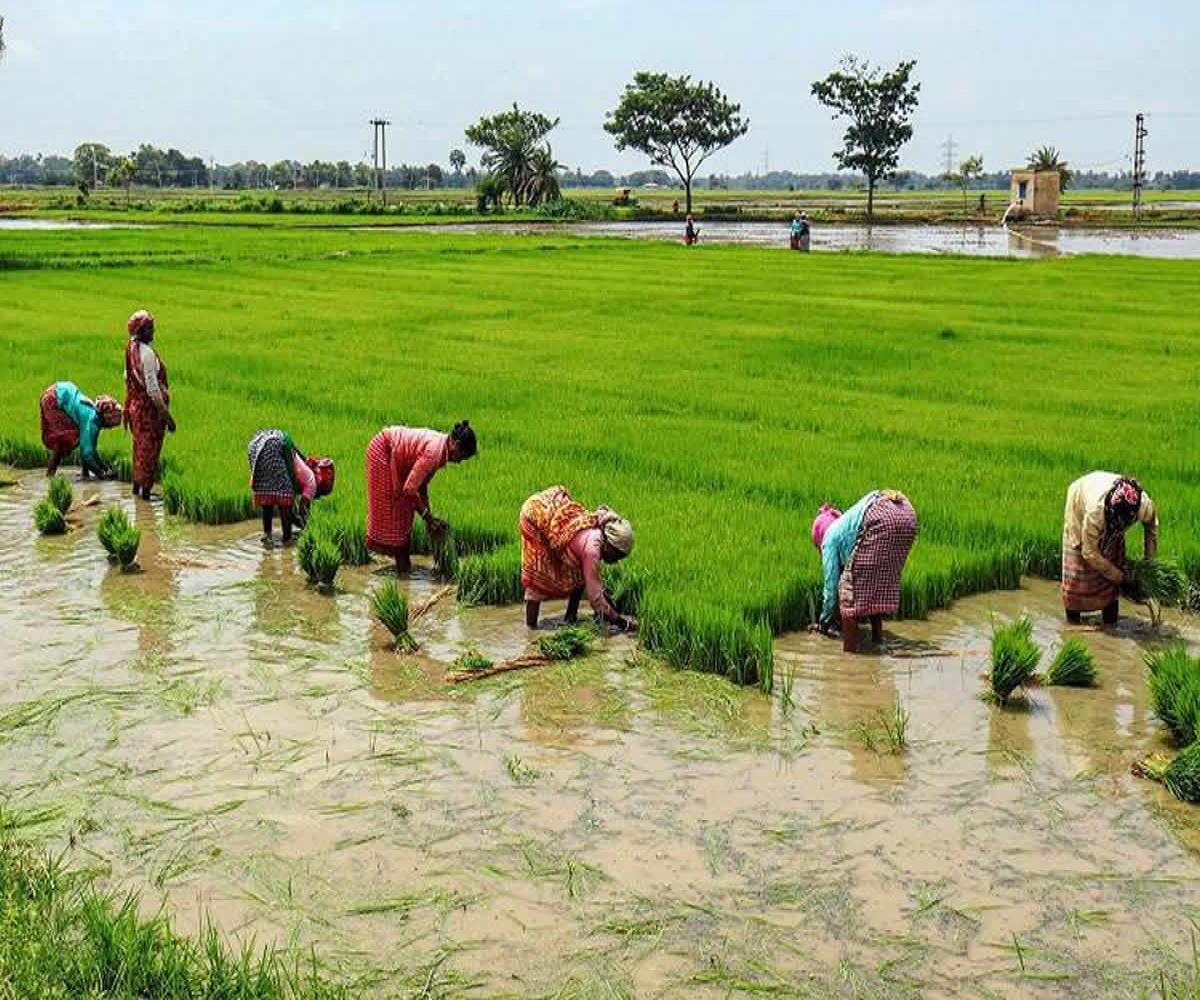
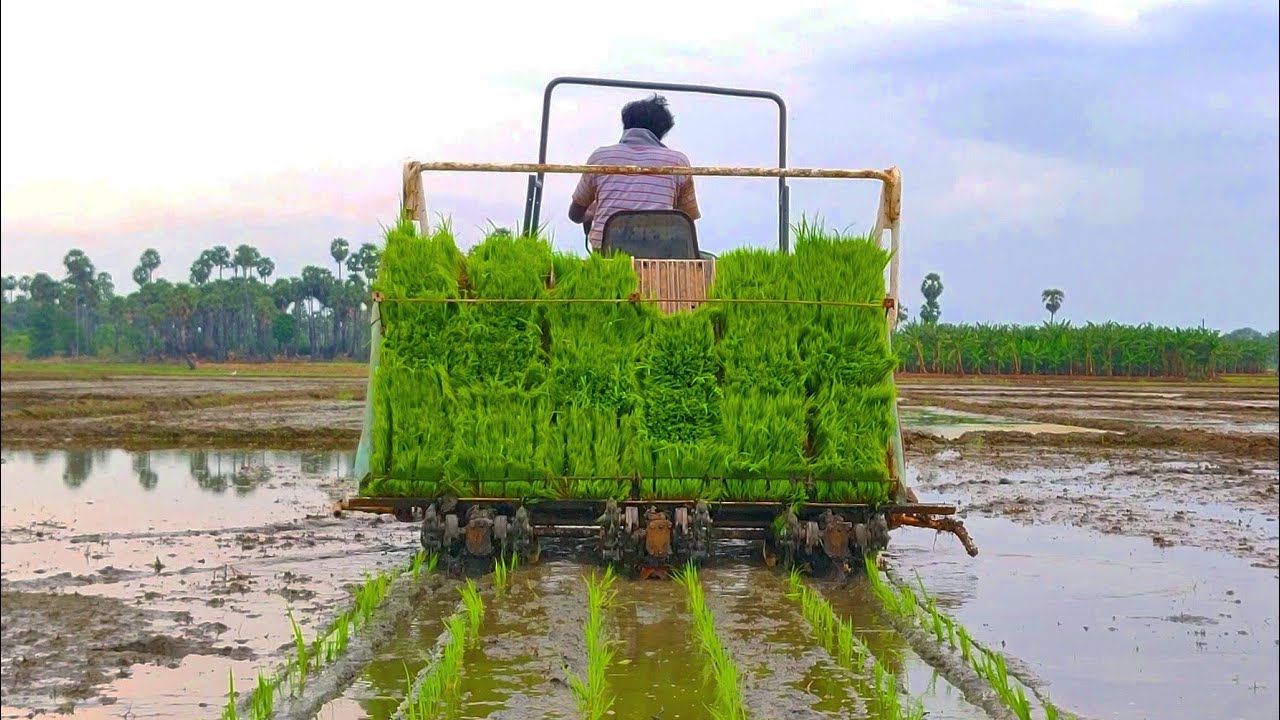
Transplant seedlings of appropriate age for the variety @ 2-3 seedling per hill in rows, at spacing as shown below in table.
Leave wider row of 30 cm after every 3 m to facilitate spraying and other cultural operations.
Transplant seedlings at a depth of 3-4 cm.
Wet seeding by seed drums and weed control by cono weeder
Drum seeding and cono weeding can be safely adopted
It is suitable for areas where efficient water management is possible (especially during rabi) and during kharif in areas where torrential rains are absent.
For short duration varieties 15cm spaced and for medium duration varieties 20cm spaced seed drum is recommended.
Principles of SRI
SRI (System of Rice Intensification) is a method of rice cultivation introduced by French priest Fr. Henry D Laulanie in 1983 in Madagascar and the technology was spread in other countries by Dr. Norman Uphoff of Cornell University, USA.
Adoption in areas where regulation of water is possible in second crop season
Seed rate @ 5kg/ha
Spacing 25-30 cms using markers/rope
Transplant seedlings of 8-12 days old
Provide drainage channels at every 5 m in main field for proper drainage
Maintain field without flooding
Let in water before development of cracks
Remove weeds using cono-weeder for 4-5 times at 15-20 interval