Oil Palm (Elaeis guineensis)
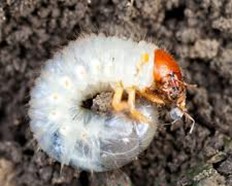
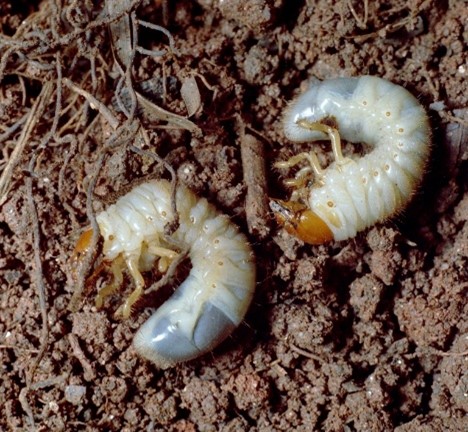
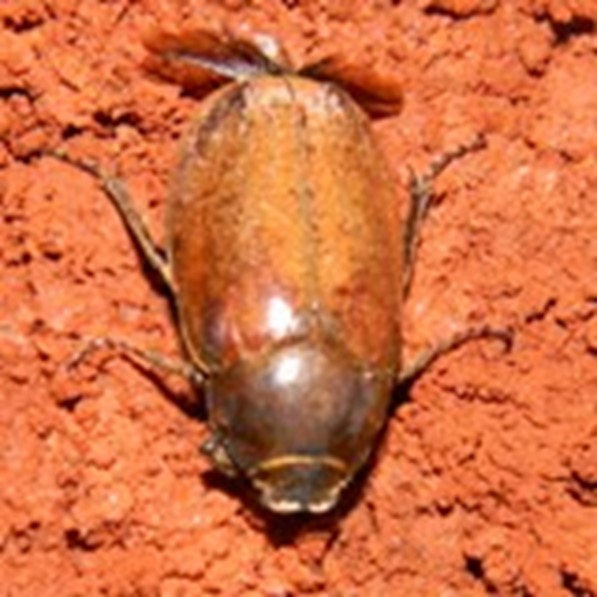
Root grub(Leucopholis burmeisteri)
Symptoms
- Root grubs or "white‟ grubs occur mostly in sandy and sandy loam soils.
- They are voracious feeders on roots. Adult beetles emerge during May-June few days after receipt of pre-monsoon showers
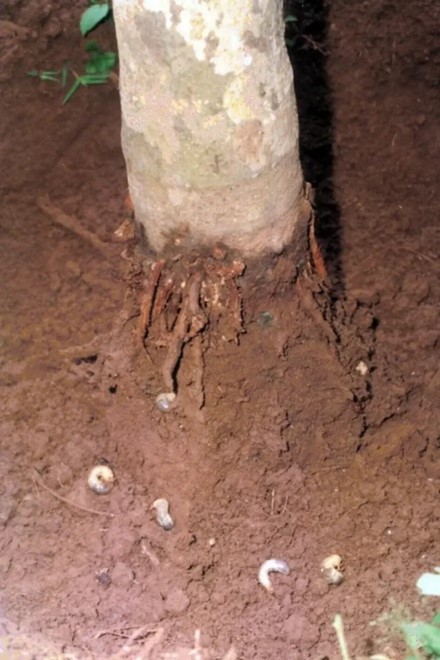
- In severe cases, the bole of the palm is also eaten up. They feed on roots of intercrops like banana, cocoa, yams etc.
- In oilpalm seedlings, the feeding on roots results in dropping and drying of leaves
- Affected seedlings come off easily since the entire root system is usually eaten up.
- Palms with few years of infestation show a sickly appearance, with yellowing of leaves, tapering of stem, and reduction in yield.
Management
- Fill the seedling bags with the soil free from root grub infestation
- Exposure of grubs by ploughing or digging the soil during pre and post monsoon periods Mechanical control:
- Collection and destruction of beetles during their emergence from the soil in the evening hours
- Install light traps @ 1 trap/acre and operate between 6 pm and 10 pm Biological control: