

Cabbage (Brassica oleracea var. capitata)
Black rot(Xanthomonas campestris pv. campestris)
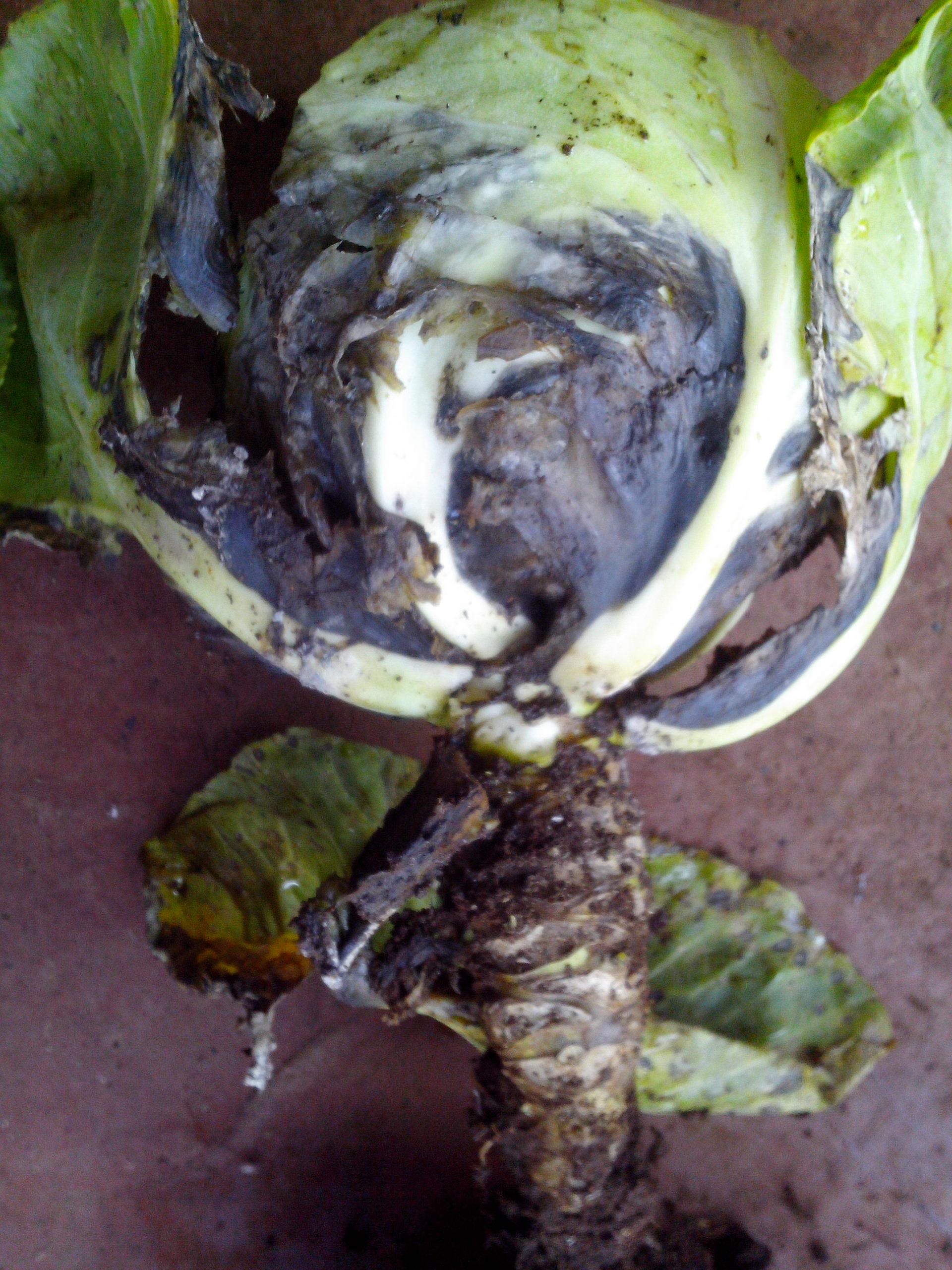
Symptoms
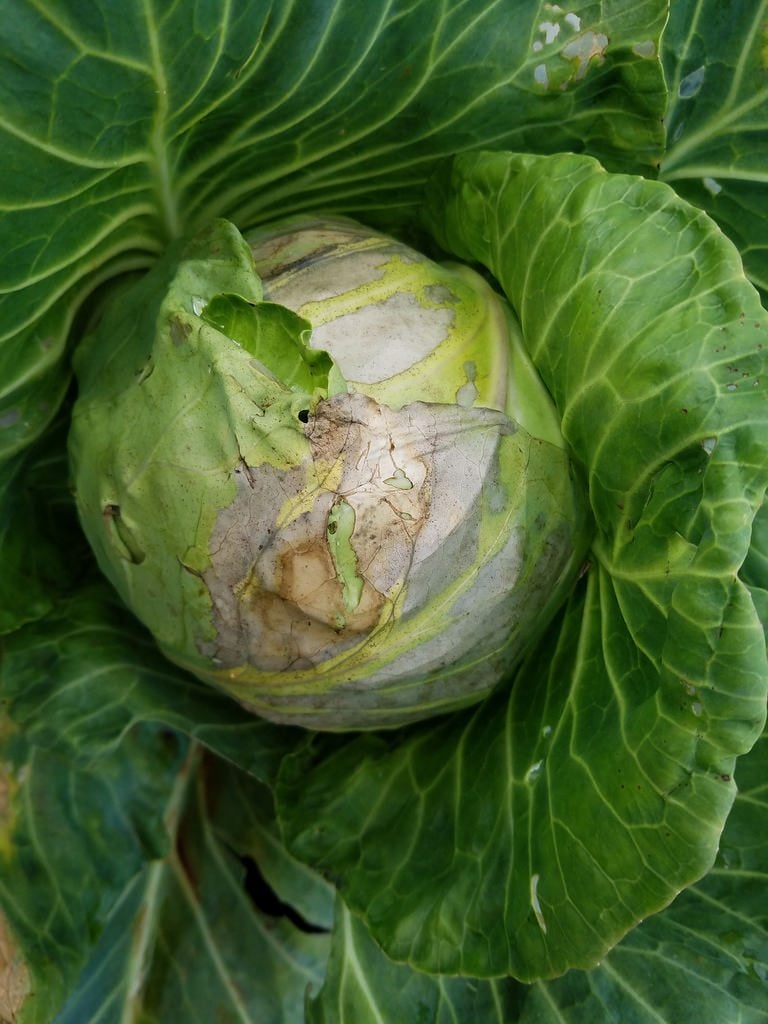
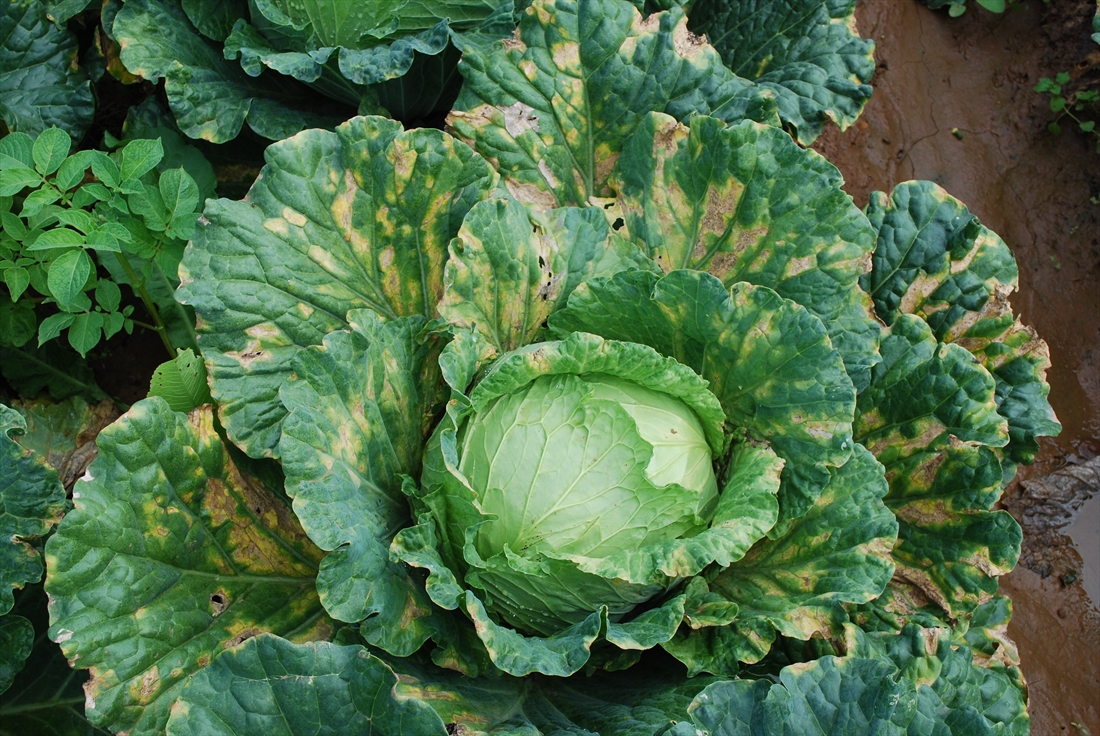
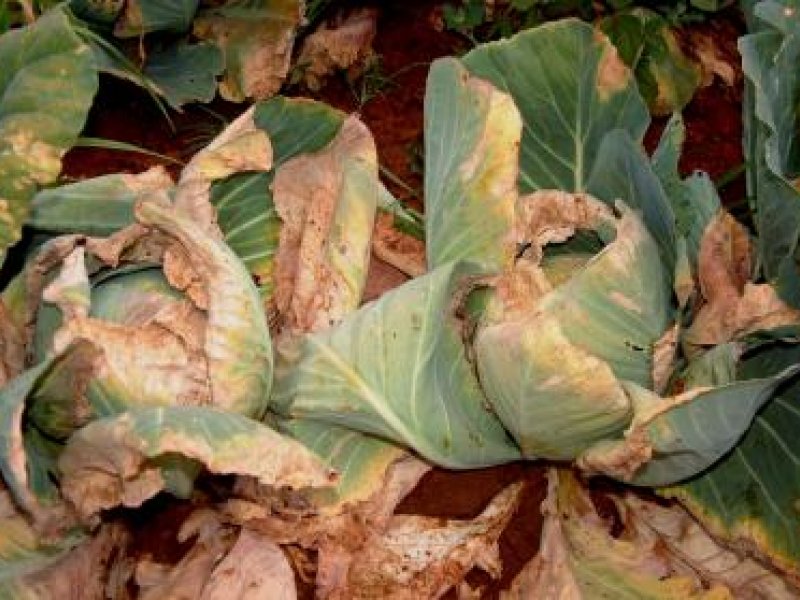
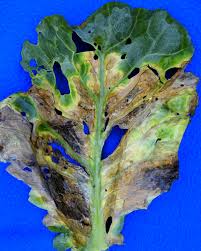
- Affect all stages of crop. On young seedlings, the cotyledons show blackening at the margins.
- Infected seedlings become yellow, drop lower leaves and may die.
- Leaves may be affected on only one side of a seedling.
- In main field, the classic symptom of black rot is caused by local infection that results when bacteria enter leaves through natural openings of leaf margins.
- The infected tissue turns pale green-yellow and then turns brown and dies.
- Affected areas are usually wedge- or V-shaped.
- These areas enlarge as the disease progresses, and severely affected leaves may drop off.
- The veins in infected leaves, stems, and roots sometimes become black.
- The heads of the infected plants remains small and its quality is reduced making it unfit for marketing.
Management
- Use of black rot tolerant varieties is the best method to control the disease.
- Planting should be done on raised beds to facilitate drainage.
- Cultivation in the fields where crucifers have been continuously grown during last 2 years should be avoided.
- Plants should be thoroughly inspected for black rot symptoms.
- Affected plants should be removed and destroyed
- Treat seeds with Pseudomonas fluorescens (20 g/litre of water/ kg of seed) and soil application of Pseudomonas fluorescens fortified in neem cake also reduces the disease incidence.
Chemical Control
| Sl.No | Generic Name | Trade Name | Color code | Dosage/litre | Knapsack Sprayer (Capacity 10L) | Recommendation | Remarks | |
|---|---|---|---|---|---|---|---|---|
| Dosage/acre (200 L) | Dosage/hectare (500 L) | |||||||
| 1 | Copper hydroxide 77 WP | HiDice, Kocide 101 | Blue | 1 g/litre of water | 10 g | 200 g | 500 g | - |
| 2 | Copper oxychloride 50 WP | Bensaan, Blitox, Blue copper, Bluetrox, Copter, Cupramar, Cuprina, Dhanucop, Fytolan, Fytox, Fytran, Fytolan, Hilcopper, Killex copper, Maincop Dhanucop, Star cop, Tagcop, Trucop | Blue | 2 g/litre of water | 20 g | 400 g | 1000 g | - |
Extremely Toxic

Highly Toxic

Moderately Toxic