

Garlic (Allium sativum)
Thrips (Thrips tabaci)
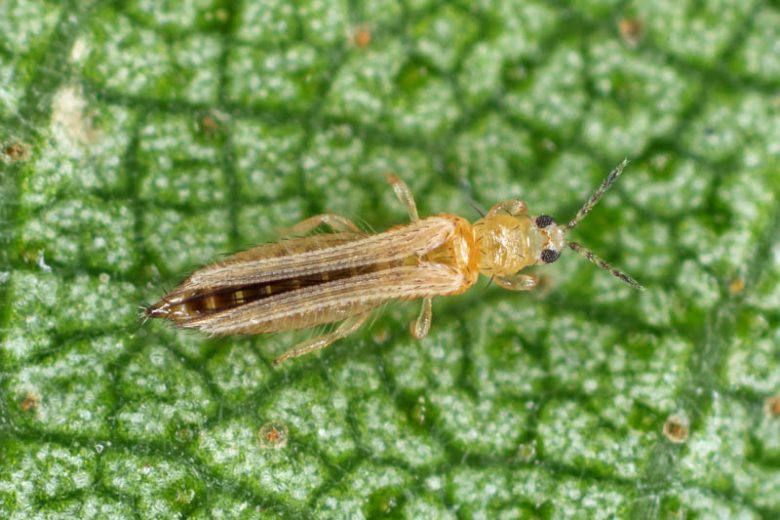
Symptoms
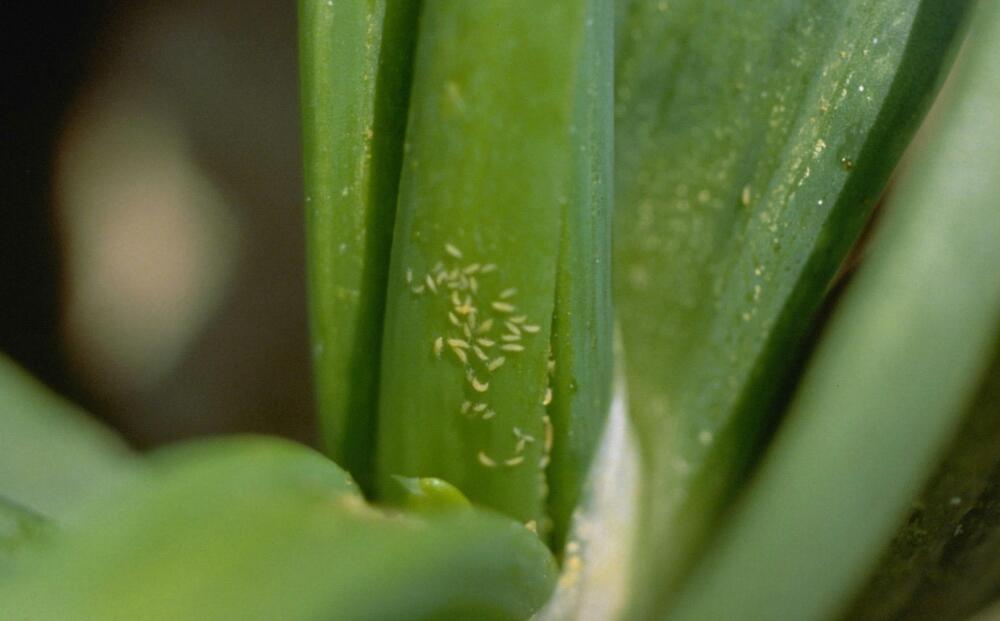
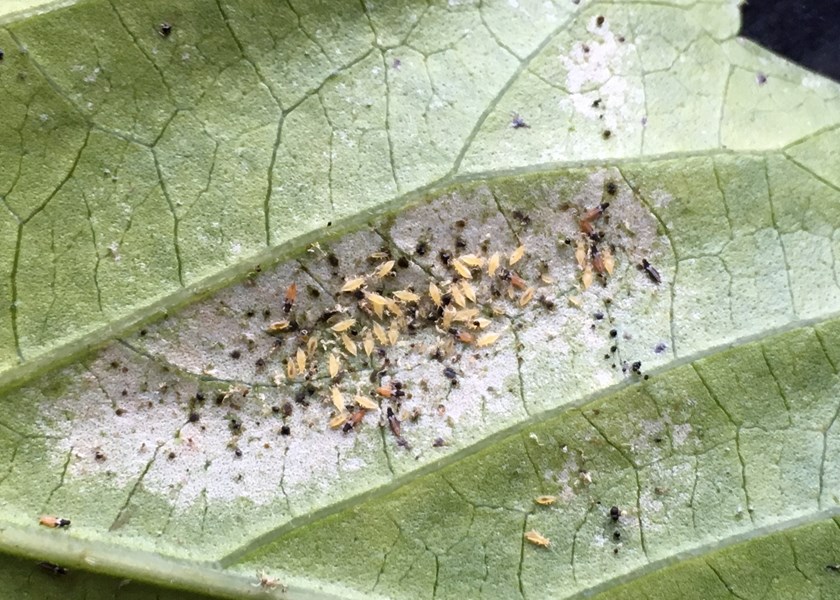
- Thrips are seen in large numbers between leaf sheaths and stems of garlic.
- They lacerate the epidermis of leaf and suck the exuding cell sap.
- The affected leaves show silvery blotches which later turn into brownish colour.
- The leaves get distorted from tips downwards and plant ultimately wilt and dry away.
- Seedlings are killed due to heavy infestation and the plant growth is retarded.
- The shape and size of bulbs as well as yield is affected by thrips.
Management
- Follow proper field sanitation techniques such as removal of alternate weed hosts and destruction of culls of onion and garlic.
- Avoid successive planting of onion and garlic.
- Plastic mulching with silver coloured reflective sheets.
- Barrier cropping with two rows of maize on the outer border of crop.
- Use sprinkler irrigation.
- Flooding of infested field will check the thrips population.
- Plant the new crop in upwind direction of already planted crop which help in escaping infestation from old planting to some extent in the initial stage.
- Adjust the transplanting dates
- Orius tantillus is an effective natural enemy.
- Beauveria bassiana is also an effective option for the management of the pest.
Chemical Control
| Sl.No | Generic Name | Trade Name | Color code | Dosage/litre | Knapsack Sprayer (Capacity 10L) | Recommendation | Remarks | |
|---|---|---|---|---|---|---|---|---|
| Dosage/acre (200 L) | Dosage/hectare (500 L) | |||||||
| 1 | Dimethoate 30 EC | Nugor, Rogor, Tagor, Tara 909, Label colour | Yellow | 1 ml/litre of water | 10 g | 200 g | 500 g | - |
Extremely Toxic

Highly Toxic

Moderately Toxic