
Okra / Bhindi (Abelmoschus esculentus L.)
Powdery mildew(Leveillula taurica)
Symptoms
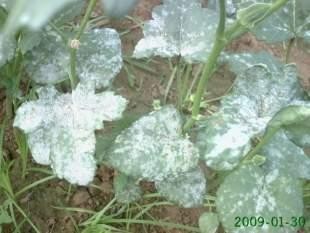
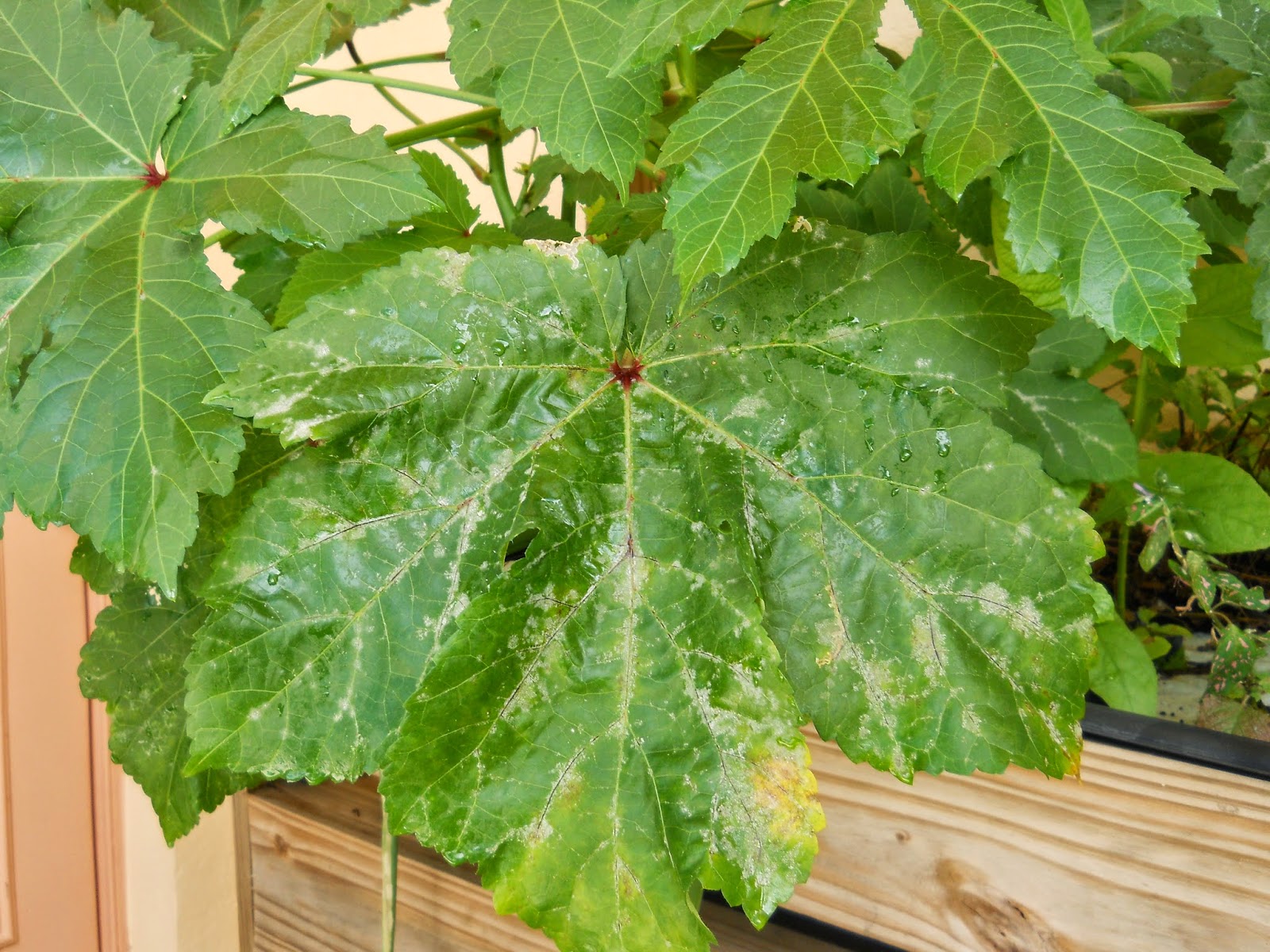
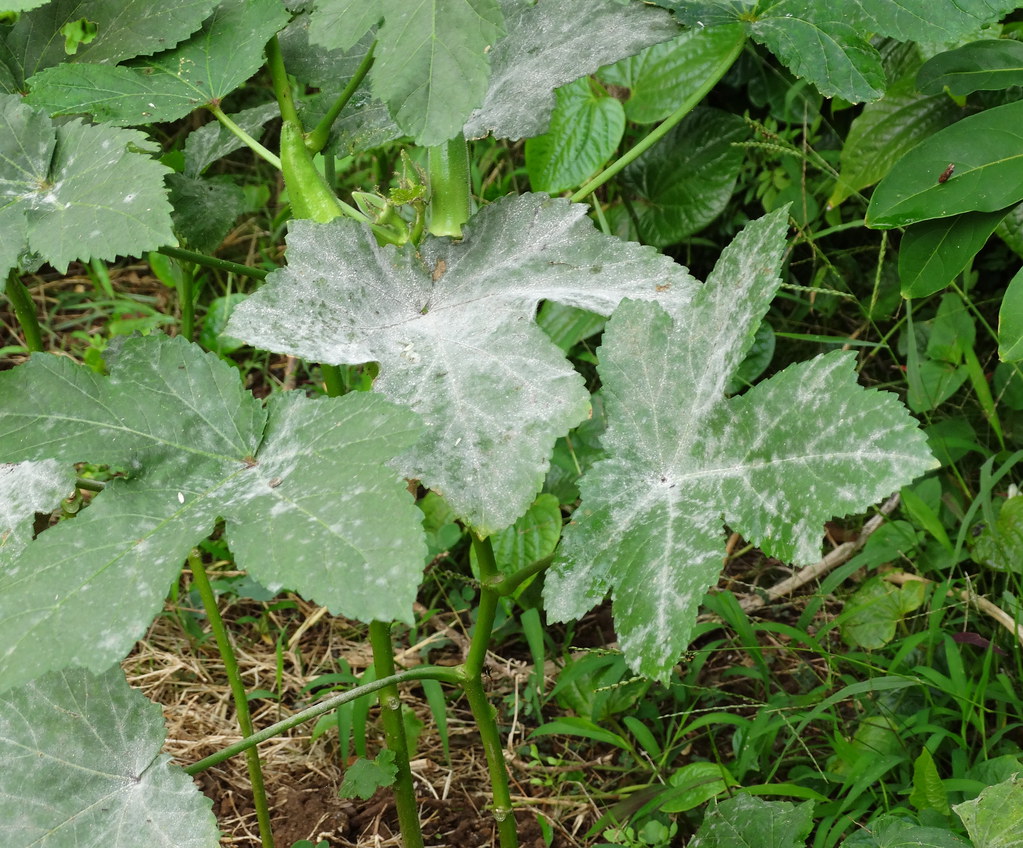
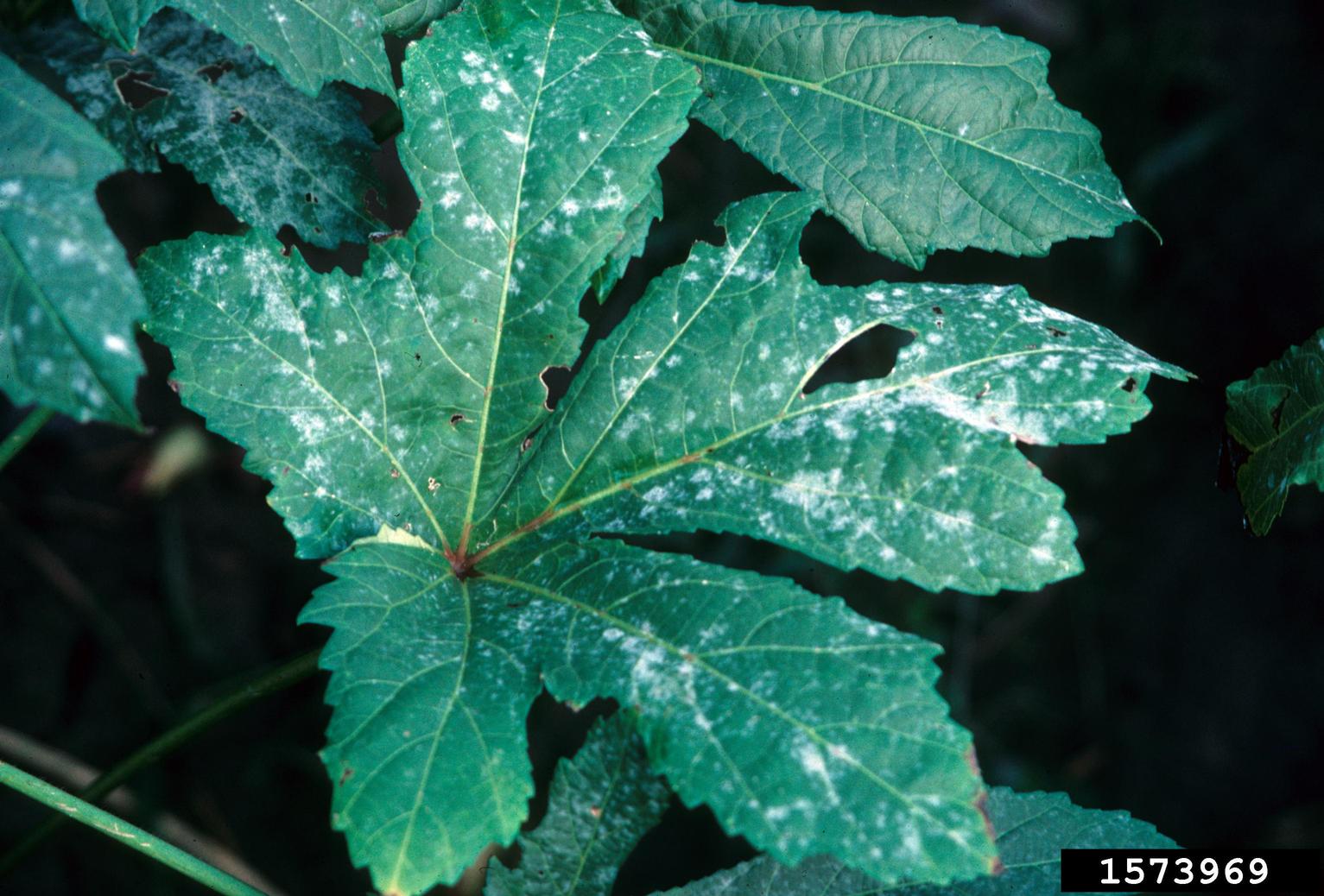
- The characteristic symptom is a superficial white powdery growth on tender shoots, leaves, flowers and fruits.
- Small cottony white spots appear on the infected leaves which gradually spread on the lamina.
- Heavily infected leaves become yellow, and then become dry and brown.
- Infected tissues may be distorted and show crinkling.
- The disease is more prevalent in winter months. Low humidity, sunny days and low night temperature favors disease development.
- The fruit yield is reduced and the affected fruit are smaller in size.
Management
- Maintain proper health of the plant.
- Organic mulch added around the plants will protect roots while preventing fungal spores from splashing onto the plant.
Chemical Control
| Sl.No | Generic Name | Trade Name | Color code | Dosage/litre | Knapsack Sprayer (Capacity 10L) | Recommendation | Remarks | |
|---|---|---|---|---|---|---|---|---|
| Dosage/acre (200 L) | Dosage/hectare (500 L) | |||||||
| 1 | Carbendazim 50 WP | Bavistin, Benfil, Bengard, Benlate, Benmain, Bensaan, Carben, Carziim50, Dhanustin, Dhanustin 50 WP, Fungiguard, Gancarzin50, Glizim, Mintho, Tagstin, Tiara, Zoom | Green | 2 g/ litre of water | 20 g | 400 g | 1000 g | Spray when the disease is noticed |
| 2 | Wettable sulphur 80 WP | Dhanusul 80 WP, Dhanusulf, Ganesulf, Insulf, Microsul, Sulfex, Sulfix 80 WP, Sulfex80, Tagsulf, Thiovit, Wettasul | Green | 2 g/litre of water | 20 g | 400 g | 1000 g | Spray when the disease is noticed |
| 3 | Dinocap 48 EC | Arathane, Karathane | Blue | 2 ml/litre of water | 20 ml | 400 ml | 1000 ml | Spray when the disease is noticed |
Extremely Toxic

Highly Toxic

Moderately Toxic