Common scab(Streptomyces scabies, S. griseus, S. aureofaciens, and S. falveolus)
Symptoms
The pathogen primarily infects young developing tubers by entering through the lenticels or occasionally via wounds.
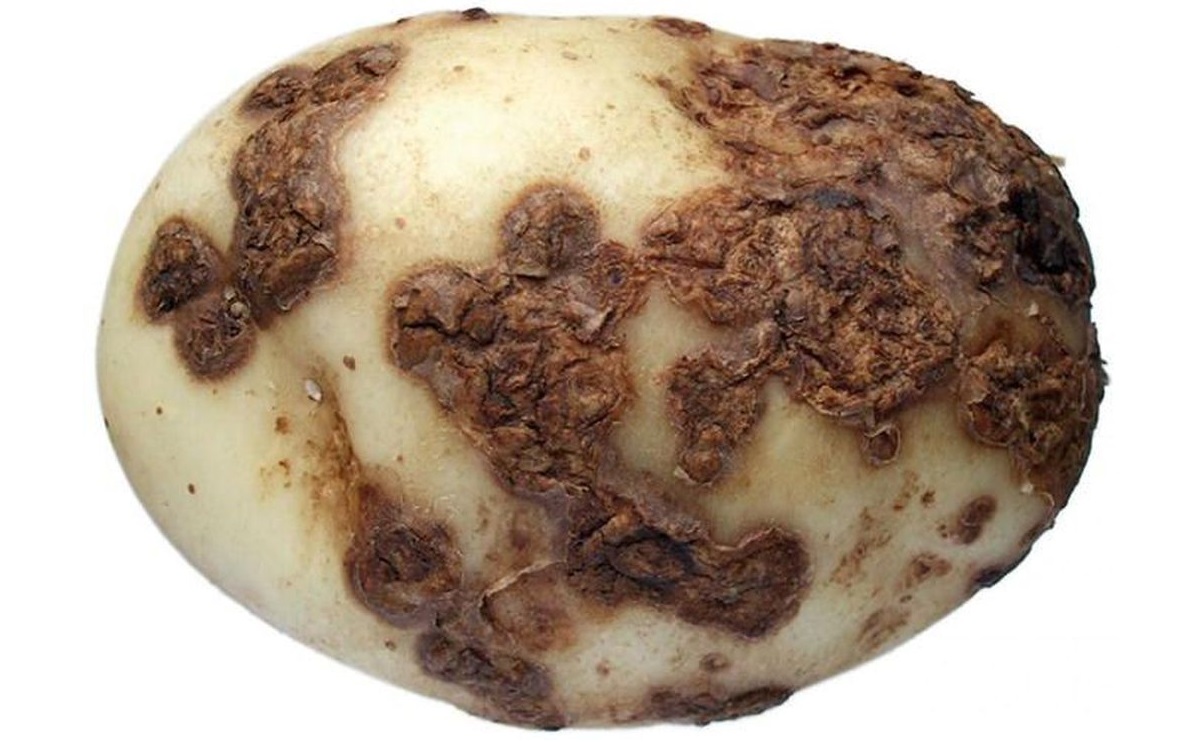
Initial infections present as superficial reddish-brown spots on the tuber surface, which expand as the tubers grow, developing into corky and necrotic lesions.
Scab symptoms mainly appear on tubers and are divided into shallow and deep pitted categories.
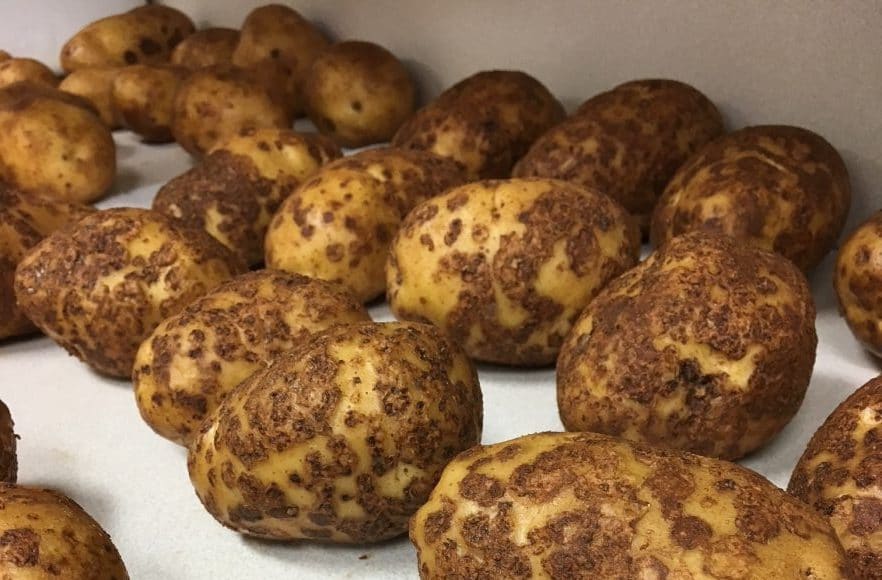
Shallow scab manifests as superficial roughened areas resembling skin abrasion (russetting), sometimes slightly raised or below the tuber skin.
Scab lesions consist of corky tissue resulting from abnormal proliferation of tuber epidermis cells due to pathogen invasion, varying in shape, size, and brown color.
Deep pitted scab lesions are dark brown or almost black, measuring 3-4 mm or more in depth, surrounded by hard corky tissue, potentially joining together to cover the entire tuber surface.
Often, various symptoms coexist, such as slightly brownish roughening of tuber skin, proliferated lenticels with hard corky deposition, concentric series of wrinkled cork layers around a central black core, raised rough and corky pustules, and deep pits surrounded by hard corky tissue.
Affected tubers display rough, cracked skin with scab-like spots, while severe infections leave potato skins covered with rough black welts.
Severe attacks may also result in the development of dark brown lesions on roots and stolons.
Management
Start with seed tubers that are free from disease.
Keep the ridges moist for a few weeks when the tubers are forming to make it hard for the disease to grow.
After growing potatoes, plant crops like wheat, pea, oats, barley, lupin, soybean, sorghum, and bajra in rotation to stop the disease from spreading.
Before planting potatoes, grow certain legumes and use green manure, which helps control common scab.
Green manure boosts the activity of helpful bacteria that fight against the scab-causing bacteria.
To control potato scab, water the field regularly every week from when the tubers start forming until they're fully grown.
Since all actinomycetes are susceptible to PCNB (penta-chloro-nitro-benzene), soil application of Brassicol @ 20-30 kg is very effective.