

Potato (Solanum tuberosum)
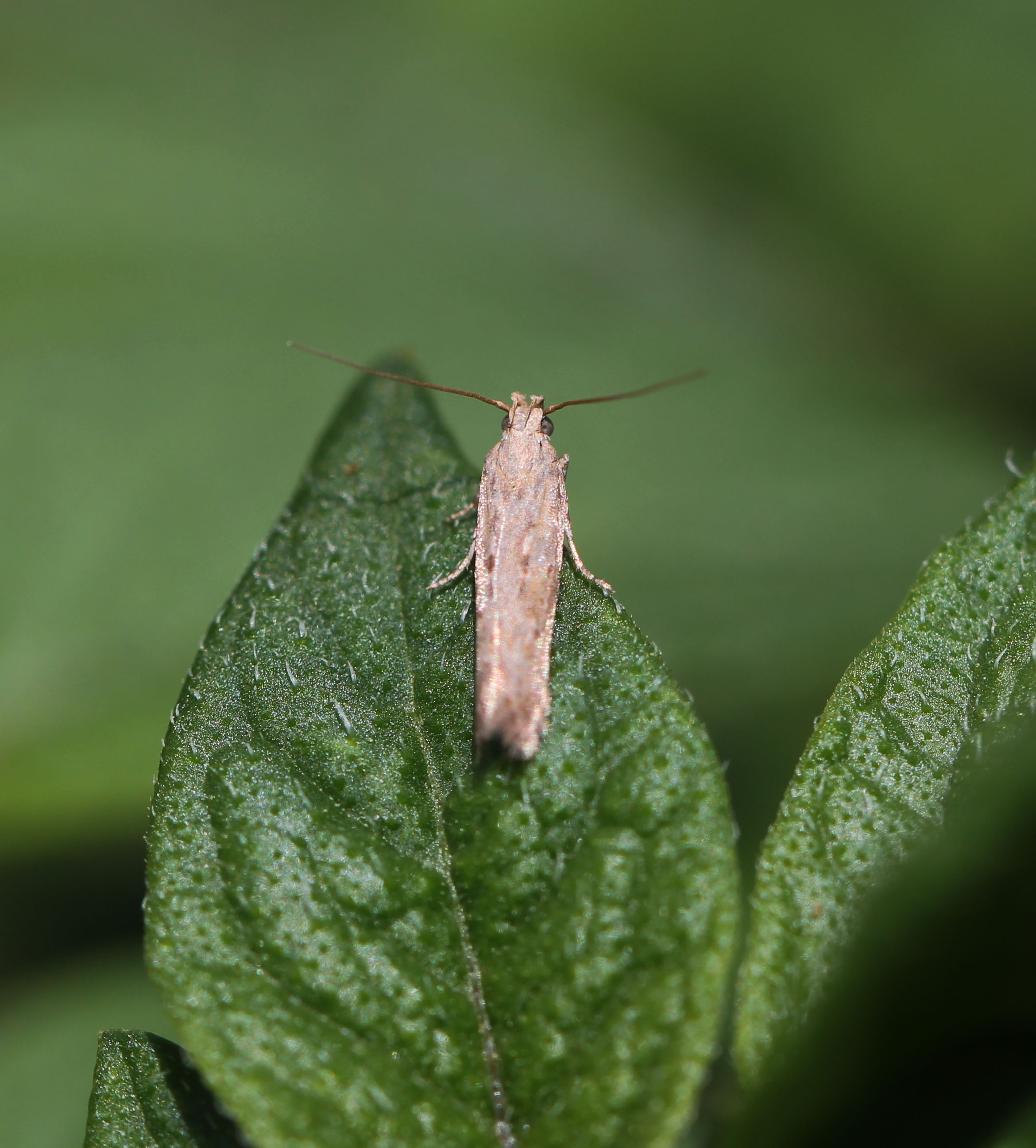
Potato tuber moth(Phthorimaea operculella)
Symptoms
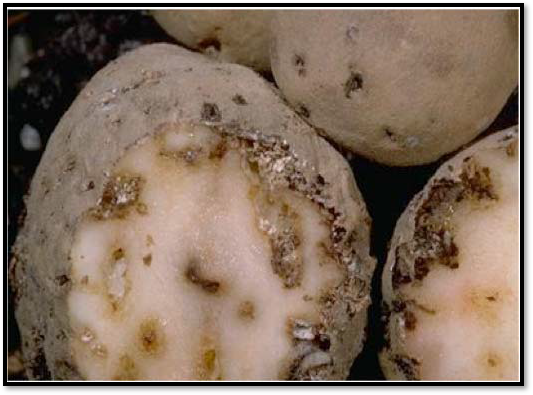
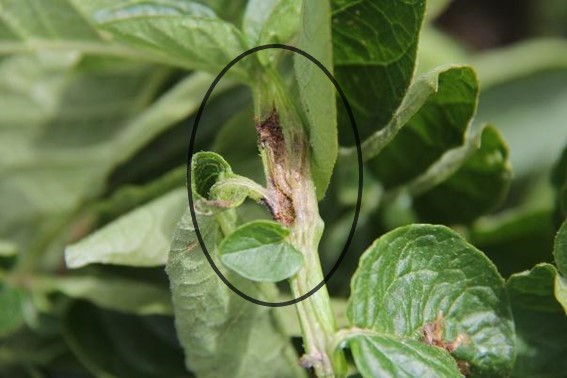
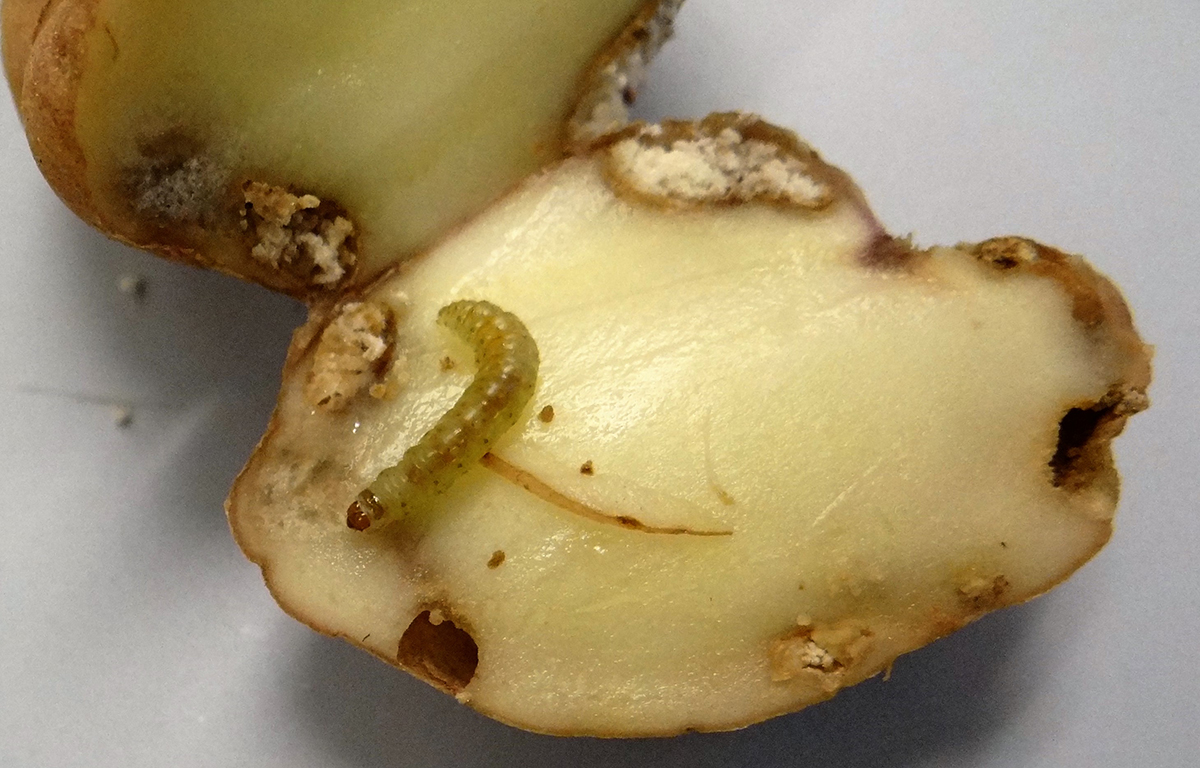
- Potato tuber moths affect both tubers and foliage, with larvae mining younger leaves, petioles, and terminal shoots, while also feeding on tubers.
- Larvae penetrate tubers either in the field or during storage, resulting in irregular galleries and deep tunnels, particularly in severe storage infestations.
- Larvae feces are often found near bore holes.
- Additionally, they enter leaves, consuming the inner portions and leaving behind dried-up outer skins.
Management
- Select healthy tubers for planting
- Plant the tubers to a depth at 10 - 15 cm deep
- Adopt intercropping with Cowpea, onion, maize, coriander .etc.
- Rotate potato with non-host crops like cereals, cucurbits .etc.
- Collect and destroy all the infested tubers from the field
- Do not leave the harvested tubers in the field overnight
- Do earthing up at 60 days after planting to avoid female moths laying eggs on the exposed tubers
- Spray Neem seed kernel extract (NSKE) (50gm/L of water)
- Spray Bacillus thuringiensis @1 kg/ha at 10 days interval
Chemical Control
| Sl.No | Generic Name | Trade Name | Color code | Dosage/litre | Knapsack Sprayer (Capacity 10L) | Recommendation | Remarks | |
|---|---|---|---|---|---|---|---|---|
| Dosage/acre (200 L) | Dosage/hectare (500 L) | |||||||
| 1 | Quinalphos 25 EC | Agroquin, Anuphos, Guin Guard Tagquin, H.LX, Hilquin Geelux, Kinalaux Exalux, Krilux, Quinaswan Flash, Quincid Starlux, Rambalux Quinolux | yellow | 2 ml | 20 ml | 400 ml | 1000 ml | |
Extremely Toxic

Highly Toxic

Moderately Toxic