On young seedings, the cotyledons show blackening at the margins.
Infected seedlings become yellow, drop lower leaves and may die.
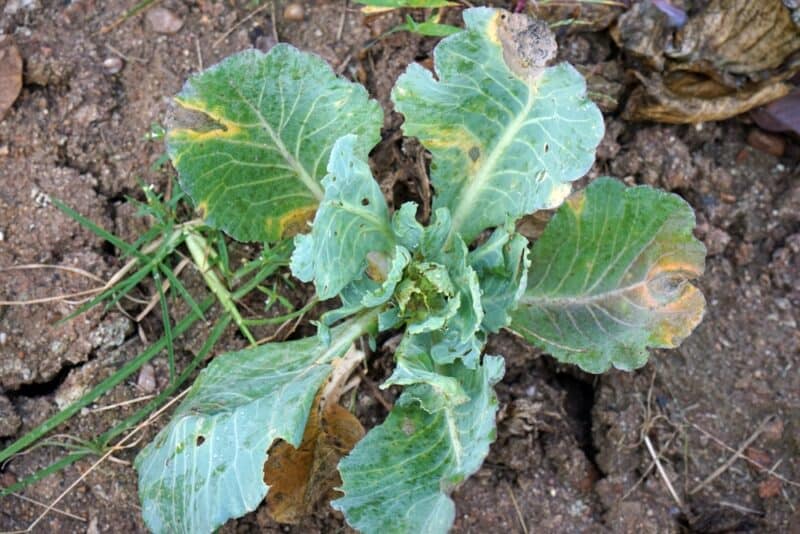
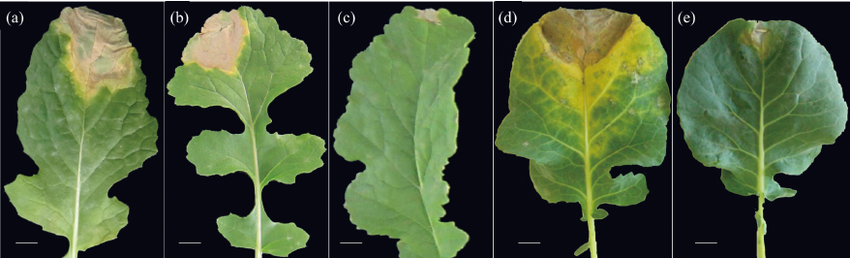
The infected tissue turns pale green-yellow and then turns brown and dies.
Affected areas are usually wedge- or V-shaped.
These areas enlarge as the disease progresses, and severely affected leaves may drop off.
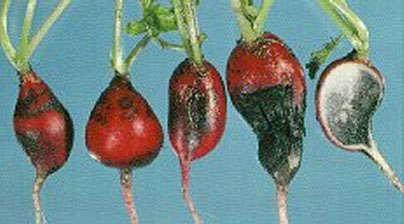
The veins in infected leaves, stems, and roots sometimes become black.
The heads of the infected plants remains small and its quality is reduced making it unfit for marketing.
Management
An integrated approach is needed to manage black rot successfully.
Use of black rot tolerant varieties is the best method to control the disease.
Considerable reduction in disease has been observed when seeds are treated with Agrimycin-100 (1 gram / 10 litre of water) or Streptocycline (0.5 gram/litre of water).
Treat seeds with Pseudomonas fluorescens (20 g/litre of water / kg of seed) and soil application of Pseudomonas fluorescens fortified in neem cake also reduces the disease incidence.
Planting should be done on raised beds to facilitate drainage.
Cultivation in the fields where crucifers have been continuously grown during last 2 years should be avoided.
Plants should be thoroughly inspected for black rot symptoms.
Affected plants should be removed and destroyed.
Disinfect the area with bleaching powder @ 15 kg/ha in endemic fields.
Soil drench Agrimycin-100 (1 gram / 10 litre of water) or Streptocycline (0.5 gram/litre of water) when the disease is noticed.