

Radish (Raphanus sativus)
Club root(Plasmodiophora brassicae)
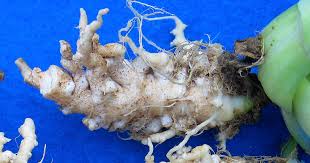
Symptoms
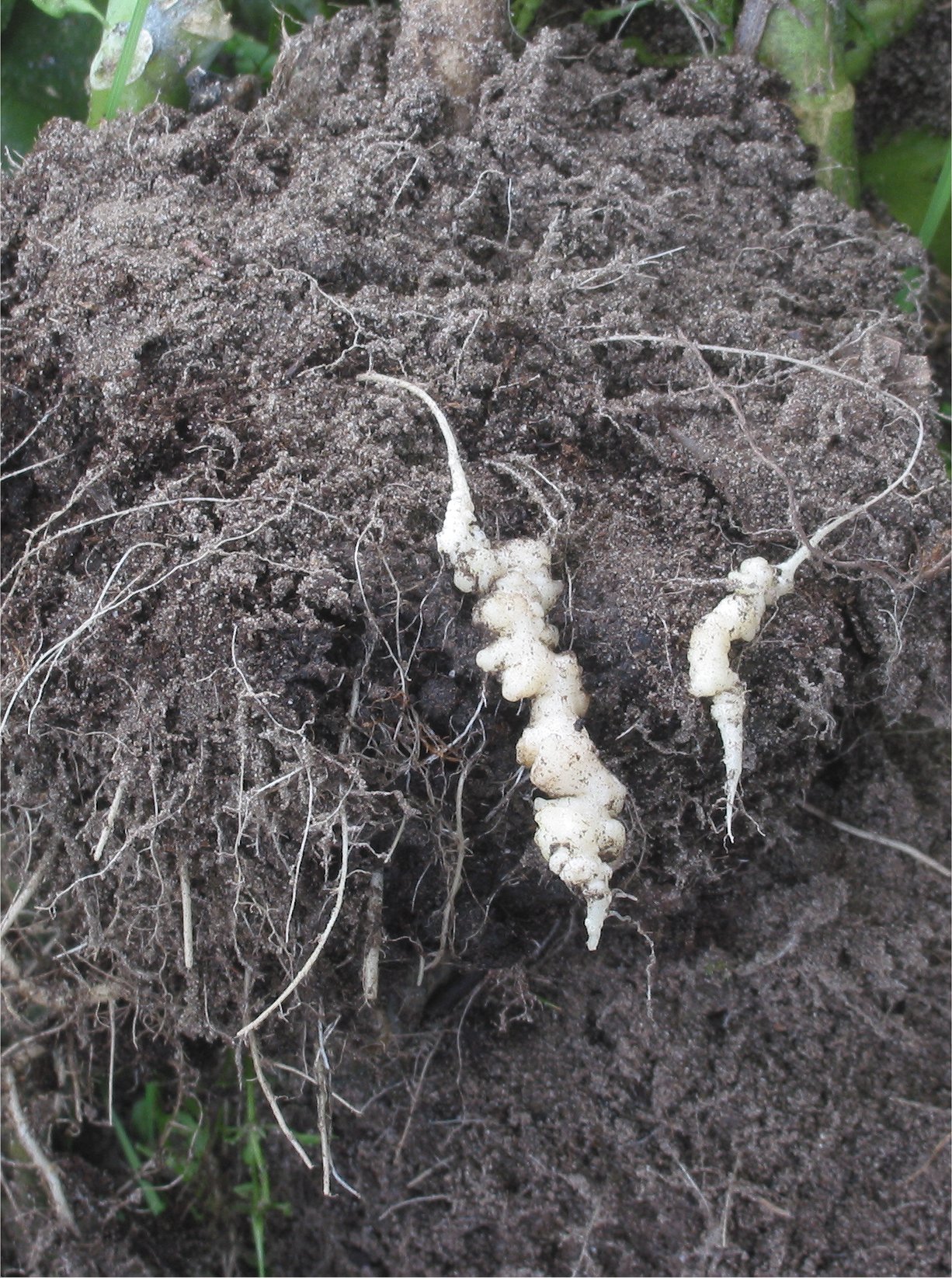
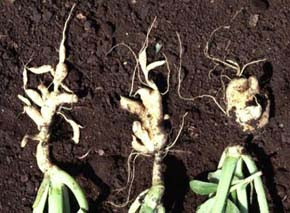
- Cool, wet and acidic soils favor the development and spread of the disease.
- Roots develop clubs (swellings) that can be 12-15 cm wide.
- The largest clubs are usually on the larger roots just below the soil surface.
- Infection in the nursery stage results in the death of seedlings.
- When plants are attacked at a later stage, the disease rarely kills the plant, but the capacity of the affected roots to absorb minerals and water gets reduced.
- Plants wilt in hot weather but partly recover at night.
- Finally leaves become stunted, yellowish and prematurely bolt in hot weather.
Management
- Use certified seeds
- Long crop rotations with non-cruciferous crops for 6 years or longer help prevent a pathogen build- up and reduce disease incidence.
- When susceptible varieties are grown in acidic soils, finely ground limestone is thoroughly mixed into the soil six weeks before planting to raise the soil pH above 7.0.
Chemical Control
| Sl.No | Generic Name | Trade Name | Color code | Dosage/litre | Knapsack Sprayer (Capacity 10L) | Recommendation | Remarks | |
|---|---|---|---|---|---|---|---|---|
| Dosage/acre (200 L) | Dosage/hectare (500 L) | |||||||
| 1 | Carbendazim 50 WP | Bavistin, Benfil, Bengard, Benlate, Benmain, Bensaan, Carben, Carziim50, Dhanustin, Dhanustin 50 WP, Fungiguard, Gancarzin50, Glizim, Mintho, Tagstin, Tiara, Zoom | Green | 1 g/ litre of water | 10 g | 200 g | 500 g | - |
Extremely Toxic

Highly Toxic

Moderately Toxic