Papaya (Carica papaya)
Nitrogen (N)
Symptoms
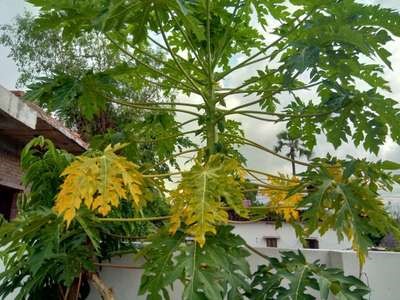
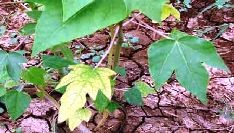
- Deficiency symptoms will be first noticed in older leaves
- Symptoms were pale green to light green normally starts from leaf tip .
- Leaves become pale green with reduced leaf area & rate of leaf production
- Deficiency makes short , thin and compressed Leaf petioles
- Petioles shows pinkish discoloration
- Plant exhibits stunted growth
Management
- For determining the severity of the deficiency, soil analysis has to be done
- Application of quick releasing nitrogen fertilizer like urea, according to the results of the soil test.
- Frequent application of organic growth boosters is also beneficial
- Apply urea as a foliar spray (10 gram per litre of water) once every 15 days .
Phosphorus (P)
Symptoms
- Syptoms first noticed in older and lower leaves.
- Complete cessation of stems elongation
- Older leaves become irregularly necrotic
- Reduced leaf production
- Marginal chlorosis of leaves
- Premature death
- Cause blue / dark green coloration of leaves.
- Root growth will be severely affected.
Management
- Ensure that recommended amount of fertilizer is applied on regular time.
- For determining the severity of the deficiency, soil analysis is to be done
- Use fertilizers such as single superphosphate for quick correction or bone meal or rock phosphate for long-term correction.
- In the pH range of 6.2-7.0, phosphorus is readily absorbed by the roots.
- Addition of biofertilizers including phosphorus solubilizing bacteria along with organic manure helps to increase the availability of phosphorus
Potassium (K)
Symptoms
- Symptoms will be first noticed in older and lower leaves.
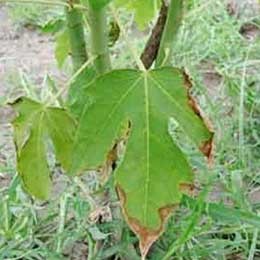
- Symptoms first appear as pale to lemon-yellow margins on older leaves.
- Leave become smaller in size with necrotic leaf tips & leaf margins
- Premature yellowing of entire plant is noticed
- Development of purplish brown patches on base
of petioles
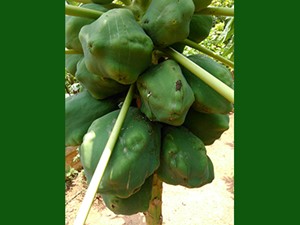
- Fruits are distorted, malformed and unsuitable for marketing.
- Marked reduction in overall growth of the plant
Management
- In the pH range of above 6, Potassium is readily available.
- Maintain pH by addition of lime/dolomite
- Improve the soil fertility by adding organic matter and wood ash.
- For determining the severity of the deficiency, soil analysis is to be done
- Use Muriate of Potash (MOP) according to the results of the soil test. Split application is preferable.
- Apply foliar sprays of sulphate of potash (SOP) (10 gm/litre of water) and wetting agents in the morning as an immediate remedy
Calcium (Ca)
Symptoms
- Deficiency is seen mainly in growing points, younger leaves and developing fruits.
- Chlorosis of leaves with curled edges
– initial symptom
- Small necrotic spots spread on leaf lamina which adversely affects leaf development
- Stems of affected leave become twisted and folded.
- Softening of the pulp affecting fruit quality.
- Plant exhibit reduced internodal length leads to rosetting appearance.
Management
- Analysis of pH in the soil
- If the soil is acidic apply lime 300-500 g/plant/year
- High phosphorus levels lead to calcium deficiency.
- In alkaline soil application of Gypsum is preferable
- Boron is needed for calcium utilization.
- So a boron deficiency can also lead to calcium deficiency.
Magnesium (Mg)
Symptoms
- Deficiency is seen first in the bottom leaves.
- Interveinal chlorosis – yellowing between the veins
- Leaves exhibit green banding around the margin & edge
- Later stages marginal yellowing of leaves that extend towards midrib.
- Plant height drastically reduced
- leaves become malformed
- Purplish mottling of leaf petiole is also noticed.
Management
- Do the soil analysis and confirm the deficiency.
- Addition of Magnesium sulphate (32 gram /plant or 32 kg/ acre) in bands near plants.
- Long-term usage of dolomite will reduce magnesium deficiency
- Magnesium and potassium fertilizers should not be applied together
Sulphur(S)
Symptoms
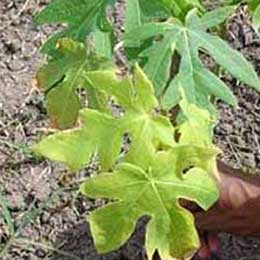
- Deficiency symptoms first appear in the upper and younger leaves.
- chlorosis followed by uniform yellowing of the leaves
- Delayed of green colour in newly emerged leaves
- Leaf size & Plant growth are reduced
- Leaf blades become very soft and tear easily.
- Over all stunting of plant growth
Management
- Application of sulphur-containing fertilisers, such as Factamfos, Ammonium sulphate, Single superphosphate, etc., reduces the deficiency.
- In sulphur deficient soils , apply sulphur dust (10 gram per plant or 10 kilogrammes per acre).
- Deficiency in alkaline soil can be reduced by application of gypsum
- Addition of organic material improves sulphur availability.in the soil .
- Burning of organic waste leads to sulphur deficiency
Boron (B)
Symptoms
- Symptoms noticed on growing points, younger leaves and developing fruits.
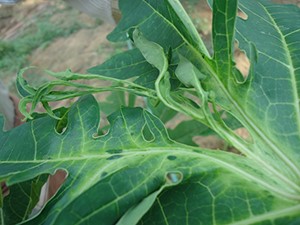
- Newer leaves show distorted symptoms
- Death of growing points
- Leaves show chlorotic symptom with inward cupping of tips.
- Bushy appearance of shoots exhibit stunted growth
- Fruits are deformed
- Leaves may become claw-like
- Distorted & brittled
- Seeds of deficient plants fail to germinate
Management
- Analysis of soil to confirm the deficiency.
- Application of borax (4 gram /plant or 4 kg/ acre) into the soil
- Addition of borax (1 gram / litre of water) as foliar spray.
- Avoid the combined application of Boron and calcium.
- Application of borax with ammonium fertilizers should be avoided.