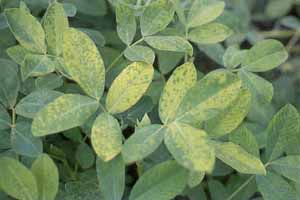
Nitrogen exhibits high mobility within plants, facilitating transfer from lower leaves to growing points when soil nitrogen levels decline.
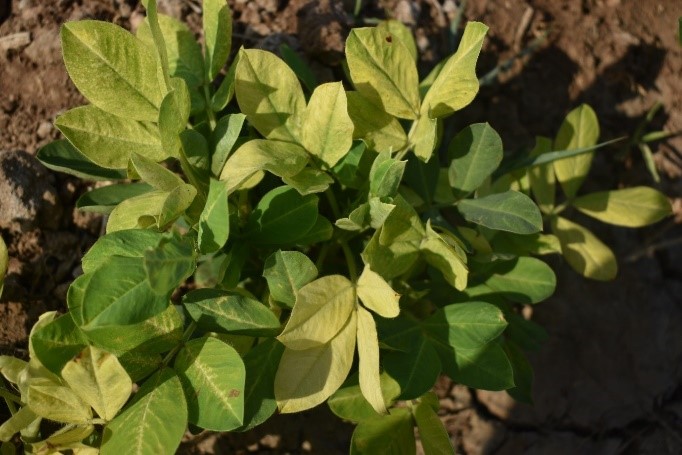
Consequently, initial signs of nitrogen deficiency manifest in older, lower leaves.
Early symptoms include yellowing of leaves, typically starting at the leaf tip.
Depending on the extent of deficiency, older leaves may wither or drop, while stems may appear thin and elongated.
Affected plants may display reddish stems and exhibit stunted growth, characterized by pale green foliage.
Management
For determining the severity of the deficiency, soil analysis has to be done
Application of quick releasing nitrogen fertilizer like urea, according to the results of the soil test.
Apply urea as a foliar spray (10 gram per litre of water) once every 15 days .
Frequent application of organic growth boosters is also beneficial
Phosphorus (P)
Symptoms
Phosphorus nutrition plays a crucial role in shaping root growth.
In cases of deficiency, the root cap tends to dry out, hampering the absorption of essential nutrients.
Initial signs of deficiency typically appear in older, lower leaves.
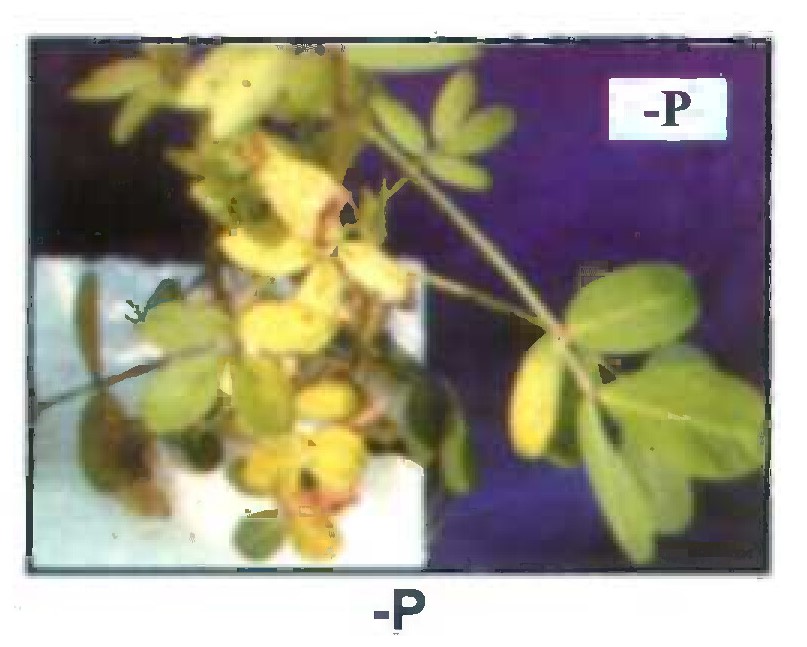
Affected leaves may darken to a deep green hue, later turning reddish-purple.
Plant size and branching patterns are adversely affected, leading to stunted growth.
Delayed blooming, reduced flower count, and hindered fruit or pod development are additional consequences of phosphorus deficiency.
Management
Ensure that recommended amount of fertilizer is applied on regular time.
For determining the severity of the deficiency, soil analysis is to be done
Use fertilizers such as single superphosphate for quick correction or bone meal or rock phosphate for long-term correction.
In the pH range of 6.5-7.5, phosphorus is readily absorbed by the roots.
Addition of biofertilizers including phosphorus solubilizing bacteria along with organic manure helps to increase the availability of phosphorus
Potassium (K)
Symptoms
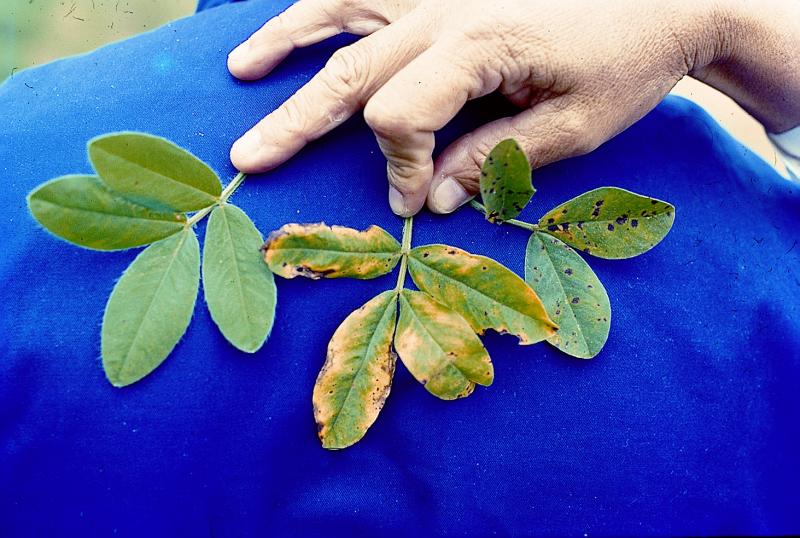
Potassium, being highly mobile within plants, exhibits deficiency symptoms primarily in older and lower leaves initially.
Common indications comprise chlorosis or yellowing, notably along leaf margins or tips.
Symptoms originate in lower leaves and gradually advance upwards through the plant.
In severe instances, leaves may exhibit dryness and scorching along their edges.
Affected plants experience stunted growth, characterized by diminished branch size and overall vigor, resulting in subpar fruiting and pod development
Management
In the pH range of above 6, Potassium is readily available.
Maintain pH by addition of lime/dolomite
Improve the soil fertility by adding organic matter and wood ash.
For determining the severity of the deficiency, soil analysis is to be done
Use Muriate of Potash (MOP) according to the results of the soil test. Split application is preferable.
Apply foliar sprays of sulphate of potash (SOP) (10 g/litre of water) and wetting agents in the morning as an immediate remedy
Calcium (Ca)
Symptoms
Calcium, being immobile within plants, primarily manifests deficiency symptoms in growing points, younger leaves, and developing fruits.
Initial signs include browning and necrosis at the tips of roots and leaves.
Reduced internodal length and rosetting of leaves are common manifestations.
Leaf edges appear ragged and may become brittle, with upward curling near the terminal bud.
Depressions may be evident on tender leaves and the undersurface of leaves.
Tender stem and root parts suffer damage, leading to stunted growth.
Poor pod formation is a notable consequence of calcium deficiency.
Management
Analysis of pH in the soil
Check the pH of the soil. If the soil is extremely acidic (pH between 3.5 and 4.5), apply lime (3.4 kg/cent of 40 m2 in two split doses). And in areas of moderate acidity (pH between 5.5 and 6), apply lime (1 kg/cent of 40 m2).
High phosphorus levels leads to calcium deficiency.
In alkaline soil application of Gypsum is preferable
Boron is needed for calcium utilization.
So a boron deficiency can also lead to calcium deficiency.
Magnesium (Mg)
Symptoms
Initial symptoms of deficiency typically appear in lower leaves before progressing upwards as the condition worsens.
The primary indication is the presence of dark green veins contrasted with yellow areas between them, known as interveinal chlorosis.
Chlorotic leaves may subsequently transition to a reddish hue and develop necrotic spots.
Premature leaf shedding can also occur as an additional symptom of magnesium deficiency.
Management
Do the soil analysis and confirm the deficiency.
Addition of Magnesium sulphate (320 gram /cent or 32 kg/ acre) in bands near plants.
Long-term usage of dolomite will reduce magnesium deficiency
Magnesium and potassium fertilizers should not be applied together
Sulphur(S)
Symptoms
Due to its immobility within plants, sulphur deficiency primarily affects upper and younger leaves initially.
Symptoms typically begin with chlorosis, progressing to overall yellowing.
Severe deficiency can result in the entire plant turning yellow.
Affected plants exhibit stunted growth.
Additionally, sulphur deficiency may delay the maturity of groundnut crops.
Management
Application of sulphur-containing fertilisers, such as Factamfos, Ammonium sulphate, Single superphosphate, etc., reduces the deficiency.
In sulphur deficient soils , apply sulphur dust (100 gram per cent or 10 kilogrammes per acre).
Deficiency in alkaline soil can be reduced by application of gypsum
Addition of organic material improves sulphur availability.in the soil .
Burning of organic waste leads to sulphur deficiency
Boron (B)
Symptoms
Being immobile within plants, boron deficiency primarily affects growing points, younger leaves, and developing fruits.
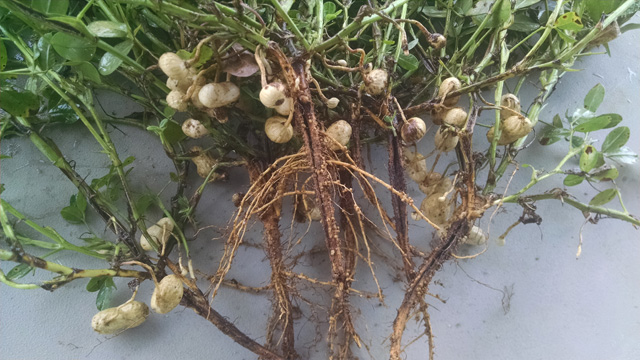
Visible necrotic areas often appear near the leaf margin, while the inner faces of boron-deficient groundnut cotyledons display depressions and discoloration.
Abnormal pod size and shape are common, leading to a condition known as hollow heart, classified as internal damage that diminishes crop quality and value.
Groundnut yields and oil content are also adversely affected by boron deficiency.
Management
Analysis of soil to confirm the deficiency.
Application of borax (40 gram /cent or 4 kg/ acre) into the soil
Addition of borax (1 gram / litre of water) as foliar spray .
Avoid the combined application of Boron and calcium.
Application of borax with ammonium fertilizers should be avoided.
Iron (Fe)
Symptoms
Iron, being immobile within the plant, initially exhibits deficiency symptoms on new growth.
These symptoms typically manifest as interveinal chlorosis, characterized by yellowing between the veins while the veins themselves remain dark green.
Iron deficiency-induced chlorosis affects the entire length of leaves, unlike zinc deficiency, which primarily impacts the lower half of leaves.
These symptoms are frequently observed in calcareous soils with pH levels above 7.5 and in poorly drained soils
Management
Iron content in Kerala soils is often high. So, get a soil test to determine the reason for the problem
Low potassium levels leads to iron deficiency
Addition of Ferrous Sulphate (60 gram/cent or 6 kg/ acre) into the deficient soils.
Manganese (Mn)
Symptoms
Manganese, possessing moderate mobility in plant tissues, initially manifests symptoms on younger leaves.
Deficiency of manganese results in a light green mottle between the main veins of leaves.
This condition leaves a band of darker green along the main veins, contrasting with the interveinal chlorotic areas that adopt a pale green or dull yellowish hue.
Additionally, distinctive brown spots may appear on the leaf margins as a characteristic feature of manganese deficiency.
Management
Soil Analysis
Application of Manganese Sulphate (5 gram per litre of water) as foliar spray
Zinc (Zn)
Symptoms
Symptoms of zinc deficiency often entail yellowing between leaf veins, with veins retaining a dark green color, known as interveinal chlorosis.
Zinc deficiency symptoms can overlap with those of iron deficiency, potentially leading to confusion.
Notably, while iron chlorosis affects the entire length of leaves, zinc deficiency-induced chlorosis primarily occurs in the lower half of leaves.
Zinc deficiency additionally leads to stunted growth, characterized by smaller-than-normal young leaves.
Management
The optimal pH range for zinc availability is 5 to 7.5.
Confirm deficiencies by doing soil testing.
Apply zinc sulphate to deficient soils (800 g /cent or 8 kg/ acre)
Avoid the application of Zinc and phosphate fertilizers at the same time
In severe cases, foliar spraying of Zinc sulphate (2 gram/litre of water) with Calcium carbonate (2.5 gram/litre of water) can be advocated in morning hours.