Coffee (Coffea spp)

Nitrogen (N)

Symptoms

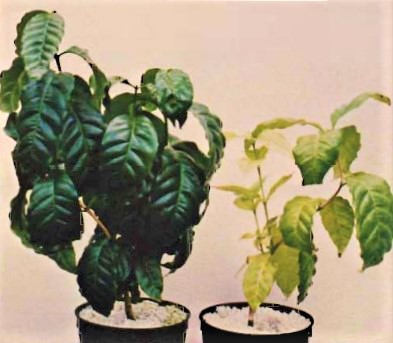
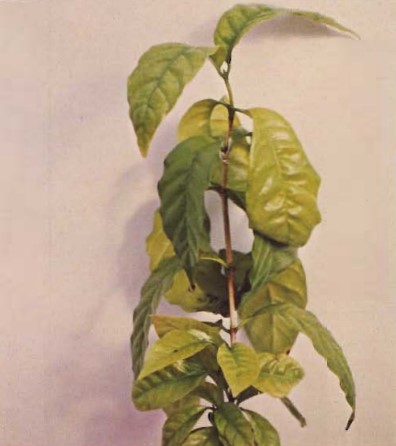
  • Deficiency symptoms first noticed in older and lower leaves.
  • Premature leaf fall.
  • Delayed fruit flowering
  • Sparse foliage with fewer leaves & smaller leaf size compared to healthy plants
  • Shoot growth was severely inhibited
  • Lower bean & oil quality

Management

  • For determining the severity of the deficiency, soil analysis has to be done
  • Application of quick releasing nitrogen fertilizer like urea, according to the results of the soil test.
  • Apply urea as a foliar spray (10 gram per litre of water) once every 15 days .
  • Frequent application of organic growth boosters is also beneficial.

Phosphorus (P)

Symptoms

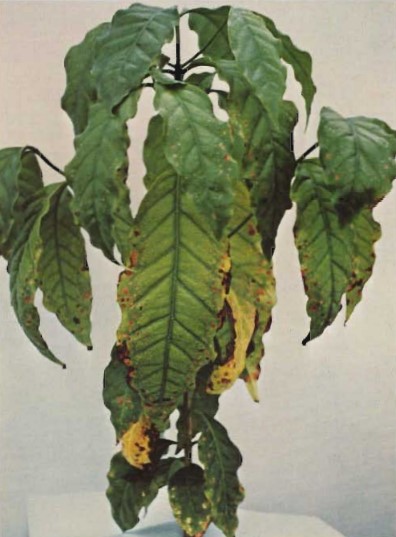
  • Symptoms first noticed in older and lower leaves.
  • Slight mottled chlorosis of the older leaves.
  • At severe deficiency, necrotic spots develop on the leaves.
  • Root growth will be inhibited.
  • Delayed flowering & fruit set

Management

  • Ensure that recommended amount of fertilizer is applied on regular time.
  • For determining the severity of the deficiency, soil analysis is to be done
  • Use fertilizers such as single superphosphate for quick correction or bone meal or rock phosphate for long-term correction.
  • In the pH range of 6.5-7.5, phosphorus is readily absorbed by the roots.
  • Addition of biofertilizers including phosphorus solubilizing bacteria along with organic manure helps to increase the availability of phosphorus

Potassium (K)

Symptoms

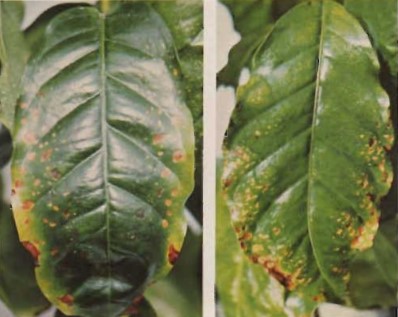
  • Symptoms first noticed in older and lower leaves
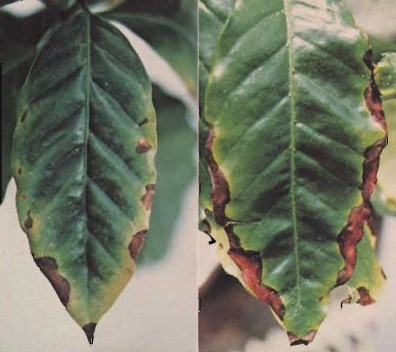
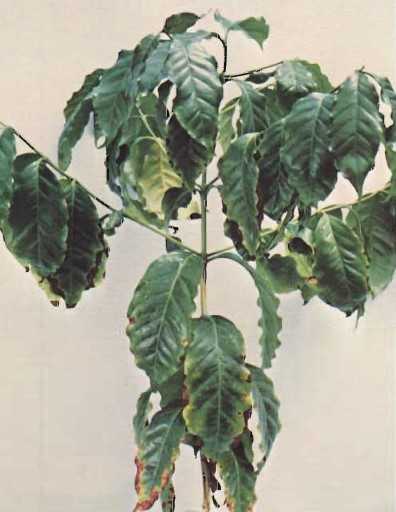
  • Leaves turn pale or yellow starting from leaf margin to tips.
  • Scorching/browning of leaf margins are noticed.
  • Central portion of the blade remains green in color.
  • Young leaves were unaffected

Management

  • In the pH range of above 6, Potassium is readily available.
  • Maintain pH by addition of lime/dolomite
  • Improve the soil fertility by adding organic matter and wood ash.
  • For determining the severity of the deficiency, soil analysis is to be done
  • Use Muriate of Potash (MOP) according to the results of the soil test. Split application is preferable.
  • Apply foliar sprays of sulphate of potash (SOP) (10 gm/liter of water) and wetting agents in the morning as an immediate remedy

Calcium (Ca)

Symptoms

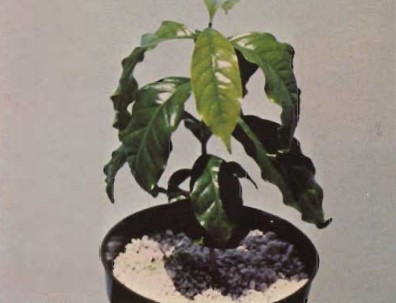
  • Symptoms seen mainly in growing points, younger leaves and developing fruits.
  • Bronzing of young leaves are observed.
  • Necrotic spots appear from leaf margins and progresses towards centre of leaves.
  • Curling, cupping, distorted of leaves are noticed.
  • Exhibit weak & underdeveloped system.
  • Affected berries exhibits normal shape & lower quality.
  • Highly susceptible to storage pests

Management

  • Analysis of pH in the soil
  • If the soil is acidic, add 340 gram of lime per plant per year.
  • High phosphorus levels leads to calcium deficiency.
  • In alkaline soil application of Gypsum is preferable

Magnesium (Mg)

Symptoms

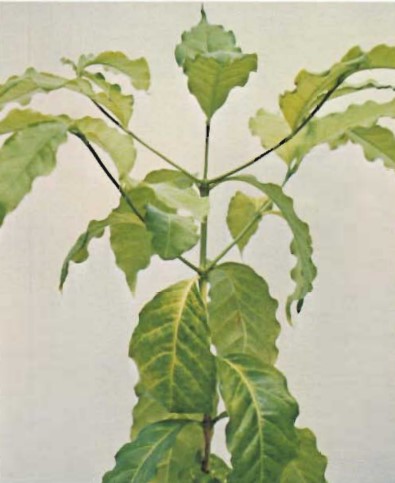
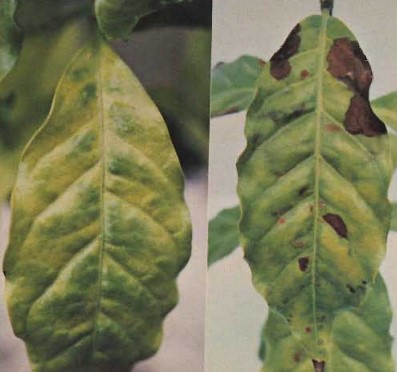
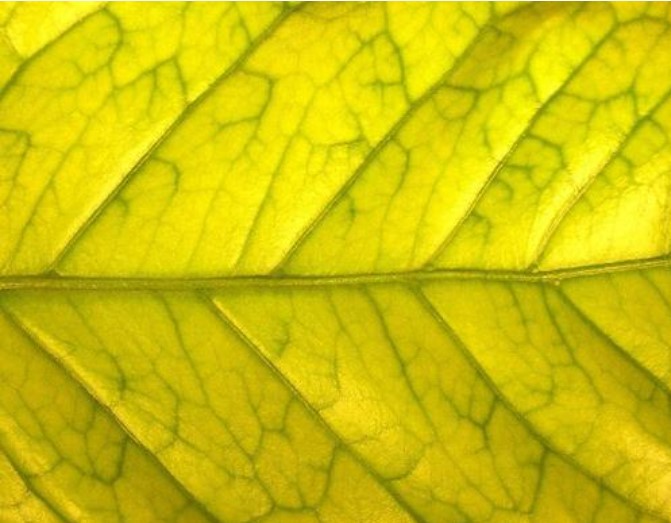
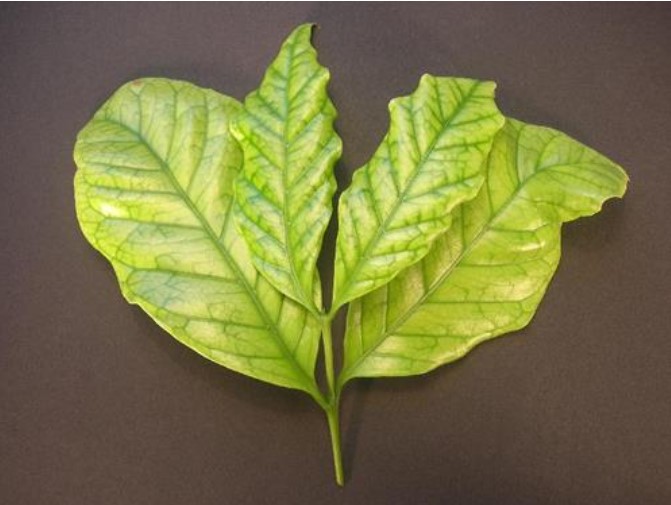
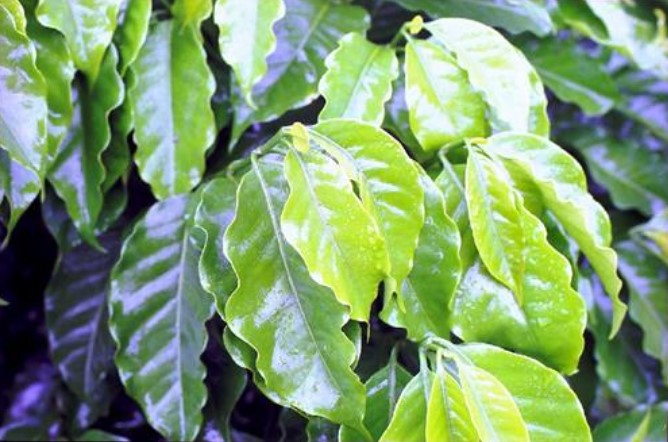
  • Interveinal chlorosis (yellowing of areas between veins while vein remain green)
  • Leaves exhibits curling, distortion, cuppling, twisted
  • Premature abscission of leaves.
  • Young leaves were unaffected

Management

  • Do the soil analysis and confirm the deficiency.
  • Addition of Magnesium sulphate (32 gram /plant or 32 kg/ acre) in bands near plants.
  • Long-term usage of dolomite will reduce magnesium deficiency
  • Magnesium and potassium fertilizers should not be applied together.

Sulphur(S)

Symptoms

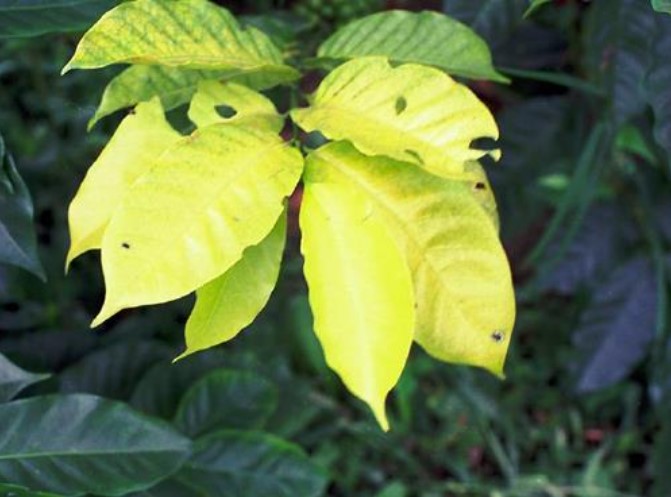
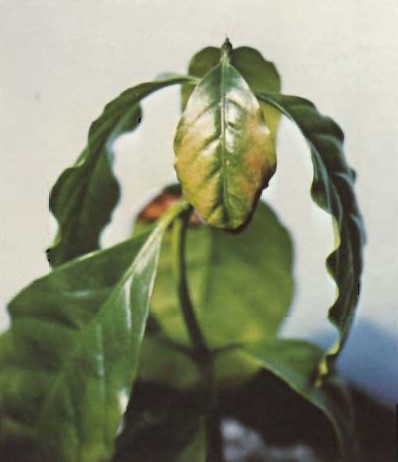
  • Yellowing of younger leaves.
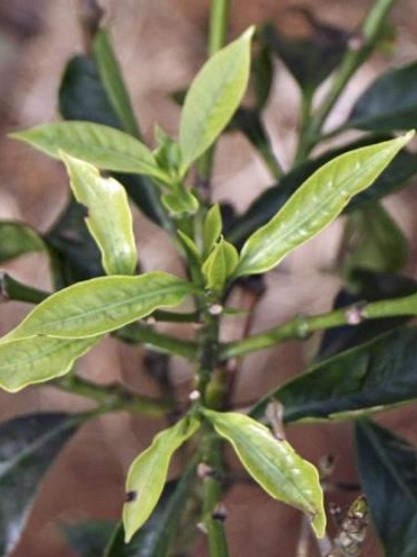
  • Entire leaf blade become pale yellow
  • Delays maturity of coffee. plants
  • Reduced fruits set
  • Plants exhibits shorter internodes resulting in stunted growth.
  • Intensity & complexity of aroma leads to reduced quality

Management

  • Application of sulfur-containing fertilisers, such as Factamfos, Ammonium sulphate, Single superphosphate, etc., reduces the deficiency.
  • In sulphur deficient soils , apply sulphur dust (10 gram per plant or 10 kilogrammes per acre).
  • Deficiency in alkaline soil can be reduced by application of gypsum
  • Addition of organic material improves sulphur availability in the soil.
  • Burning of organic waste leads to sulphur deficiency

Boron (B)

Symptoms

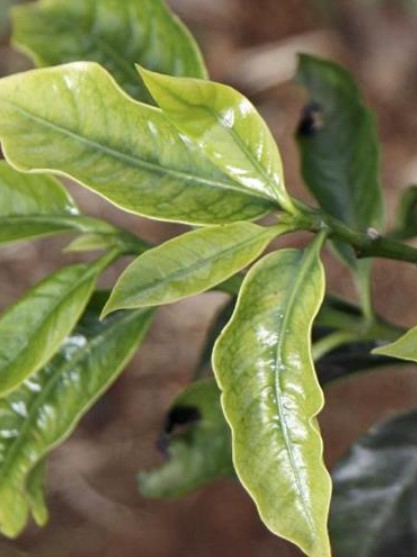
  • Yellowing noticed on leaf margins & progress towards leaf centre of young leaves.
  • Apical bud necrosis is characteristic symptom (death & necrosis of growing tup)
  • Leaves may have leathery texture & exhibits curling, distortion & deformation
  • Reduced flowering & fruit set
  • Beans may have incomplete development & may not fill properly leads to reduced yield & lower quality.
  • Production of hollow or empty beans

Management

  • Analysis of soil to confirm the deficiency.
  • Application of borax (4 gram /plant or 4 kg/ acre) into the soil
  • Addition of borax (1 gram / liter of water) as foliar spray .
  • Avoid the combined application of Boron and calcium.
  • Application of borax with ammonium fertilizers should be avoided.

Iron (Fe)

Symptoms

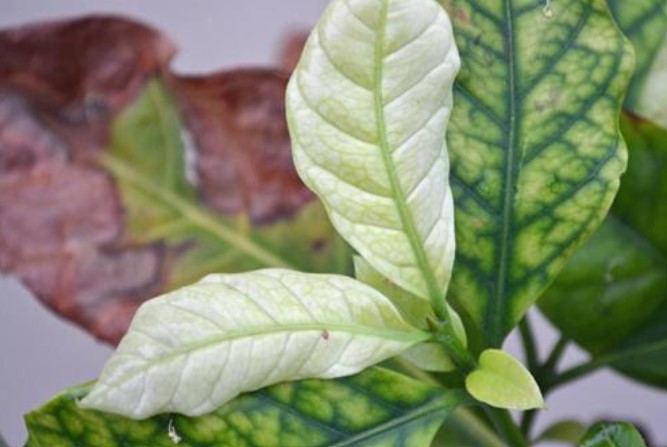
  • Inter veinal chlorosis of younger leaves
  • In severe cases leaves may shows whitening/bleaching appearance.
  • Necrotic spots observed on leaf tips & margins may turn brown or black colour leads to tissue death
  • Yield & quality of beans are reduced

Management

  • Iron content in Kerala soils is often high. So, get a soil test to determine the reason for the problem
  • Low potassium levels leads to iron deficiency
  • Addition of Ferrous Sulphate (6 gram/plant or 6 kg/ acre) into the deficient soils.

Manganese (Mn)

Symptoms

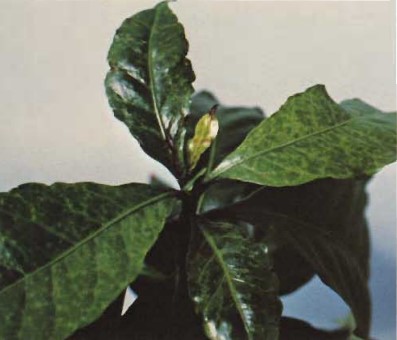
  • Interveinal chlorosis in younger leaves with checkered effect/coarse mottling
  • Necrotic spots on leaves are noticed.
  • Leaves appear twisted & deformed
  • Reduced growth
  • Noticed in soils with high pH

Management

  • Soil Analysis
  • Application of Manganese Sulphate (5 gram per litre of water) as foliar spray

Zinc (Zn)

Symptoms

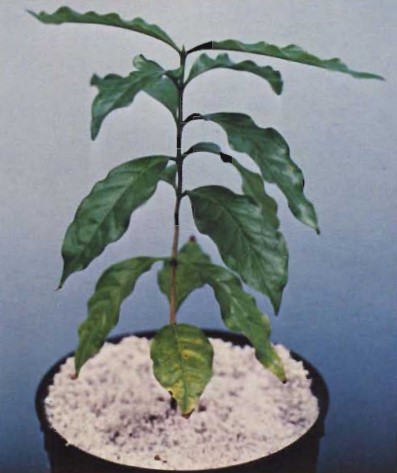
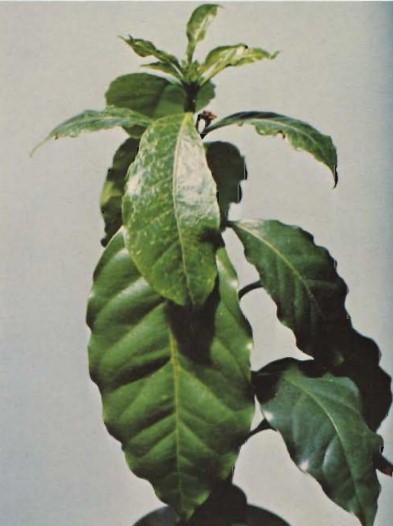
  • Interveinal chlorosis of the leaf blade.
  • Leaves remains small and narrow
  • Abnormal shape of berries is observed.
  • Shortening of internodes giving the plant a rosette appearance
  • Delayed maturity & flowering is noticed.
  • Poor fruit development

Management

  • The optimal pH range for zinc availability is 5 to 7.5.
  • Confirm deficiencies by doing soil testing.
  • Avoid the application of Zinc and phosphate fertilizers at the same time
  • In severe cases, foliar spraying of Zinc sulphate (2 gram/liter of water) with Calcium carbonate (2.5 gram/liter of water) can be advocated in morning hours.