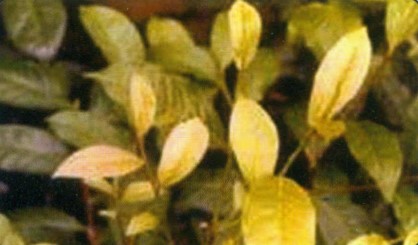
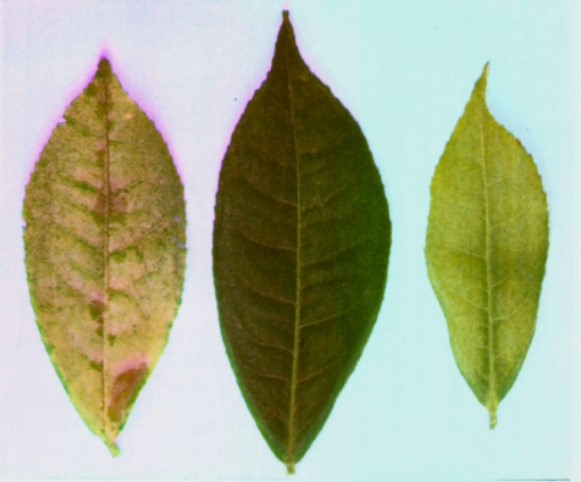
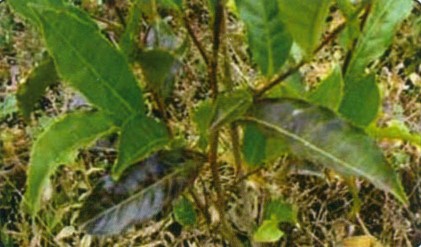
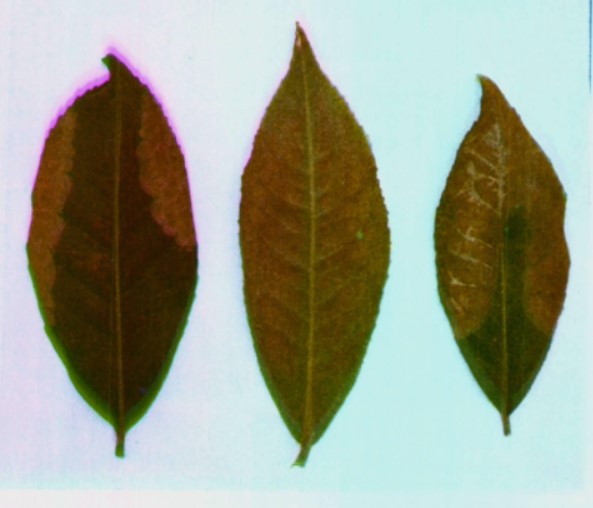
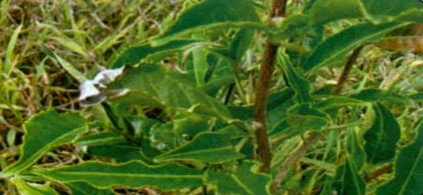
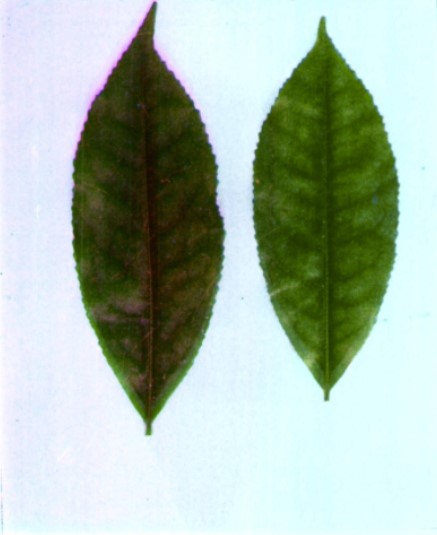
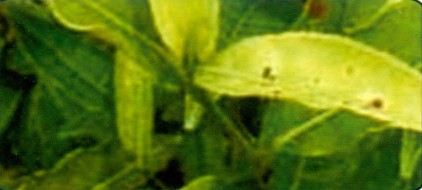
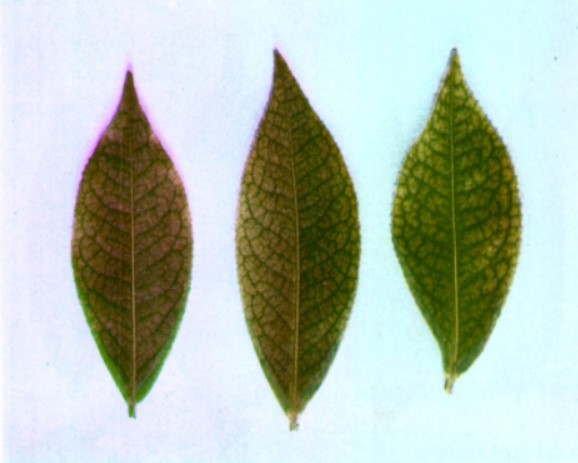
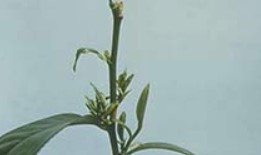
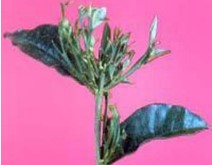
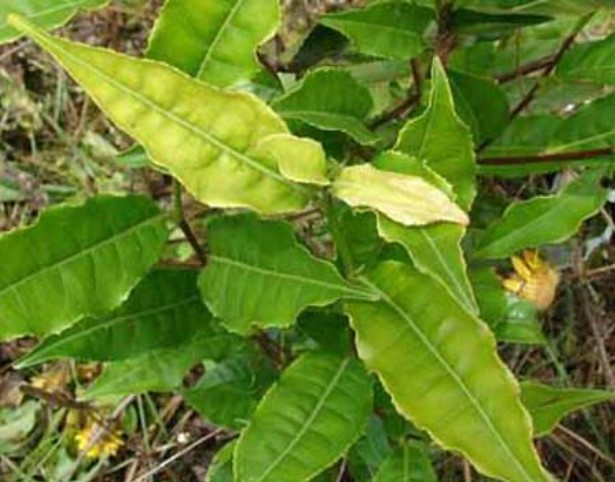
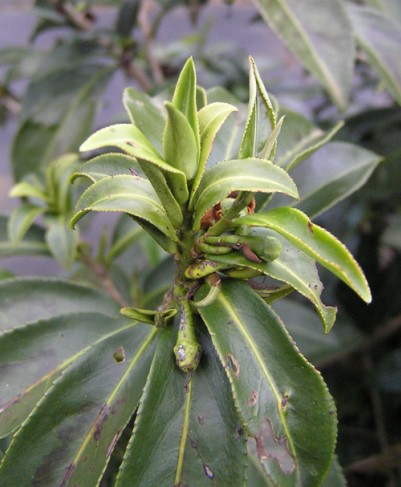
Deficiency symptoms will be first noticed in older leaves
Pale green to light green colour change on leaves.
Death and / or dropping of the older leaves
The leaves become rough and hard
Leaf losses shiny appearance become dull
Reduced size of leaves
Stunted growth of plants
Management
For determining the severity of the deficiency, soil analysis has to be done
Application of quick releasing nitrogen fertilizer like urea, according to the results of the soil test.
Apply urea as a foliar spray (10 gram per litre of water) once every 15 days .
Frequent application of organic growth boosters is also beneficial.
Phosphorus (P)
Symptoms
Deficiency symptoms will be first noticed in older leaves
Loss of glossiness of the older leaves
Death of branches
Stunted growth of plants
Pigmentation of older leaves
Poor root growth and development
Management
Ensure that recommended amount of fertilizer is applied on regular time.
For determining the severity of the deficiency, soil analysis is to be done
Use fertilizers such as single superphosphate for quick correction or bone meal or rock phosphate for long-term correction.
In the pH range of 6.5-7.5, phosphorus is readily absorbed by the roots.
Addition of biofertilizers including phosphorus solubilizing bacteria along with organic manure helps to increase the availability of phosphorus
Potassium (K)
Symptoms
Deficiency symptoms will be first noticed in older leaves
Marginal chlorosis in older leaves
Marginal scorching of leaf
Purple colour (bronzing) over the entire leaf blade
The marginal necrosis is followed by drying of the margins
Reduced size of leaves and malformation
Management
In the pH range of above 6, Potassium is readily available.
Maintain pH by addition of lime/dolomite
Improve the soil fertility by adding organic matter and wood ash.
For determining the severity of the deficiency, soil analysis is to be done
Use Muriate of Potash (MOP) according to the results of the soil test. Split application is preferable.
Apply foliar sprays of sulphate of potash (SOP) (10 gm/liter of water) and wetting agents in the morning as an immediate remedy
Calcium (Ca)
Symptoms
Deficiency symptoms will be first noticed in younger leaves
Downward curling of leaves along the stem axis.
Small spots on the lower surface of young leaves - oil-spots
Leaf blade became boat shaped with the upper surface on the convex side.
Thickened leaves with brittle texture.
Necrosis of leaf blades
Dieback of growing points with deformed leaves
Stunted growth of plants
Management
Analysis of pH in the soil
If the soil is acidic, add 3.4 kg of lime per cent in two split doses
High phosphorus levels leads to calcium deficiency
In alkaline soil application of Gypsum is preferable
Magnesium (Mg)
Symptoms
Deficiency symptoms will be first noticed in older leaves
Interveinal chlorosis
Yellowing of mature leaves
Chlorotic leaves turn to red and then develop spotted necrosis
premature leaf fall
Management
Do the soil analysis and confirm the deficiency.
Addition of Magnesium sulphate (320 gram /cent or 32 kg/ acre) in bands near plants.
Long-term usage of dolomite will reduce magnesium deficiency
Magnesium and potassium fertilizers should not be applied together.
Sulphur(S)
Symptoms
Deficiency symptoms first appear in the younger leaves
General yellowing of young leaves
Interveinal yellowing
Reduced size of leaves
Reduced shoot growth
Management
Application of sulfur-containing fertilisers, such as Factamfos, Ammonium sulphate, Single superphosphate, etc., reduces the deficiency.
In sulphur deficient soils, apply sulphur dust (100 gram per cent or 10 kilogrammes per acre).
Deficiency in alkaline soil can be reduced by application of gypsum
Addition of organic material improves sulphur availability in the soil .
Burning of organic waste leads to sulphur deficiency
Boron (B)
Symptoms
Deficiency symptoms first appear in younger leaves
Reduced size and malformed leaves
Plant tip and flower bud will be afected
Management
Analysis of soil to confirm the deficiency.
Application of borax (40 gram /cent or 4 kg/ acre) into the soil
Addition of borax (1 gram / liter of water) as foliar spray .
Avoid the combined application of Boron and calcium.
Application of borax with ammonium fertilizers should be avoided.
Iron (Fe)
Symptoms
Deficiency symptoms are first seen in the youngest leaves
Interveinal chlorosis
Youn leaves become yellow in color
Bleaching of the new growth
Management
Iron content in Kerala soils is often high. So, get a soil test to determine the reason for the problem
Low potassium levels leads to iron deficiency
Addition of Ferrous Sulphate (60 gram/cent or 6 kg/ acre) into the deficient soils.
Manganese (Mn)
Symptoms
Deficiency symptoms are first seen in leaves just reaching their full size
Light green mottling between the main veins.
Dark green bordering of the main vein
Pale green or dull yellowish coloration of chlorotic area .
Management
Soil Analysis
Application of Manganese Sulphate (5 gram per litre of water) as foliar spray
Zinc (Zn)
Symptoms
Deficiency symptoms first appear on young leaves
Interveinal chlorosis of the leaf
Yellowing of leaf blades
Small sickle shaped leaves
Stunted auxiliary shoots
Inward curling of margins
Management
The optimal pH range for zinc availability is 5 to 7.5.
Confirm deficiencies by doing soil testing.
Apply zinc sulphate to deficient soils (8 gm /palm or 8 kg/ acre)
Avoid the application of Zinc and phosphate fertilizers at the same time
In severe cases, foliar spraying of Zinc sulphate (2 gram/liter of water) with Calcium carbonate (2.5 gram/liter of water) can be advocated in morning hours.