
Pineapple (Ananas comosus)
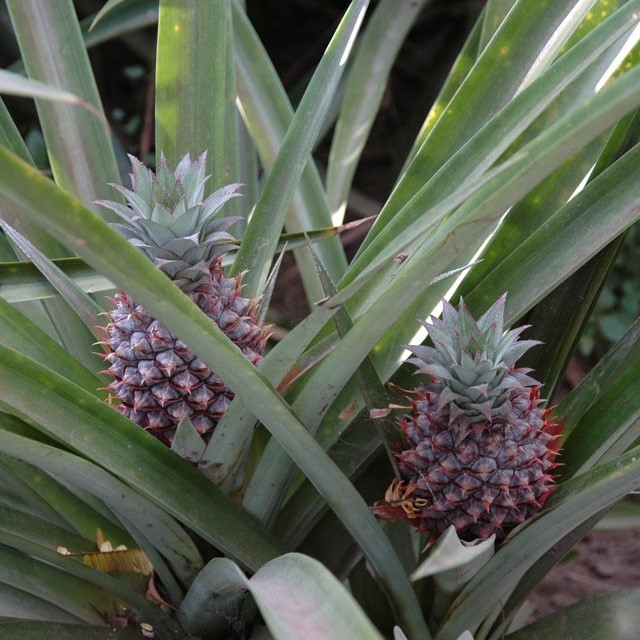
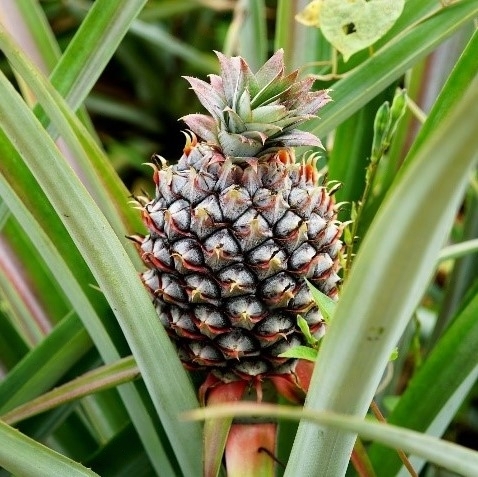
The pineapple (Ananas comosus) is one of the most popular tropical fruits. The name pineapple in English (or piña in Spanish) comes from the similarity of the fruit to a pinecone. Ananas comes from anana, the Tupi word for the fruit, meaning "excellent fruit". Comosus means tufted and refers to the stem of the fruit.
This fruit is native to southern Brazil and Paraguay where its wild relatives occur. Portuguese had introduced the pineapple to India and Java, and the fruit, delighted with the climate that so closely mirrored its conditions of origin, spread throughout the Far East. The Indians carried it to the West Indies before Columbus arrived. In 1493 Columbus found the fruit on the island of Guadeloupe and carried it back to Spain and it was spread around the world on sailing ships that carried it for protection against scurvy. The Spanish introduced it into the Philippines and may have taken it to Hawaii and Guam early in the 16th Century. The pineapple reached England in 1660 and began to be grown in greenhouses for its fruit around 1720.