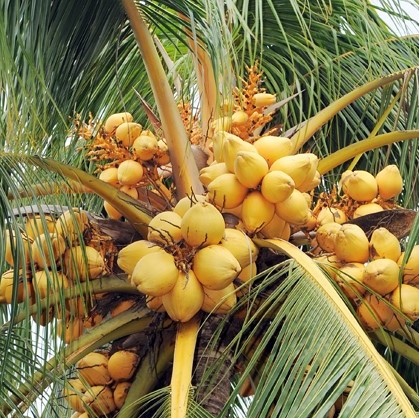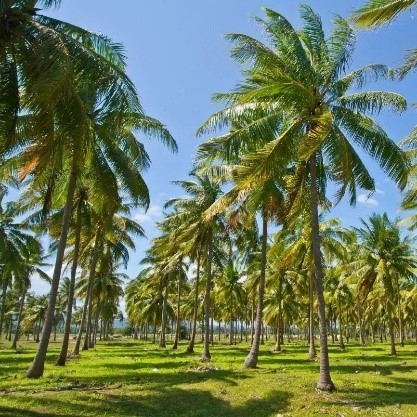

Coconut (Cocos nucifera)
The origin of the coconut is virtually unknown. The coconut palm may have originated in the lands around the Western Pacific; from there it was probably distributed east- and westwards by early peoples. Ocean currents also dispersed it, with the seeds protected by the fibrous fruit. Germinating coconuts were found washed up on the shores of the newly born volcanic island of Anak Krakatoa, in the 1930s.
The coconut is featured in early Sanskrit writings dating from the 4th century BC. It was known as sriphala (Sanskrit: Sriphala = God's fruit)
The three 'eyes' of the coconut represent the three eyes of the great god Shiva. The palms are also frequently mentioned in the early Tamil literature dating from between the 1st century AD to the 4th century AD.
Coconut became known to the western world in the 6th century. It was imported into Egypt from the Indian Ocean. Marco Polo recognized the coconut as the "Pharoah's nut" as he traveled through India. In the mid-sixteenth century sea-faring traders introduced the palm into Spain and Portugal, Brazil and Puerto Rico. Spanish sailors to describe the monkey-faced appearance of the coconut might have coined the name ‘coconut'.