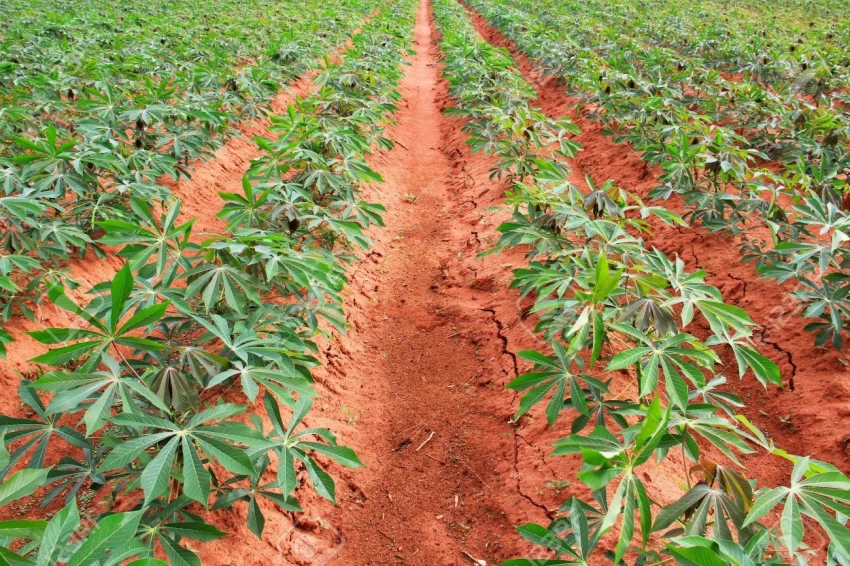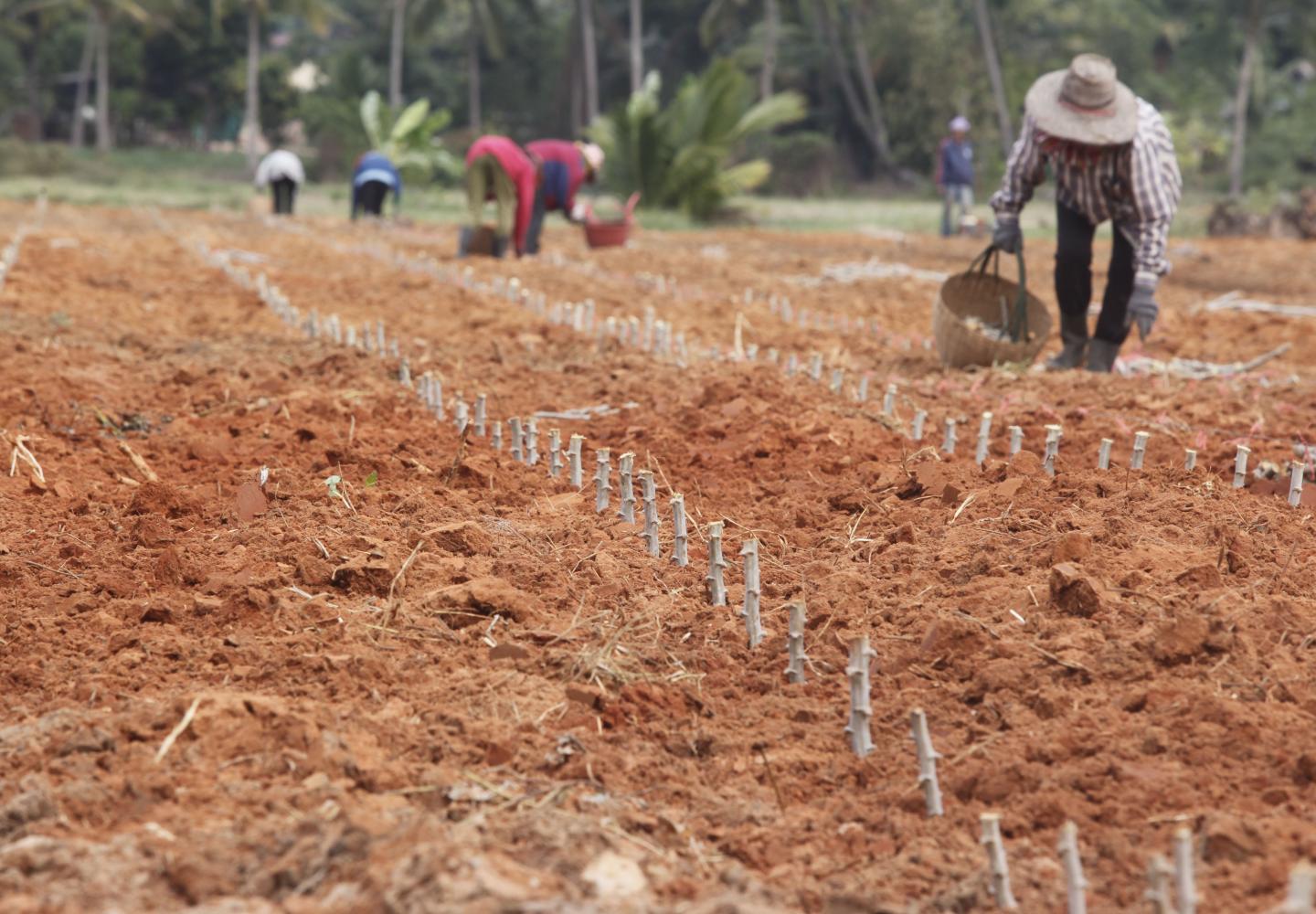

Tapioca (Manihot esculenta)
Cassava (Manihot esculenta) is the most important starchy root crop grown in the tropics and is mainly cultivated in southern peninsular India.
Introduced during seventeenth century by Portuguese, the crop played a significant role to overcome food shortage among the low-income group of people in Kerala.
Underground tuber is rich in starch and mainly consumed after cooking. Processed products like chips, sago and vermicelli made of tapioca are also popular in the country.
Being easily digestible, it forms an important ingredient in poultry and cattle-feeds. It is also widely used for production of industrial alcohol, starch and glucose.
Tapioca is a Euphorbiaceous woody shrub native to South America.
cultivated extensively as an annual crop in tropical region for its edible starchy tuberous roots.
The roots are nutritious and wholesome, and are used as a supplementary food as it is a major source of
carbohydrates. The tapioca plant gives the highest yield of food energy per cultivated area per day among
crop plants, except possibly for sugarcane. Apart from starch, tapioca roots also contain significant
amounts of calcium, phosphorus and Vitamin C.
In Kerala, cassava is a secondary staple food and is known as the poor man’s
vegetable. Boiled cassava is normally eaten with fish curry (kappayum meenum) or meat, and is a
traditional favourite of many Keralites. Kappa biriyani (cassava mixed with meat) is a popular dish
in central Kerala. Various processed products of export importance are also made from tapioca.